I live in Agra and I take travelers to the Taj Mahal almost every week. You might think the effect wears off. It does not. Every time I walk a guest through the great gateway and the white dome appears in its frame, I get to watch someone see it for the first time, and that moment never gets old. Here is how to plan your visit so that moment is at its best, plus what I show people once the Taj itself is done.
The first glimpse
The Taj Mahal is designed to be revealed, not just seen. You approach through the red sandstone gateway, the Darwaza-i-Rauza, and the mausoleum appears centered in its arch, floating above the gardens and the long reflecting pool. The marble changes with the light: soft pink at dawn, bright white at midday, warm gold before sunset. This is why the time of your visit matters more than almost anything else.
The story in the marble
Emperor Shah Jahan commissioned the Taj Mahal in 1632 after the death of his wife Mumtaz Mahal, who died giving birth to their fourteenth child. It took around 22 years and some 20,000 artisans to complete. Look closely and the craftsmanship is everywhere: semiprecious stones inlaid into the marble in floral patterns, a technique called pietra dura that families in Agra still practice today, and Quranic calligraphy that grows larger the higher it sits on the walls, so it appears uniform from the ground.
Inside the main chamber, the cenotaphs of Mumtaz Mahal and Shah Jahan stand behind carved marble lattice screens. A detail most visitors miss: these are symbolic markers. The actual graves lie in a plain chamber directly below.
When to visit
Come at sunrise. The light is at its softest, the air is cooler, and you share the gardens with hundreds of people instead of many thousands. The complex opens about 30 minutes before sunrise and closes around sunset.
- Best season: October to March, when the weather is pleasant. Summer is very hot and the monsoon months are humid.
- Closed on Fridays, when the mosque inside the complex holds prayers. If you are in Agra on a Friday, visit Agra Fort or Fatehpur Sikri instead and come to the Taj the next morning.
- On five nights around each full moon, except Fridays, a limited number of night viewing tickets are sold for short timed slots. Book well ahead if this interests you.
Tickets, gates and rules
Foreign visitors pay 1,100 rupees for entry plus an optional 200 rupees for the main mausoleum chamber, so 1,300 in total. Children under 15 enter free. Take the mausoleum ticket, skipping the inner chamber is the most common regret I hear. Book online through the official ASI portal to avoid the counter queues, and carry your passport, it is required for foreigners.
Enter through the East or West Gate. The South Gate is currently exit only. Security is strict: no drones, no tripods, no food, no large bags. Bring a small bag only, and expect to put on shoe covers or go barefoot on the marble platform.
What to bring
- Water and sunscreen, there is little shade in the gardens
- A scarf or shawl if you plan to visit the mosque side or other religious sites in Agra
- A camera or phone, but leave the drone and tripod at the hotel
- Your passport and your e-ticket
Beyond the Taj: a local's Agra
The Taj takes two to three hours. Agra deserves the rest of your day.
Agra Fort is where the story ends. Shah Jahan spent his final years imprisoned here by his own son, in rooms with a distant view of the monument he built for his wife. Standing where he stood changes how you remember the Taj.
Mehtab Bagh, the garden across the Yamuna river, gives you the classic sunset view of the Taj with a fraction of the crowd. Itimad-ud-Daulah, often called the Baby Taj, came first and previews the inlay work later perfected at the Taj Mahal. With a full extra day, Fatehpur Sikri, the abandoned Mughal capital about 40 km away, is worth the trip.
And eat. Agra is known for petha, a translucent sweet made from ash gourd, and for Mughlai cooking that goes far beyond what tourist restaurants serve. I also take guests to family workshops where pietra dura inlay is still done by hand, the real ones, not the commission-driven showrooms drivers usually push.
Visit the Taj Mahal with me
I am a local host in Agra on Indy Guide. If you want to see the Taj at sunrise without the logistics headaches, and then spend the rest of the day in the Agra that locals know, send me a message. We plan your day together, you pay a 10 percent deposit online, and the rest goes directly to me when we meet.
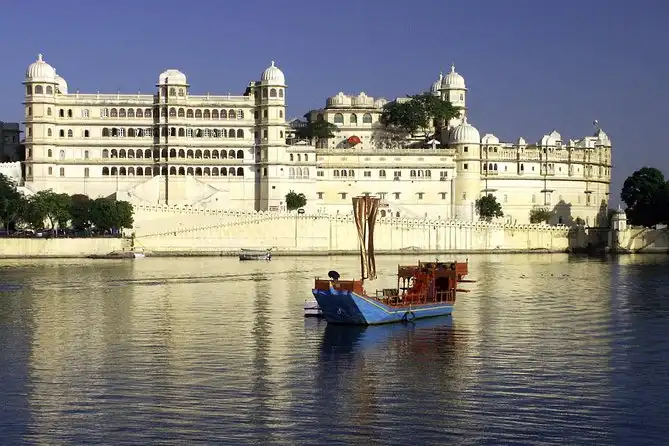
They say you haven’t truly visited India until you’ve stood before the Taj Mahal — the marble masterpiece that captures both hearts and history. Nestled on the southern bank of the Yamuna River in Agra, the Taj is not just a UNESCO World Heritage Site but a living poem of love carved in stone.
VIEW PROFILE →