Established in 1951, Serengeti National Park stands as a testament to Africa's unparalleled natural beauty. Encompassing a vast expanse of 5,700 square miles (14,763 square km), the park is a treasure trove of pristine grassland range and expansive acacia woodland savanna.
Diverse Landscapes and Elevations:
Situated at elevations ranging from 3,020 to 6,070 feet (920 to 1,850 meters), the park extends southeast, stretching 100 miles (160 km) from the shores of Lake Victoria. To the east, it spans another 100 miles (160 km) from the Kenya-Tanzania border. The park's diverse landscapes include lush grasslands, woodlands, and savannas, offering a captivating backdrop for wildlife enthusiasts.
Majestic Migrations and Abundant Wildlife:
Known for its spectacular wildlife migrations, the park's "western corridor" sees a vast number of animals, including nearly 1,300,000 gnu, 60,000 zebras, 150,000 gazelles, and various other species. From November to May, the herds graze in the southeastern plains, only to migrate west into woodland savannas and beyond the Kenya-Tanzania border in late May or June. The Mara, part of the Masai Mara National Reserve, witnesses a significant portion of this migration. The return journey to the southeastern plains occurs in November, marking the end of the dry season.
Diverse Fauna:
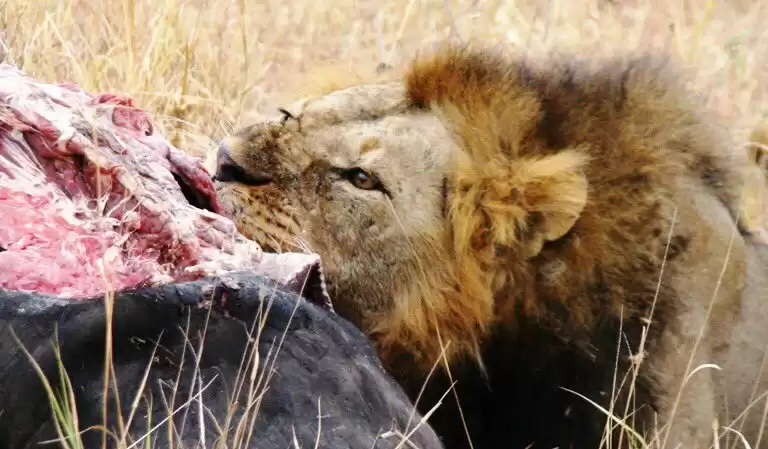
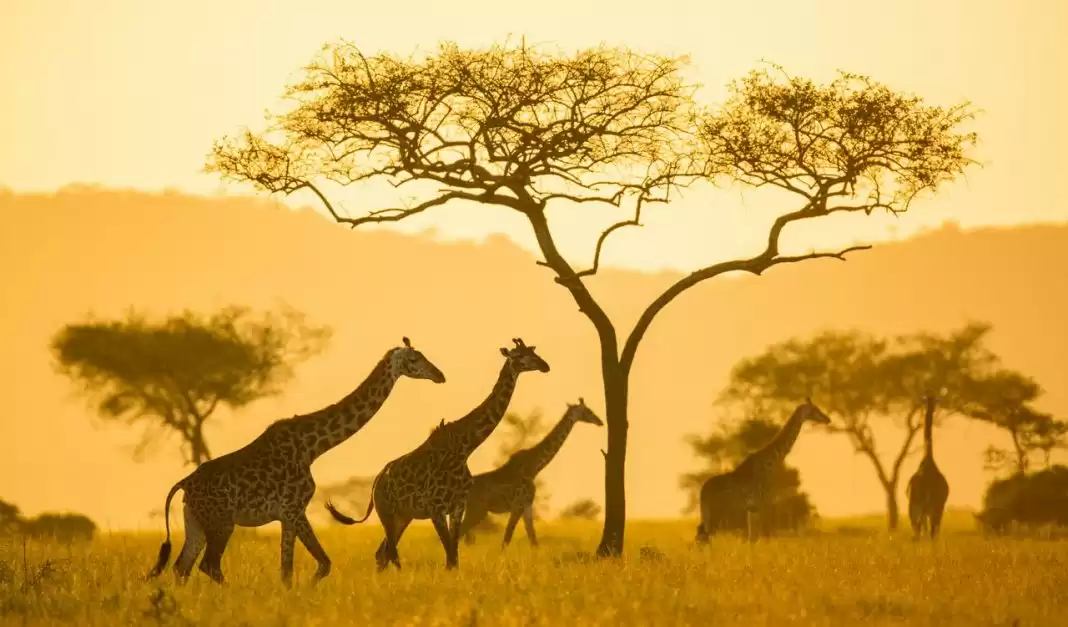
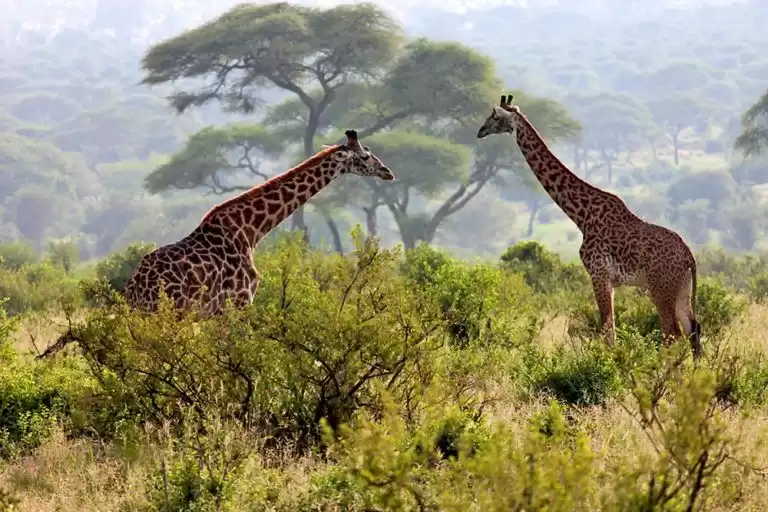
Serengeti National Park is a haven for wildlife, boasting over 35 species of plains animals. Among the inhabitants are 3,000 lions, along with abundant spotted hyenas, leopards, rhinoceroses, hippopotamuses, giraffes, cheetahs, and baboons. The Mara River marshes are home to crocodiles, while the skies above showcase more than 350 species of birds, featuring ostriches, vultures, and flamingos.
Challenges and Conservation Efforts:
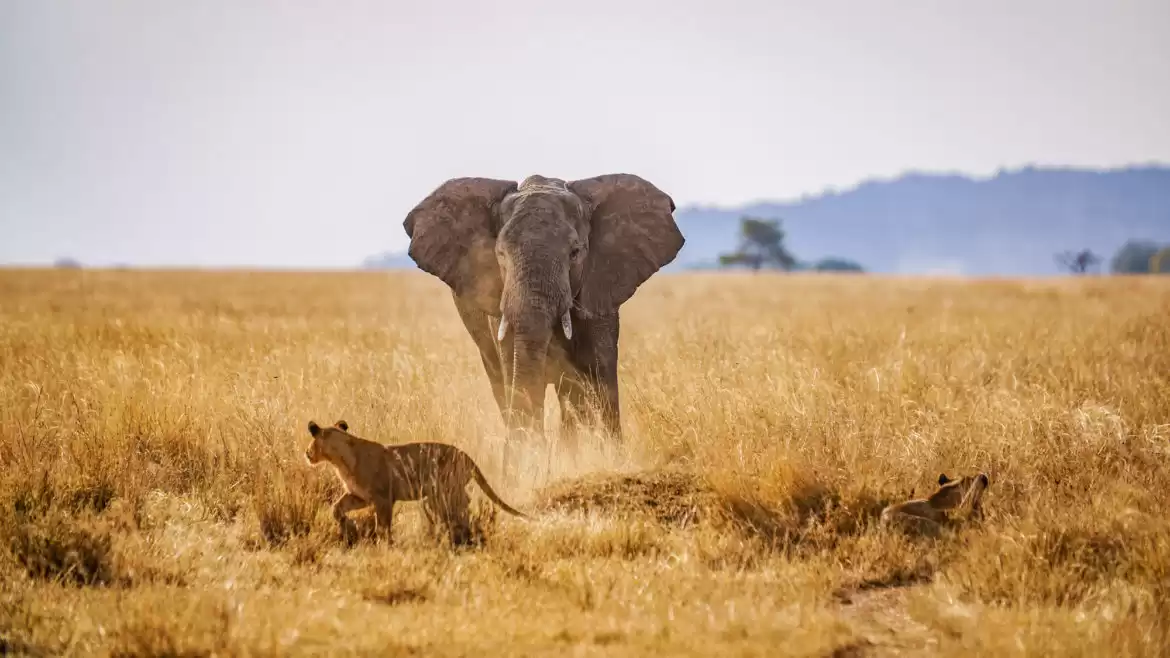
The park faces challenges, including the introduction of elephants over the past three decades due to expanding human populations. With an estimated local population of 1,360 elephants, the park has become a crucial habitat for these majestic creatures. However, the Serengeti has witnessed the local extinction of wild dogs, attributed to the spread of diseases from domestic dogs. Lions faced a significant setback in 1994 when a canine distemper epidemic claimed the lives of nearly one-third of the population.
Threats to Biodiversity:
Despite its protected status, Serengeti National Park grapples with threats such as the poaching of elephants for ivory tusks, the demise of the black rhinoceros for its horn, and the hunting of game animals for meat—estimated at 200,000 annually. Conservation efforts remain crucial to preserve the delicate balance of this remarkable ecosystem, ensuring that future generations can continue to witness the awe-inspiring beauty of Serengeti's untamed wilderness.

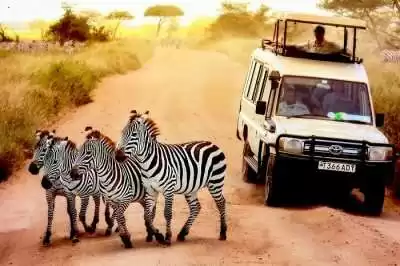
Serengeti National Park, national park and wildlife sanctuary in the Serengeti Plains of northern Tanzania. It partially borders the border with Kenya and lies northwest of the adjacent Ngorongoro Conservation Area. It is best known for its huge herds of lowland animals (particularly wildebeest, gazelles and zebras) and is the only place in Africa where large land animal migrations still occur. The park, an international tourist attraction, was added to the UNESCO World Heritage List in 1981.
VIEW PROFILE →