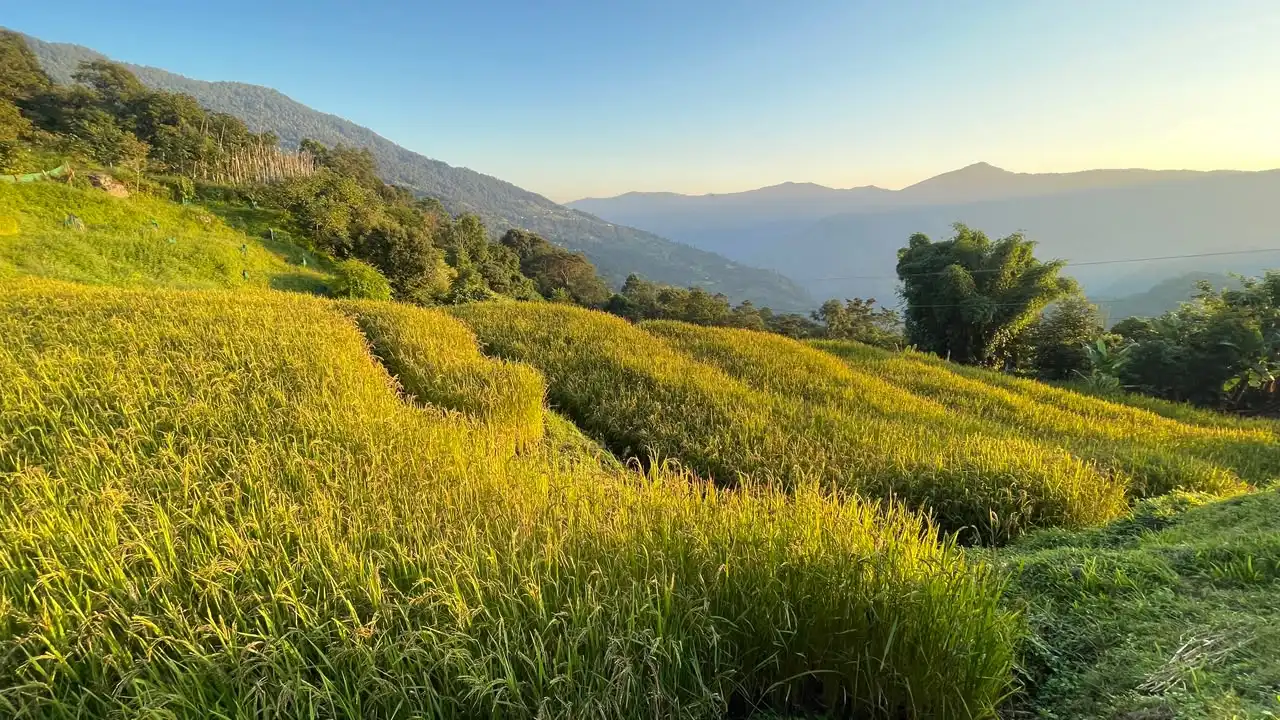
I didn't plan to stay.
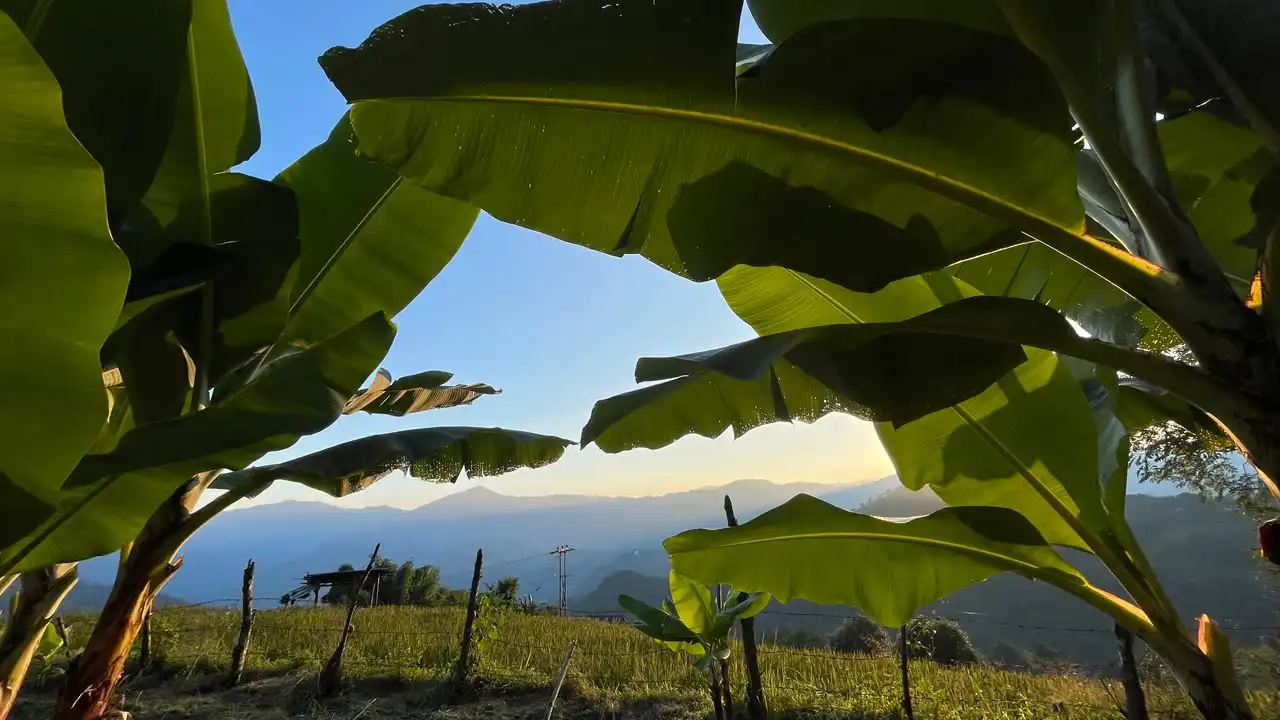
I only stopped for a moment, somewhere in the folds of rural Bhutan, where the road narrows and the rice paddies begin. But the leaves above me were so big, and the light was coming through them in a way I can't quite describe — green on one side, gold on the other — that I simply sat down.
That decision, small as it was, changed the rest of my evening. And maybe more than that.
A Banana Tree, A Paddy Field, and a Hundred Shades of Blue
Above me, the leaves stretched wider than my arms could reach.
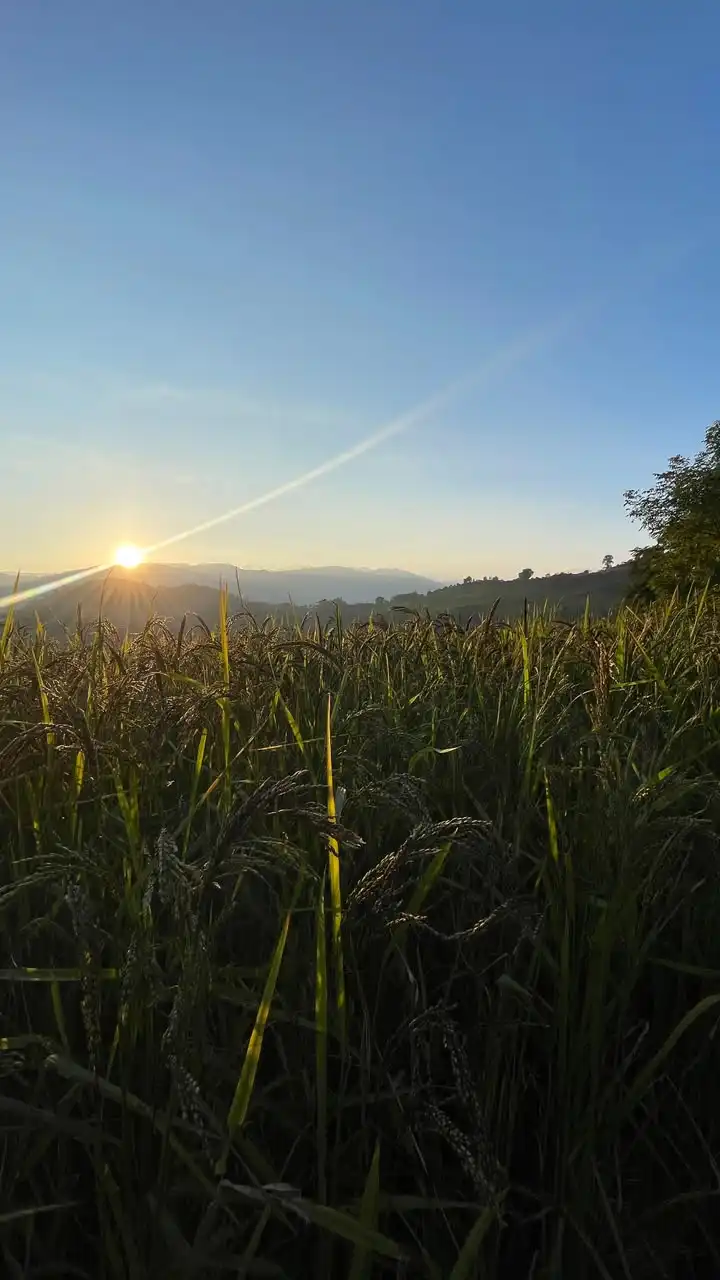
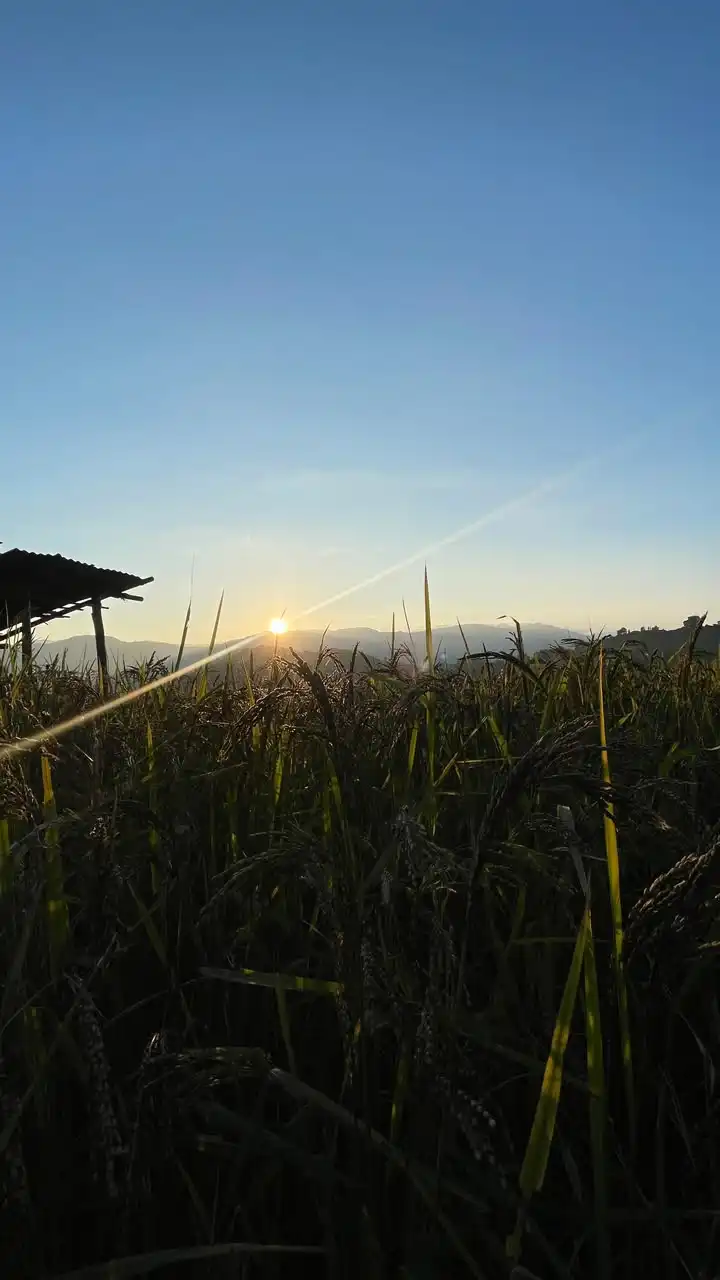
In front of me, a paddy field sat a few weeks from harvest, swaying gently in the kind of breeze that doesn't ask for attention.
Beyond the fence, the mountains rose in ridges — each one a lighter shade of blue than the last, until the farthest peak simply dissolved into the sky.
This is what Bhutan does, again and again, almost without trying. It hands you a view so layered and quiet that you forget you were ever in a hurry.
Then the sun began to go down.
What Happens When You Stop
It's strange, what happens when you actually stop moving.
For a while, my head was still loud, full of the usual noise we carry without noticing. Then, slowly, the loudness thinned out, the way mist does when morning comes.
I could hear the leaves moving against each other. I could smell the earth, damp and green and old. I felt, for a few minutes, like a child again — someone who didn't need to be anywhere else.
I've watched sunsets before, many times. But I'm not sure I had truly seen one in a long time.
The banana tree wasn't doing anything remarkable. It was just standing there, growing, letting the light pass through it. It didn't try to hold the sun in place or chase it across the sky. It simply let the light in — and that, somehow, was enough to make it beautiful.
Three Things a Hillside in Bhutan Taught Me
Slow is not behind. It just hasn't been rushed.
Slow is honest about how long real things take. You can't harvest what you didn't plant in the seasons nobody clapped for — the quiet months of tending, waiting, trusting.
And stillness isn't the reward you earn after finishing. It's what allows you to keep going at all.
Soon, this field will be cut. The grain will be gathered, and the golden hillside will turn bare again, waiting for the next cycle to begin.
That isn't sad. It's simply the reason to look up while it's here.
Why Bhutan Teaches This Lesson So Well
There's something about this country that makes you want to sit down under a tree and stay a little longer than planned.
Maybe it's the way Bhutan has resisted rushing itself into modernity, choosing instead to measure progress by Gross National Happiness rather than GDP. Maybe it's the Buddhist rhythm that runs quietly beneath daily life here, reminding you that permanence was never promised and was never meant to be.
Whatever the reason, Bhutan has a way of slowing your pulse to match its own — the pace of farmers transplanting rice by hand, of prayer flags fluttering on mountain passes, of monks walking unhurried through monastery courtyards that have stood for centuries.
If you come looking for fast answers, Bhutan may frustrate you. But if you come ready to sit under your own banana tree, it will give you something far better.
Find Your Own Banana Tree
You don't need Bhutan specifically to do this. You need a tree, a view, and the willingness to stay a little longer than you planned.
But if you do come here — to the Himalayan kingdom of terraced fields, blue ridgelines, and golden afternoons — let yourself stop. Not for the photograph. For the stillness that comes after it.
Live again.
When was the last time you truly saw a sunset, instead of just watching it happen?
Planning Your Visit
Best time to go: October to December and March to May offer the clearest skies and most vivid mountain views, with rice fields turning gold in autumn before harvest.
Getting there: Flights land in Paro, Bhutan's only international airport, with dramatic Himalayan approaches. All visitors need a licensed local guide, arranged through a registered Bhutanese tour operator.
Where to find your own banana tree moment: Head beyond Paro and Thimphu into the Punakha or Bumthang valleys, where terraced paddies, farmhouses, and fruit trees line the hillsides away from the main tourist trail.
What to bring: Light layers for warm valley afternoons and cooler mountain evenings, comfortable walking shoes, and patience — Bhutan rewards those who slow down.
Local tip: Ask your guide to simply stop the car somewhere unplanned. Some of Bhutan's best moments aren't on the itinerary at all.

I didn't plan to stay. I only stopped for a moment, somewhere in the folds of rural Bhutan, where the road narrows and the rice paddies begin. But the leaves above me were so big, and the light was coming through them in a way I can't quite describe — green on one side, gold on the other — that I simply sat down. That decision, small as it was, changed the rest of my evening. And maybe more than that.
VIEW PROFILE →