If you do come to Kyrgyzstan and you buy a Shyrdak it's important to understand what the symbols mean. I have a few of my own Shyrdaks myself and the local masters taught me the symbols of hand-sewed shyrdaks. Take a look at the examples below and if you have any questions about where to buy the best Shyrdak or if you're interested in a handicraft tour in Kyrgyzstan let me know. This very helpful information was provided by Altn-Kol a local women's handicraft cooperative in Kochkor, Kyrgyzstan.
Symbolic Meanings of Shyrdaks
Mother & ChildThis symbol is the representation of the Keeper of the Hearth and a safe home. |
Besh BarmakThe literal translation of this symbol is Five Fingers. The implied meaning refers to the traditional Kyrgyz meal Besh Barmak that is eaten with the five fingers of the right hand. Ultimately the symbol represents the satisfaction one feels after a feast. |
SoldiersThis symbol depicts soldiers standing at attention and in vigilance, providing protection to the homeland. |
RainHere we see, again, two people with arms lifted high in thanks for rain. The symbol can also represent the desire to be victorious in battle. |
BlessingsThis symbol shows a person with arms outstretched, bestowing a blessing. |
JerThe circle in shyrdak art represents the world and our connection to it. |
Spring WaterA spiral form depicts water flowing out of the ground from a wellspring. It symbolizes new beginnings. |
River WaterThe rivers flowing from our mountains are a symbol of life for the Kyrgyz people. |
MountainsKyrgyzstan is known for its many mountain ranges. When illustrated upon a shyrdak it stands for a barrier of protection. |
Eternal MovementThis ancient spiral design is a symbol for the ever-present movement of the elements of nature. Winter, Spring, Summer, and Fall. |
Bird TracksThe depiction of a Birdâs Track refers to the effect a person has on their family and their community. What a person does leaves a lasting imprint. |
Dogâs TailThis subtle double curve symbolizes friendship and acts as a reminder that one has an ally. |
Ramâs HornThe ramâs horn refers to great wealth and fortune. |
Bird in FlightThe depiction of a bird with its wings spread in flight symbolizes the wish that your dreams come true. |
Rib & Spinal ColumnThese two designs are used in repetition upon a shyrdak to show strength and support. |
TalismanThese designs are depictions of traditional talismans used by Turkic people to ward off the influence of spirits. |
CombThis is a representation of a Kyrgyz hair comb and symbolizes cleanliness. |
Yurt WallThis visually striking pattern is the symbol for the inner wall of a yurt. This lattice denotes protection and interdependency. |
Saddle Bag TiesThis dovetail design is the symbol of faith, hope, and trust. |
Kymyz FlaskThe kymyz flask is a tradition Kyrgyz symbol of success and generosity. Kymyz is the national drink of Kyrgyzstan. It is made from the fermented milk of horses and is drunk during the spring and summer when it is fresh. |
The SunThis cross-cultural symbol refers to the source of light for the world. |
The MoonThis double crescent shows the waxing and waning phases of the moon and is the blessing of good sleep. |
The Morning StarThis is a stylization of Venus. |
Day & NightThis ancient design refers to the cycle of night and day. |
The North StarThis embodiment of Polaris and the night sky is a symbol of eternity. |
SeedThe symbol of the seed is one of blessing and growth. |
LeavesThese three leaves are representations of the summer pastures known as Jailoh. |
TreeThis is another cross-cultural symbol representing the Tree of Life. |
PomegranateThis symbol shows the many seeds of the pomegranate fruit and indicates fruitfulness and increase. |
TulipThis sprouting flower is the herald of spring. |


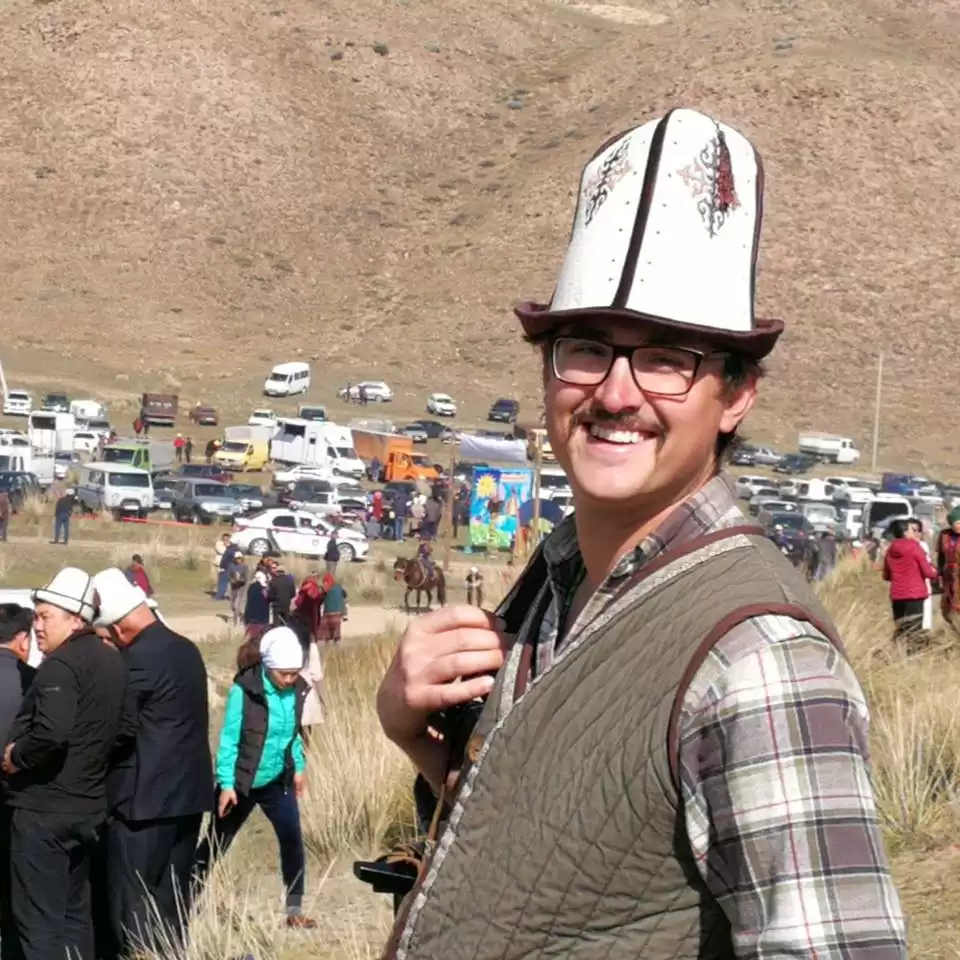
Central Asia is full of amazing and interesting cultures and it's possible to see the different types of handicrafts throughout Kyrgyzstan and Central Asia. My passion for the last 4.5 years has been meeting these people and spending time with them in the village. It's really amazing to have a tea with a local master and learn about his or her family history by looking at their handicrafts. There is some really interesting artist here in Kyrgyzstan that still needs to be discovered.
VIEW PROFILE →