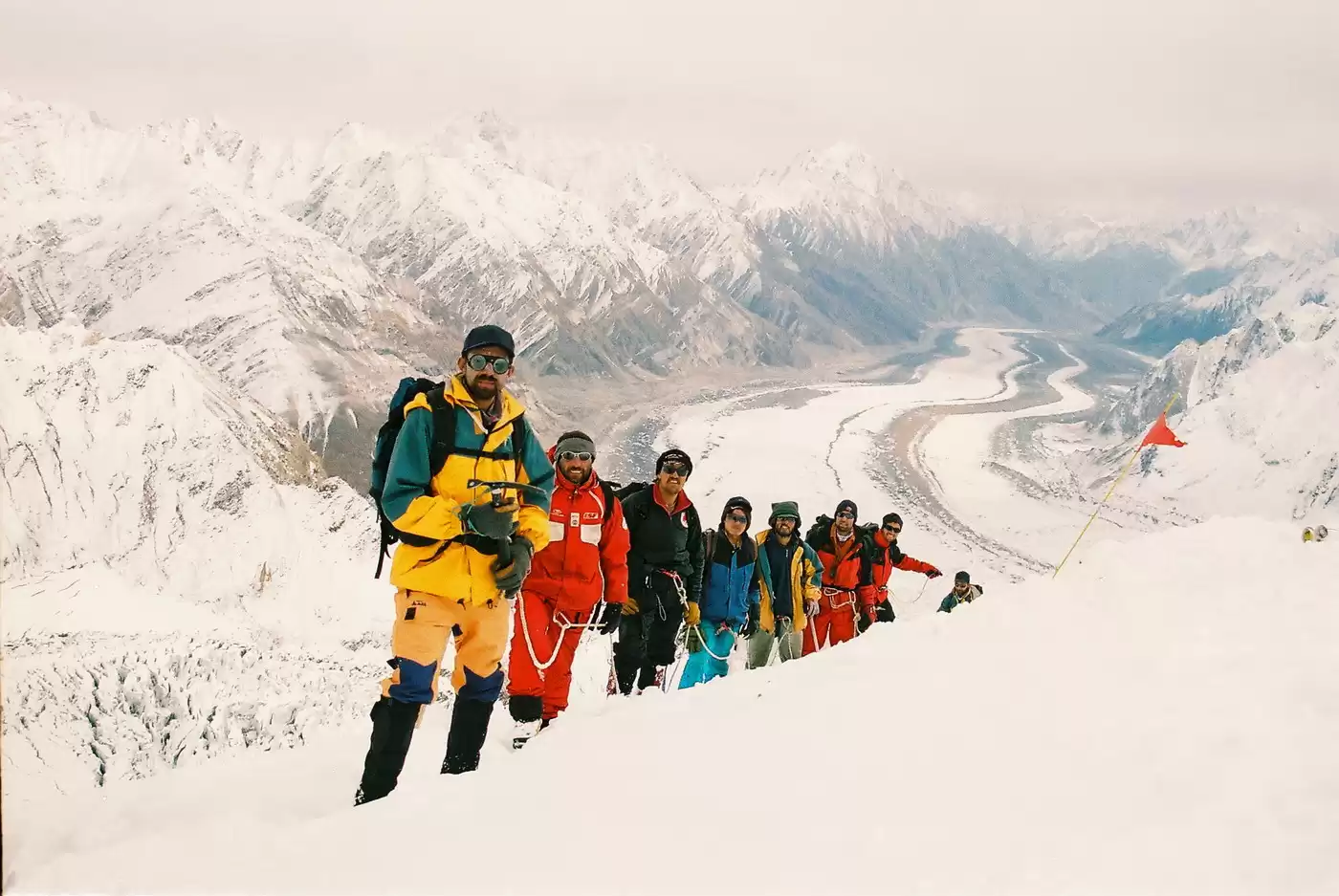
35 Days Spantik 7027 M Expedition Pakistan
About this tour
Spantik Peak is known by various names of its beauty and grandeur. The northwestern face on the Nagar side with its bright red color of golden pillar is called "Ghenish Chhish", which in Brushaski (local language) means Golden Mountain.
Activities included
Day-by-day itinerary
Day 1: Islamabad, Pakistan to Rawalpindi, Pakistan
Overview Itinerary Day Details 01 Arrive Islamabad,Pindi, equipment assortment & checking 02 Fly Islamabad to Skardu Or Drive Chilas/Narran 08/10 hrs drive, 500 km 03 At Skardu , Arrive from Narran/Chilas > Skardu, 7/8 hrs drive, 270 km, 04 Skardu, distribution of loads, acclimatization 05 Skardu > Arandu, 7/8 hrs Jeep drive, Camp. 06 Arandu > Man Pakora, 6/7 hrs TREK, Camp. 07 Man Pakora > Balocho, 7/8 hrs TREK, Camp. 08 Balocho > KL Base Camp, 7/8 hrs TREK, Camp. 09 @ Base Camp, establishment & formation. 10 10/27 -1, days at the base camp for climbing the peak. 15 climb 2, est. Camp 1 16 climb 3, try Camp 2 17 climb 4, try Camp 2 19 climb 5, est. Camp 2 18 limbing 6, try Camp 3 19 climb 7, try Camp 3 20 Climb 8, Est. Camp 3 21 climb 9, Attack-1 22 climb 10, Attack 1, reserve day 23 climb 11, Attack 1, descend 24 climb 12, Attack 2 25 Climb 13. Attack 3 26 climb 14, descend to Camp 2 27 climb 15, descend to base camp 28 Closing @ Base Camp 29 Trek to Man Pakora 30 Trek to Arandu village 29 Jeep Arandu to Skardu 30 Fly to ISB / drive to Chilas/Narran 33 Drive Chilas > Islamabad – closing of the expedition 34 Arrive in Islamabad!!!!! 35 Reserve day or Depature
What's included
Cost Includes: Briefing & Debriefing: Welcome reception (briefing) meeting (debriefing) at Skardu GB Office. Transportation: Road transfers between airport/hotel and within the city as per itinerary. 4x4 jeep from Skardu to Arandu and back to Skardu, truck loader for all kinds of equipment are up &down. Accommodation: Hotel accommodation at tourist class hotels at Rawalpindi/Islamabad, Chilas, and Skardu. Base Camp Kitchen: Dinning tents, Kitchen equipment, bathroom, crockery, cutlery, fuel, and related community gear. Base Camp Facilities: Mess tents, mattresses, mess, kitchen and toilet tent with tables/field stools, washroom. tent and camping ground fees. Guide: Mountain professional Guide. Cook & Helper: One cook and one helper for BC High Camp Equipments: 02 Dome tents, for each camp. Meals and BC Food: All meals at hotels, during the trek, at B.C, and Climbing. Porterage: Porterage of 50 kg per person of expedition equipment and high-altitude food etc. to the B.C and return from BC to road head Arandu Village. High Altitude Porters: experience High altitude porters/supporting crew their Personal Equipment’s (Addition HP required will be charged US$ 2000 per HP. High altitude porters Electrical at BC. Generator for electrical supply at BC with the patrol. Solar plate with lights for the lighting system. Local Staff Insurance: Insurance of our field staff Guide, Cook, kitchen staff, porters & assistants, and low altitude porters (except HP. Porterages: Local Porterage from Arandu to base camp and back to arandu village. Allowance Wages: Wages and basic kit of guide, Sardar, cook and assistant(s). Cargo: Clearance of cargo before arrival of the team and its storage. Insurance: Insurance of our field staff and low altitude porters (except helicopter rescue). Guarantee: Above quotation is based on present porter rates and valid for 2021.
Cost Excludes: International airfare, airport tax, excess baggage charges. Doctor, Medications ground evacuations, and helicopter rescue charges of any kind. Room services, laundry, beverages, phone/communication bills, and items of personal nature. Insurance liability of member(s) and others under force majeure conditions. Clearing agent charges. Domestic Airfare: airfare ISB-KDU-ISB Return tickets Surface transfers in case of flight cancellations to the kick off point. Tips for HP Porters and staff tips High Climbing Equipment’s Ice screw. Snowball, Climbing and fixing Rope, EPI Gas, and staves. High altitude food: Foods for the climbing list will be shared in advance. High Climbing Equipment’s Personal gear for climbing. Mountain royalty Permit fees: permit &royalty of the mountain US$1500 for 7 Member Group and Additional Member US$ 180 Climbing Gear: Rope, ice screw, snow bar, EPI gas, cooking pots, Oxygen Supplement: Cylinder, 02 Oxygen set hoses, regulator, supply to high camps, Thuraya Phone: Satellite phone services with fixed calling charge with Solar Charger and Walkie Talkie radio for communication. Solar Penal for Charging: Solar power at BC for Charging. Letter of guarantee on behalf of team/client for environmental bond for USD 1000 Rescue Mission. In case of emergency Helicopter required for rescue US$, 14,000 will be advance deposited in Askeri aviation account if refundable. Any other service not mentioned in this condition sheet Tipping System: If you have an excellent experience, a gratuity is a great way to show your appreciation. Tips of 5-10% of the trip price are recommended and will be distributed amongst the expedition leader, HPs, cook staff, and porters. This is a general guideline. The actual number of gratuities should be based on the quality of experience, ability, and professionalism of the staff. The following is the minimum gratuity for Spantik. Staff Group Tips Summit Attempt Bonus HP a who climbed with members who did not submit (this cost will be split amongst the members who climbed with the HPs). Successful Summit Bonus HPS for summits with members (this cost will be split amongst the members who climbed with the HPs). Refund: If the climbing cancellation is made 30 days + prior to departure full payment will be refunded and a nominal communication service charge will be deducted. RVT reserves the right to deduct: 50% cancellation charge from paid package price if the cancellation is made in less than 20 days of arrival date. 75% in case of cancellation in less than 14 days. In case of cancellation prior to arrival, all charges in respect of confirmed bookings that entail no-show charges by hotels/transport/airline will have to be paid by the clients. Anyone deciding to abandon the trip after arrival or leave during the trip for whatever reason(s) whether the client's own or external (of the nature of force majeure) will not be eligible for a refund. This also applies in case the entire group completes/abandons the trip and decides to return earlier than the agreed time schedule. Nominal communication service charge will also be deducted from the refund.
What to know
GEAR AND CLOTHING LIST For Trekking GEAR & Clothing While on an organised trek, it is best to pack all items for your trip in one large piece and one carry on. The large piece must be a duffel bag (weighing not more than 12.5 Kg.) because duffels are easier for porters to carry. A small day pack is suggested as carry-on to keep items that you will use during while on the trek, bus or jeep. Luggage Large duffel bag with lock. It is not recommended to put your stuff in backpack as the straps might get damaged while being transferred from bus to jeeps, jeeps to campsites and during loading and unloading by porters each day. A small padlock that fits through the zipper of your duffel bag is recommended. Day Pack. Large enough for camera gear, cap, sun glasses, water bottle, jacket and other items you may like to use while on the trek. Extra carry-on. For storing city clothes in Skardu. Money Belt. A small fanny pack, money belt or around the neck passport bag is suggested for keeping safe your passport, travel documents and money. Packing list for your Duffel. Sleeping Bag. As we shall be sleeping for four nights at Concordia at 4,700meters or at Snow Lake and Hispar Pass at 5151meters above sea level, so the bag should be rated for 0 degree F or -18 degree C. Ratings are all relative since the amount of insulation needed for a particular person to stay comfortable depends on their rate metabolism. A down bag will be warmer for its weight and pack smaller but does not retain its insulative properties when wet. A water proof breathable shell or a bivy-bag will keep the bag dry. A synthetic bag keeps you warm even when wet and is a less expensive alternative, but will weigh more for a given amount of warmth. Trekking Boots. The single most important item on this list. Never take brand new boots on a trek, make sure they are well broken-in before departure. Good trekking boots are hard to get in Pakistan. If you are buying a new pair from abroad, look for medium-weight boots of fabric or a fabric/leather combination. They should provide adequate ankle support . A vibrum or other deep-lug will protect you from rocks and add support. Always use thick socks when trying shoes so that you get the correct size. Short shoes can jam your toes painfully during steep descents. You could also try to get new “Grouted” shoes that provide protection against water and are good while walking in rain or through snow. Make sure you can fit crampons on your shoes, as it is vital for crossing different passes. Camp Shoes. Jogging shoes or sneakers to slip in at the end of the day. Tiva sandals are ideal for this trek, as you can use them while crossing streams and also at the campsite for strolls. Crampons You may need crampons on certain treks, sometimes only for one day. It helps in having better grip on hard snow to have crampons fitted to your boots. Look for easy to fix ones. ( Check with us for your specific trek if you need the crampons or not). From our regular trek list, you would need to bring crampons for : Gondogoro La, Biafo Hispar and Wartum Peak Thermal socks. The socks you wear are a critical element. A cotton/wool combination is useful while on the glacier, and for warmer conditions cotton socks are best. For hose who are sensitive to wool synthetic/cotton socks are recommended. Liner Socks. A thin, wickable material. Polypropylene, Capilene, Thermax and Drylete all work very well. Silk does not work nearly as effectively as any one of the above. Polyester Fleece/Pile Jacket or Pullover. Stays warm even when wet. Polyester Fleece Pants. Good for afternoon strolls, same as above. Rain gear. A rain suit available from the local market is best for rain, doubles as windbreaker, and fits over pile jacket and pants. Wicking Long Underwear (tops & bottoms). Wick moisture to keep you warm and comfortable and dry quickly. Two suits are a good idea. Ski Hat. Covers your ears properly, use one with cotton liner. Woolen cap is also good. Mittens or Gloves. Woolen gloves are useful when at higher elevations and during windy conditions, when temperature drops quickly. Brimmed Sun Hat. Very important for this trek, as when we start the trek and till we arrive at Concordia, we are generally walking towards east. This can be annoying in the morning as sun is low and hits your eyes. Bathing Suit. Men can take bath by the rivers or occasional lakes in ablation valleys. Toiletries. Keep everything you normally use. Just remember to bring effective sunscreen, chap stick /lip balm, skin lotion and laundry soap. CLOTHING With your knowledge of Pakistani culture you are well aware of precautions to be taken while traveling through remote areas. Cloths for the trek should be durable, comfortable and easy to wash and dry. In good weather you will spend much of your time in a T-shirt or medium shirt and outdoor trousers. You will need warmer clothes for evening in the camps. Temperature falls rapidly as soon the sun goes down. Men could wear shorts once we are through the populated areas, that means from the third day of trek. Women are advise to use cotton shalwar kameez (loose long shirts and baggy trousers) the traditional Pakistani dress, as these are comfortable during warm conditions, and also appreciated & respected by the locals. Check List Head gear Parka Wool shirt & trousers Sweater Cotton shirt & pants Gloves & Mittens Rain/wind suit Cotton & Wool undergarments Socks (Cotton & Wool/synthetic) Boots (Trek & Camp) Belt ! Down Jacket Shalwar Kameez (Cotton) Spare laces for boots Miscellaneous Items Sunglasses Towel Washcloth Bandanna/Scarf, for covering your mouth while riding in a jeep. Water bottle, with durable screw top. Sunscreen Headlamp with flash light + extra batteries and bulb Insect repellent Swiss Army knife, or a similar one Nylon cord for a clothes line Personal Medical kit Pocket size sewing kit Lighter or matches for general use Wrist Watch Optional Items Thermarest. We provide close-cell matrices but you may want to supplement for additional comfort. Stuff sacks of various sizes for storing of your used clothes. Toilet paper or travel pack of tissues. An interesting book. Note book and pen for journal. Snacks: personal choice of dried fruit, candy, energy bars. Binoculars. Camera, film, extra batteries, cleaning supplies and extra lenses. Sports gear (playing cards/Frisbee) Water purification tablets
Route & locations
Islamabad, Pakistan to Rawalpindi, Pakistan