Altai Mountain And Central Mongolia
About this tour
Travelling to Bayan-Ulgii
Glaciers, Diverse Wildlife, Highest Mountains, Longest River and Kazakh Eagle Hunte The Mongol Altai mountain is the symbol of covered with glaciers, while the valleys have lush green pastures, which support about two million as bears, foxes and lynxes. These valleys are dotted with small communities of nomadic families enjoying the short but beautiful summer as well as some wonderful alpine lakes.
The Nairamdal peak 4374m of the Altai Tavan Bogd mountain is the highest point, Khovd, the biggest river 516 km in length in the country flows through its territory. There are many crystal fresh water lakes in Bayan-Ulgii as Tolbo and Dayan lakes. The province was founded in 1940 and became a refuge for Muslim Kazakhs fleeing separatist fighting in Chinese province.
Today, the Kazakhs make up over 90% of the province’s 90 000 populations and its capital Ulgii has very distinct Central Asian spirits. Ulgii is located on the southern bank of Khovd river which has unique atmosphere with solid white and flat roof buildings. Ulgii has bazaar, plus a mosque and Islamic schools. Most popular tourist attractions in Bayan-Ulgii are mountaineering, hiking in the high Altai Mountains, attending Golden Eagle festival, experiencing Kazakh nation's culture, taking part of their everyday nomadic lifestyle and wildlife snow leopard, argali sheep, ibex, bird watching.
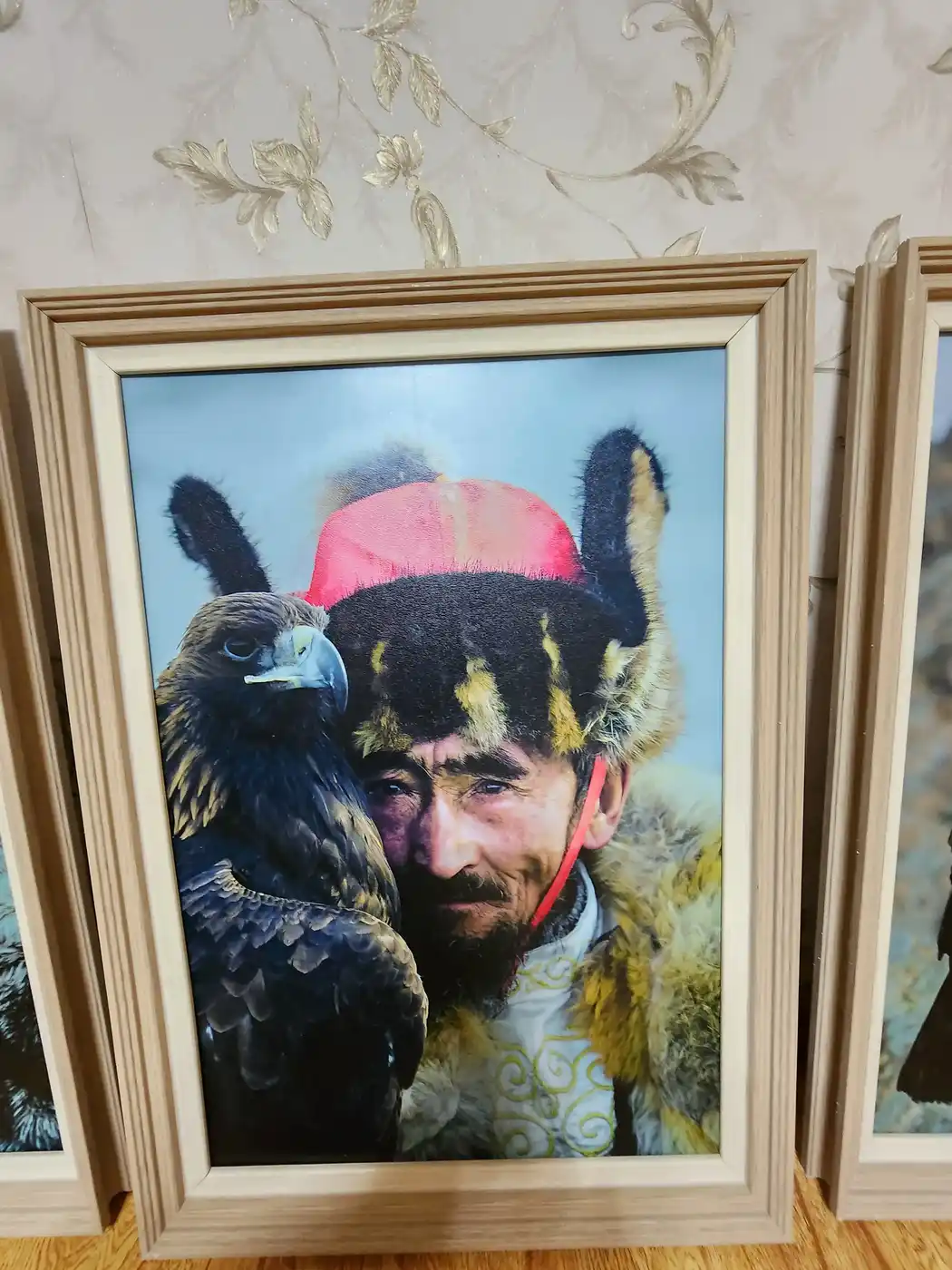
The must-see event in the province is golden eagle hunting. Usually Kazakh men train the eagle from their young age to hunt from the horseback and they primarily hunt red foxes or small animals. Physically, Kazakhs has slight Caucasian appearance than Asians. Ordinary Kazakh men wear moustache and skullcap and women wear long embroidered dresses and cover their heads by colorful scarves. The cuisine is very different than Mongolian dishes, with a smell of flat oven baked bread and “besbarmak” – a traditional dish
Activities included
Day-by-day itinerary
Day 1: Ulaanbaatar, Mongolia to Kharkhorin, Mongolia
Today arrive to Ulaanbaatar. Meet our team. The most experienced driver and guide. Drive to Kharkhorrin. Kharkhorriin is the ancient capital of Mongolia. In Kharkhorrin you will visit Erdene Zuu monastery musuem. Stay in a ger camp.
Day 2: Kharkhorin, Mongolia to Orkhon, Mongolia
Today is driving to Orkhon valley. Amazing view of Orkhon valley. The Orkhon Valley Cultural Landscape lies in the central part of Mongolia, 360km southwest of Ulaanbaatar. The valley is rich with archaeological remains, historic monuments, and cultural findings. You can explore sites with historical significance like Orkhon inscriptions, Ruins of Khar Balgas, Karakorum, Erdene Zuu Monastery, Tuvkhun Monastery and so on. Home for centuries to major political, trade, cultural and religious activities of successive nomadic empires, the Orkhon Valley served as a crossroads of civilizations, linking East and West across the vast Eurasian landmass. The earliest evidence of human occupancy dates back to 40,000 – 15,000 years ago, the valley was continuously occupied throughout the prehistoric and bronze ages and early historic times, was settled successively by the Huns, Turkic peoples, the Uighurs, the Kidans, and finally the Mongols. Besides all the historic and cultural sights, you can also enjoy beautiful Orkhon Waterfall and camp on the banks of the Orkhon River.
Day 3: Orkhon, Mongolia to Khorgo, Mongolia
Today is driving to Khorgo Terkhiin Tsagaan Lake National Park. LOCATION: 660 km from Ulaanbaatar, 180 km northwest of Tsetserleg town, and just 4 km from Tariat soum (administrative unit) of Arkhangai province. One of the natural highlights of Arkhangai province, the awe-inspiring Khorgo Terkhiin Tsagaan National Park comprises of two famous attractions: Terkhiin Tsagaan Lake or Great White Lake and dormant volcano Khorgo. 77267 hectares of Khorgo Terkhiin Tsagaan Lake area is extremely rich in wildlife and flora, which was designated as a national park to protect the spectacular mountain scenery and endangered species. 2210 m high Khorgo volcano is one of the 10 volcanoes in the national park, became extinct about 8000 years ago. The larch tree forest covers the northern slope of the volcano while its crater is 200 m in diameter, with a depth of 70-80 m. Visitors climb the volcano on stairs and trails, and upon reaching the top, walk along the volcano rim with outstanding views of surrounding areas; a small village can be seen from the volcano as well as a bird’s eye view of Terhkiin Tsagaan Lake.
Day 4: Khorgo, Mongolia to Khyargas Lake, Mongolia
Today is driving to Khyargus lake. Long driving day. 500km. Khyargas Lake receives a lot less attention than Uvs Nuur, being 'only' half the size and 'only' twice as salty as the ocean. The lake does provide an attractive summer home for birds, but it is not as scenic or as accessible as other lakes in the region. It is still worth a stopover if you are travelling between Uvs lake and Khar Us lake in Khovd aimag, or driving or hitching towards Tosontsengel in Zavkhan through the mid-eastern part of Uvs aimag. On the north-western side of Khyargas lake, there are some fantastic hot springs. Head for the abandoned village where the road leaves the lake, or ask directions at Naranbulag. A national park fee applies around the lake, though you'd be lucky (or unlucky) to find a ranger to pay it to. South of Khyargas lake, but still in the national park is the freshwater lake Airag Lake, at the end of the mighty Zavkhan Gol. Despite the name, the lake is not full of fermented mare's milk, but it does have about 20 breeding pairs of migratory Dalmation pelicans. There were about 400 pelicans in the 1960s, but the numbers are tragically decreasing because poachers kill them for their beaks, which are used to make a traditional implement for cleaning horses, called a khusuur, or currycomb, which you may see in use at the Naadam Festival.
Day 5: Khyargas Lake, Mongolia to Chandmani, Mongolia
Today is driving day to Chandmani village. Drive to 250km. Dusting road. Mongol Els or Mongol Sand Dunes is located between Gobi-Altai and Zavkhan province, stretching across several soums of respective provinces. Mongol Sand Dunes stretches 300km along the Zavkhan River Valley and it is the biggest sand formation in Mongolia. There are few lakes can be found in the area including Ereen, Ajig, Sangiin Dalai and Gun lakes and they combined with Zavkhan River and the sand dunes make for a gorgeous landscape and interesting ecosystem.
Day 6: Chandmani, Mongolia
Today is hiking day on sand dunez. Another beautiful day on sand dunez. Amazing view of amazing Durgun lake. Camping day. Mongol Els or Mongol Sand Dunes is located between Gobi-Altai and Zavkhan province, stretching across several soums of respective provinces. Mongol Sand Dunes stretches 300km along the Zavkhan River Valley and it is the biggest sand formation in Mongolia. There are few lakes can be found in the area including Ereen, Ajig, Sangiin Dalai and Gun lakes and they combined with Zavkhan River and the sand dunes make for a gorgeous landscape and interesting ecosystem.
Day 7: Chandmani, Mongolia to Bayan-Ölgii, Mongolia
Today is driving day to center of western part. Bayan Ulgii small city. Drive to 300km. Homeland of eagle hunters. Staying in hotel. Travelling to Bayan-Ulgii Glaciers, Diverse Wildlife, Highest Mountains, Longest River and Kazakh Eagle Hunters Bayan-Ulgii is more than a destination – it’s an experience that will take your breath away. The Mongol Altai mountain is the symbol of Bayan-Olgii. The highest peaks, many over 4000m, are permanently covered with glaciers, while the valleys have lush green pastures, which support about two million livestock, as well as bears, foxes and lynxes. These valleys are dotted with small communities of nomadic families enjoying the short but beautiful summer as well as some wonderful alpine lakes. The Nairamdal peak 4374m of the Altai Tavan Bogd mountain is the highest point, Khovd, the biggest river 516 km in length in the country flows through its territory. There are many crystal fresh water lakes in Bayan-Ulgii as Tolbo and Dayan lakes. The province was founded in 1940 and became a refuge for Muslim Kazakhs fleeing separatist fighting in Chinese province. Today, the Kazakhs make up over 90% of the province’s 90 000 populations and its capital Ulgii has very distinct Central Asian spirits. Ulgii is located on the southern bank of Khovd river which has unique atmosphere with solid white and flat roof buildings. Ulgii has bazaar, plus a mosque and Islamic schools. Most popular tourist attractions in Bayan-Ulgii are mountaineering, hiking in the high Altai Mountains, attending Golden Eagle festival, experiencing Kazakh nation's culture, taking part of their everyday nomadic lifestyle and wildlife snow leopard, argali sheep, ibex, bird watching. The must-see event in the province is golden eagle hunting. Usually Kazakh men train the eagle from their young age to hunt from the horseback and they primarily hunt red foxes or small animals. Physically, Kazakhs has slight Caucasian appearance than Asians. Ordinary Kazakh men wear moustache and skullcap and women wear long embroidered dresses and cover their heads by colorful scarves. The cuisine is very different than Mongolian dishes, with a smell of flat oven baked bread and “besbarmak” – a traditional dish consisting of boiled horse or mutton.
Day 8: Altai Mountains, Mongolia
Today drive to Altai Tavan Bogd National Park. 200km. Dust road. Camping around milky White River. Amazing view of Altai mountains. Mongol Altai Mountain range is one of the three main mountain ranges in Mongolia and the highest peaks in Mongolia are all situated in this range. Range continued more than 900 kilometers. Altai Tavan Bogd and Tsambagarav Mountains are the highest peaks of the West Altai mountain chain. Huiten peak in Altai Tavan Bogd is the highest point of Mongolia. Mount Altai Tavan Bogd is located near the northwestern border of Mongolia . Glacier and ice are permanent in the high altitude areas of Tavan Bogd the peak of Mountain Munh Khairhan is 4326 meter above the sea level. Altai Tavan Bogd protected site in 1996.
Day 9: Altai Tavan Bogd National Park, Mongolia
Today is hiking day to basecamp. Hiking for 16km. Camping on basecamp. Stunning Altai Tavan Bogd National Park follows Western Mongolia's border with China and Russia, and is the greatest attraction in Western Mongolia. The Park really does have it all: beautiful valleys, alpine lakes, rivers, glaciers, and the highest peaks in Mongolia. This natural richness gives rise to a host of activities; most visitors will do some hiking or horse riding, but there are fantastic opportunities for the better equipped or ogranised to try fishing, climbing, rafting, or back country skiing. To top it all off, travelers can experience the amazing Kazakh culture and see archeological sights such as petroglyphs and burial mounds. With all these attractions, you would think the place would be crawling with tourists. Fortunately, Altai Tavan Bogd Park is still blessedly peaceful and unvisited; even in peak tourist season, traveling the most popular areas, you'll only see other tourists every few days or so. Get there before it all changes!
Day 10: Altai Tavan Bogd National Park, Mongolia
Today is hiking to Malchin peak. Or soft hiking day to Potanin Glacier. The Malchin Peak, also referred to as “Herder peak”, is one of the five Holy peaks located in the Tavan Bogd mountain on the Mongolian-Russian border. Reaching a towering elevation of 4,050 m (13,287 ft), it is unsurprisingly popular destination amongst climbers and hikers alike since no specialized mountain climbing equipment is required. Interestingly, it was called Malchin/ Herder because in the olden days, people used to climb the mountain to herd their sheep.
Day 11: Altai Tavan Bogd National Park, Mongolia to Uujim, Mongolia
Today drive back to Bayan Ulgii. Drive to back to Sagsai village. Drive to 200km. Dusting road. Today is visiting eagle hunters. Today is staying with amazing eagle hunter's family. Staying in a traditional ger. Explore the Incredible World of Mongolian Eagle Hunter Nestled in the heart of Central Asia, the ancient art of Mongolian eagle hunter has captured the imagination of adventurers and travelers alike. With its roots steeped in Kazakh culture and tradition, this unique practice offers an unforgettable glimpse into the lives of skilled hunters and their majestic birds. Embark on a journey with us as we explore the incredible world of Mongolian eagle hunting and uncover the secrets behind this fascinating practice.
Day 12: Uujim, Mongolia
Today is horse riding day with eagle hunters to the mountain. Today we will go to a different spot than yesterday. Feel free to take photos while hunting eagles. You are always welcome to ask the golden eagle hunter to pose for different kinds of pictures. Also, we can arrange to invite a couple more Golden Eagle hunters to film and participate in a photo shoot. We are happy to arrange that. We hope that you can witness how the Golden eagles catch the fox or rabbit'skin.Training part.. At the end of the hunt, the golden eagle hunters will demonstrate their authentic eagle hunting experience. The eagles will fly up the hillside and come all the way down when the Mongolian eagle hunters call. Finally, we will return to the family. And drive back to Bayan Ulgii small city. Stay in hotel.
Day 13: Uujim, Mongolia to Ulaanbaatar, Mongolia
Today is your flight to Ulaanbaatar.
What's included
What to know
This tour can be customized. Please get in touch with me.
Route & locations
Ulaanbaatar, Mongolia to Kharkhorin, Mongolia