Annapurna Circuit Trek
About this tour
Throughout the trek, you are treated to breathtaking views of some of the highest peaks in the world, including Annapurna I (8,091m), Annapurna II, Dhaulagiri I (8,167m), Machapuchare (Fishtail), and Manaslu.
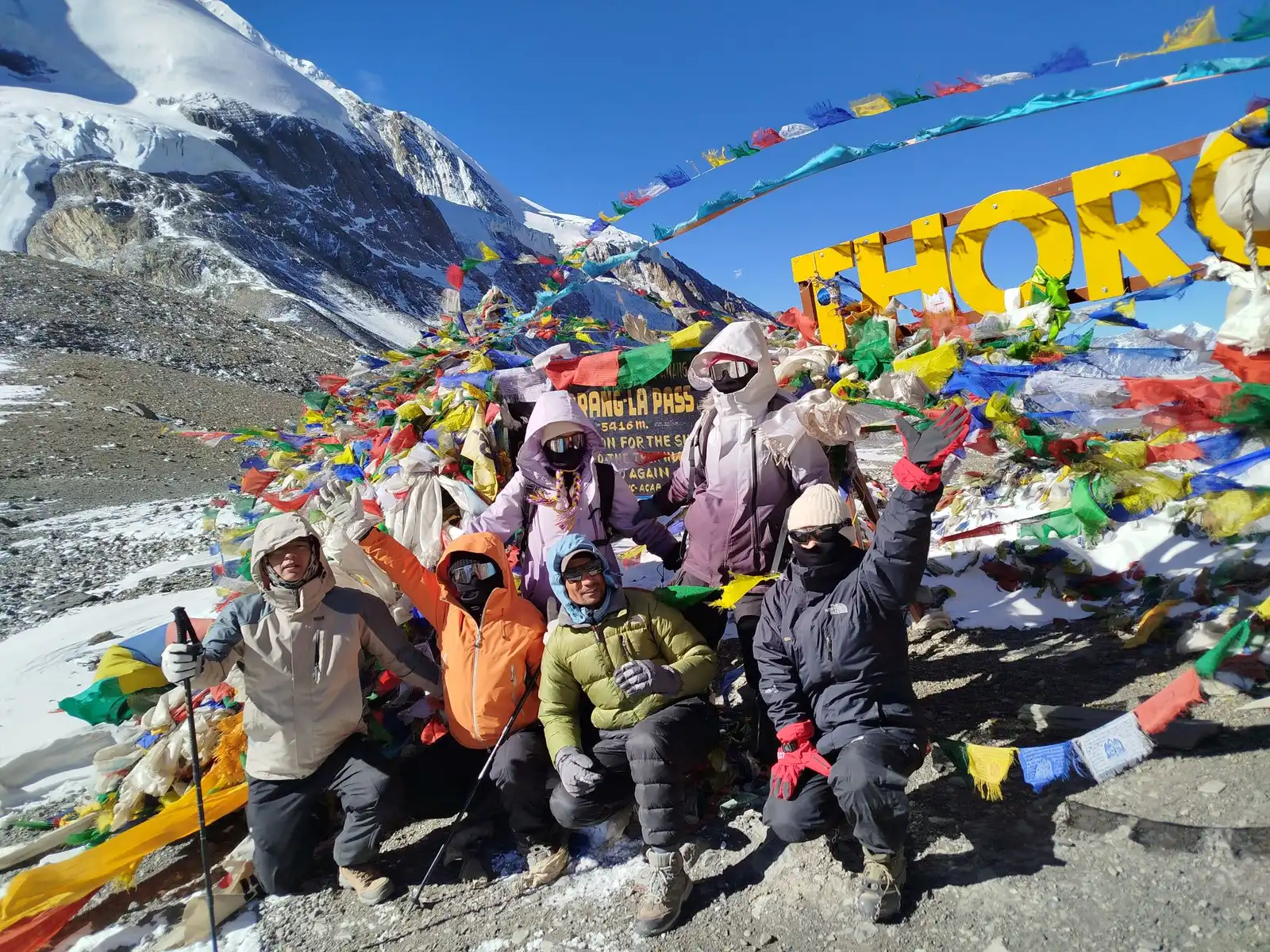
Highest Point of the Trek: The Thorong La Pass is the highest point of the Annapurna Circuit, sitting at an elevation of 5,416 meters (17,769 feet),
You will encounter Manange and Thakkali villages in the arid semi-desert region. Mananges have Tibetan ancestry and share more cultural similarities with Tibetans than with Hindu Nepalese. Bon practitioners can also be found in the isolated desert valleys. Buddhism was preceded by the animistic religion of Bon. Before Buddhism gained popularity, the majority of people in the Trans Himalayan region of Tibet and Nepal practiced Bon.
Diverse Landscapes,
Natural Hot Springs
Day-by-day itinerary
Day 1: Kathmandu, Nepal
Arrival in Kathmandu (1,324m/4,344 ft) Welcome to the Country of Himalayas ! As you arrive at Tribhuvan International Airport, Kathmanndu, One of the Representative from Himalayan Sanctuary Adventure will be waiting for you outside the terminal holding your name to escort you to your specified Hotel. Upon your arrival you will be warmly welcomed and transfer to your hotel in Kathmandu. After Check in you will be briefed to carry out the final preparation required for the trek. So that you can relax and prepare for the adventure ahead.
Day 2: Kathmandu, Nepal
Kathmandu Sightseeing and trek preparation(4 – 6hr) In the morning, you proceed Sightseeing in some places as given below: Boudhanath Stupa: The largest stupa and center of Tibetan Buddhism in the Kathmandu valley. One of the best places to relax and take a hint of Buddhist culture is in Kathmandu. Pashupatinath Temple: The Pashupatinath Temple is one of the most significant Hindu temples in Asia with over 500 small and big shrines, Lingams, and temples in the temple complex. Patan Durbar Square: Patan Durbar Square is an intriguing blend of palace structures, artistic courtyards, and elegant pagoda temples. Among its main attractions is the 17th-century Krishna Mandir (Temple). The Patan Museum contains bronze statues and other religious objects which has great significance. Durbar Square has both religious and cultural importance and the surroundings are artistically beautiful. Swayambhunath Stupa: Also known as the ‘Monkey Temple’, this is one of the oldest heritage sites in Nepal. From the top viewpoint, you will have an amazing view of the capital city “Kathmandu”. Included Meal: Breakfast
Day 3: Kathmandu, Nepal to Dharapani, Nepal
Drive from Kathmandu to Syange/Jagat (1100m) to Dharapani (1,860m / 6,102ft) 9 – 11 hours Wake up early in the morning; we will take a taxi from your hotel around 6 to get a local bus from the Gangabu local bus station to Besisahar. After Besisahar, we take a shared jeep to Dharapani, which takes us nearly 9 – 10 hours to get to Dharapani through Trishuli and Marshangdi River (a famous river for rafting) and village countryside. Some insight into the rural people’s lifestyle and their culture on this drive. Stay overnight at the lodge. Key Notes To get to Dharapani from Kathmandu, you can take a public bus to Besisahar and the next day drive to Dharapani; otherwise, if you take a private jeep from Kathmandu, you will get there on the same day. The distance from Kathmandu to Besisahar is 190 km. It takes around 6 to 7 hours to get from Kathmandu to Besisahar. See some waterfall on the way From Besisahar to Dharapani is 35 km. It takes around 3 to 4 hours to get from Besisahar to Dharapani. The time it takes from Besisahar to Dharapani depends on the road conditions from Besisahar, to Dharapani You can get Wi-Fi service at teahouses. The Wi-Fi service might be slow depend on number of device use in the hotel. There are no ATMs from Dharapani onwards. So travelers should bring local currency before they get to Dharapani. Driving Distance – 225 Km Included Meals: Breakfast, lunch, and dinner
Day 4: Dharapani, Nepal to Chame, Nepal
Dharapani to Chame (2,610m / 8,562ft) 5 – 7 hours Enjoy the trail, climbs along the mule track into a fir forest, and cross the river surrounded by higher oak and maple trees trrough Timang (2750m/9022ft) – Koto (2600m/8530ft) – Chame (2670m/8759ft). It’s a beautiful day’s walking with stunning scenery. Look out for the Alpine-like meadows and cows with huge bells in Timang. Pine forests are a constant feature and there are many glimpses of snow-covered peaks Chame is one of the bigger villages between the start of the trek and Manang and provides a good opportunity to stock up on snacks, medicines, gear etc. There is a hot spring in town – it’s a little less exciting than it sounds (it’s a small manmade pool) but is easy enough to check out if you have time. Admire the awesome views of major Himalayan peaks on the way and walking further you reach Chame. Stay overnight at Guesthouse. Trek Distance – 15.5km / 9.6miles Included Meals: Breakfast, lunch, and dinner
Day 5: Chame, Nepal to Pisang, Nepal
Chame to Pisang (3300m/10826ft) 5 – 6 hours Trek to Pisang through Bhratang(2850m/9350ft) – Dhukur Pokhari(3240m/10629ft) – Upper Pisang(3540m/11614ft). Passing through a steep and narrow river valley in dense woodland on our trail. The spectacular view of Pisang Peak and Annapurna II on our way is fantastic. Stay overnight at Teahouse/Lodge. Key Notes Bhratang is a nice place that you do not expect to find. You should try the apple juice that is squeezed fresh and any baked things that you can find. Today you can look at the scenery. It is very beautiful. The views are nice. You can enjoy them. Trek Distance – 14 km / 8.2miles Included Meals: Breakfast, lunch, and dinner
Day 6: Pisang, Nepal to Manang, Nepal
Pisang to Manang (3540m/11614ft) 6 – 8 hours We trek to Manang through – Ghyaru (3730m/12237ft) – Ngawal (3660m/12007ft) – Braga (3450m/11318ft) – Manang (3540m/11614ft). The panoramic views of Annapurna, Pisang Peak, and several other peaks are breathtaking upon reaching the top so The views from Ghyaru are some of the best on the trek. Do not rush, take your time and enjoy how beautiful it is. The view of the change in topography as we reach here and a memorable short visit the largest Barge monastery of that district. Stay overnight at Teahouse/Lodge Key Notes Most of the day you will be going up a steep path from the mani wall to Ghyaru. You have to be careful drink a lot of water and rest for a while after that. Ghyaru is a place to have a slow and relaxing brunch. I really liked sitting at the viewpoint and talking to people who were trekking and looking at the views. The views from here are some of the best you will see on the trek. This day can be very long 17 km. It might be the longest day for you. Some people like to stop and stay in Braga for the night. Manang has more things you might need like places to buy gear and snacks and some nice things like cafes, a cinema and places to do your laundry Trek Distance – 17km / 10.6miles Included Meals: Breakfast, lunch, and dinner
Day 7: Manang, Nepal
Manang (Rest day to acclimatize) Today is acclimatization day so it would be easier to proceed further to the higher altitude. Tour around monasteries with a side trip to Lake Gangapurna. Visit the Himalayan Rescue clinic and nearby local villages and interact with them. Learn about their culture and tradition and stay overnight at Teahouse/Lodge. Key Notes You can spend your day hanging out in Manang resting and preparing for the rest of the trek. If you feel that you need a day to recuperate, skip the hike and relax. Otherwise it is recommended some light walking to 100-200 metres higher above Gangapurna lake or Pragyen Gumpa Included Meals: Breakfast, lunch, and dinner
Day 8: Manang, Nepal to Yak Kharka, Tanki Manang, Nepal
Trek Manang to Yak Kharka (4195m/13762ft), (4 – 5 hrs) We ascend to the Tenki village and then climb out of the Marshyangdi valley up to the Jarsang Khola. Passing through pasturelands, Juniper trees, and Ghunsa village, witnessing yaks and horses grazing to reach the beautiful village of Yak Kharka. We cross a wooden bridge and pass through the ancient Mani wall and finally reach Yak Kharka. Stay overnight at Teahouse/Lodge Trek Distance – 8Km Included Meals: Breakfast, lunch, and dinner
Day 9: Yak Kharka, Tanki Manang, Nepal to Thorung Phedi, Tanki Manang, Nepal
Trek Yak Kharka to Phedi (4430m/14533ft), (4 to 5 hrs) We pass through the busy settlement of Thorong Phedi to the point where many trekkers used it as a base camp. We stop at Thorong Phedi as our next day trekking is tough and to get proper acclimatization we stay overnight at Teahouse/Lodge Trek Distance – 7Km Included Meals: Breakfast, lunch, and dinner
Day 10: Thorung Phedi, Tanki Manang, Nepal to Muktinath, Nepal
Trek Phedi to Thorong-La (Pass), (5416m) and Muktinath (3802m/12473ft), (8 – 10hrs) Walk through a steep ascent and rocky ridges to reach the top of the peak which is slightly icy from melting snow. The stunning views of snow-capped mountains from the top including the Annapurna Ranges. The beautiful Kali Gandaki gorge as we continue our trail and descend downhill to reach the holy Hindu pilgrimage Muktinath (3800m). Many Tibetan ethnics and Buddhist devotees reside here. Stay overnight Tehouse/Lodge Key Notes You should start early at around 4 am from Thorong Phedi or 5 am from High Camp. The Annapurna Circuit is really tough on this day but the hard part of the Annapurna Circuit is almost done.. You might need to give yourself a mental push to keep going. The scenery on the Annapurna Circuit throughout the day is pretty special. You should enjoy the trekking on the Annapurna Circuit because it is one of the rewarding days. Try not to get held up at High Camp on the Annapurna Circuit. The next section of the Annapurna Circuit creates loads of bottlenecks. You are only moving as fast as the person in front of you on the Annapurna Circuit. Muktinath is the name of the temple that draws all the pilgrims to Muktinath. You can visit the temple at Muktinath well as the Buddhist monastery at the other end of town, in Muktinath. Trek Distance –16km Included Meals: Breakfast, lunch, and dinner
Day 11: Muktinath, Nepal to Jomsom, Nepal
Drive from Muktinath to Jomsom (2600m/8530ft) 2 hours We complete our Annapurna Circuit Trek after visiting the sacred Muktinath temple and drive further to Jomsom. if you would like to walk more we would suggest you to go dhumba lake after refreshment at your hotel in Jomsom. Stay overnight at Teahouse/Lodge. Key Notes Today will drive to jomsom through kagbeni. Kagbeni is a place to visit for a few hours. There are some guesthouses and cafes where you can eat lunch. Jomsom is a town. You can find guesthouses, restaurants and shops there. There is a Java Café. It is also an art gallery and a live music place. If you want side walk around jomsom you can visit Dumba Lake which is around 1 hour walking distance Included Meals: Breakfast, lunch, and dinner
Day 12: Jomsom, Nepal to Pokhara, Nepal
Flight from Jomsom to Pokhara (25 min) An adventurous 25-minute morning flight to Pokhara from Jomsom. Rest and relax for a while in a hotel. Rest of the day tour nearby places or visit local markets if you wish to. Enjoy the nightlife in Pokhara. Stay overnight at a hotel. Included Meals: Breakfast
Day 13: Pokhara, Nepal to Kathmandu, Nepal
Drive Back to Kathmandu (7 – 9hr) After Breakfast in the morning we will transfer you to the Tourist Bus Station to catch the Tourist bus back to Kathmandu . Stay overnight in Kathmandu. Driving Distance – 200Km Included Meals: Breakfast
Day 14: Kathmandu, Nepal
Departure Day On the day of your departure, our driver will escort you to Tribhuvan International Airport for your onward journey. We wish you all the best for your travels and hope your next destination brings you more incredible adventures with Himalayan Sanctuary Adventure .
What's included
Pickups and drops from hotels and airport 3-star category hotels/accommodations in Kathmandu and Pokhara including Breakfast Local transportation to Besisahar and Sharing jeep to Dharapani Jomsom to Pokhara flight Pokhara to Kathmandu Tourist Bus Kathmandu Heritage Sites Sightseeing (4 – 6 hr) Teahouse/Lodge Accommodation including Breakfast, Lunch, and Dinner during the trek Farewell dinner at the end of the trek Himalayan Sanctuary Adventure Duffel Bag An experienced English-speaking trekking guide and porters to carry luggage (2 trekkers: 1 porter), including their salary, insurance, equipment, flight, food, and lodging All necessary paperwork and permits (ACAP, TIMS ) A comprehensive medical kit All government and local taxes
Nepalese visa fee International airfare to and from Kathmandu Excess baggage charges Private Transport (during the Trek) Entrance fees for Sightseeing and Tour Guide Lunch and dinner in Kathmandu and/or Pokhara Extra night accommodation in Kathmandu and Pokhara in case of early arrival, late departure, and early return from the mountain(due to any reason) than the scheduled itinerary Travel and rescue insurance Personal expenses (phone calls, laundry, bar bills, battery recharge, extra porters, bottle or boiled water, Tea, Coffee, Wi-Fi, hot shower, etc.) Tips for guides and porters
Languages spoken
What to know
Features of Annapurna Circuit Trek Popular trek Panorama Views: Magnificent vistas of the Himalayan peaks Annapurna I–IV, Dhaulagiri, Machapuchare (Fishtail), Manaslu, and others. Highest Pass(Thorangla): One of the world’s highest trekking passes, standing at 5,416 meters/17,769 ft. Challenging and Rewarding: Because of its difficulty and breathtaking 360-degree views, this journey is a favorite among most trekkers. Ethnic Diversity: Get to know communities with Tibetan, Thakali, Manangi, and Gurung influences. Temples and Monasteries: Visit places of worship such as Muktinath Temple, which is revered by both Buddhists and Hindus. Traditional Villages: Braga, Manang, Marpha, and Tukuche are examples of authentic Himalayan villages. The first and biggest conservation area in Nepal, the Annapurna Conservation Area is home to a wide variety of plants and animals. Accommodation during the Annapurna Circuit Trek Lodges or teahouses with basic facilities such as beds, blankets, and pillows are accommodation types during the Annapurna Circuit Trekking. The availability of attached bathrooms is there in the lower regions only. As you go higher, the bathrooms are outside the teahouses. The additional facilities like using Wi-Fi, charging electronic devices, laundry, hot shower, etc. Need to pay an extra. Meals during the Annapurna Circuit Trek The 3-course full-board meals are provided during the Annapurna Circuit Trek. Meal options are limited. Dal-Bhat is the primary option with some options like soup, eggs, noodles, hot tea, etc. available. Drinking Water during the Annapurna Circuit Trek No mineral Available in Higher elevation so tap water or boiled water are drinking water options during the Trek. Pay an extra cost for boiled water at teahouses or lodges . For safe drinking water, we suggest you to carry water purification kits and a water bottle for ease. Internet and Phone Networks during the Circuit Trek Internet and Phone networks during the Annapurna Circuit Treks are stable mostly in the lower regions. In the higher regions, networks are unstable. For the use of Wi-Fi is chargeable so you should pay an additional cost at teahouses. Best Season for the Annapurna Circuit Trek Spring (Mar-May) and Autumn (Sep-Nov) are the best seasons for the Annapurna Circuit Trek. The clear weather, stable temperatures, awesome panoramic vistas, and comfortable trekking trails make these seasons ideal for this trek. The rainy (Jun-Aug) and winter (Dec-Feb) seasons are not ideal due to unpredictable and unstable weather and temperature. The trekking trails are slippery, muddy, or snowy, and the availability of accommodations is limited. Annapurna Circuit Trek Difficulty The highest elevation during Annapurna Circuit Trekking is Thorang- la(5416 m/17764 ft) . Annapurna Circuit Trek is difficult considering its ascends and descends, high elevations, daily long hours of walking, rough trails, and limited availability of teahouses or lodges. Also, the chances of getting altitude sickness are common. Thus, acclimatization rest is essential. With proper preparation, Altitude Sickness and Preventions during the Annapurna Circuit Trek Altitude Sickness is common in the Annapurna Circuit Trekking. Altitude sickness doesn’t care how fit you are. It doesn’t care if you have done this before. It hits first timers and seasoned trekkers alike and in the the mountains, being unprepared can cost you the entire trip. You have put together the most complete guide to acute mountain sickness(AMS) so you exatly what to watch for, how to respond and how to prevent it before it starts. What is Altitude Sickness When you ascend up quickly your body doesn’t get enough to time to adjust to lower oxygenlevels. This is called Acute mountain Sickness(AMS) Brain and Lungs stugle with less oxygen Starts as low as 2500m above sea level Affects all trekkers regardless of fitneness level. Here’s what’s inside What is altitude sickness and how it happens What is the early symptoms most trekkers ignore The Three severity level AMS, HACE, HAPE Golden Rule: Climb High, Sleep Low Prevention Tips before you even hit the trail Guide what to do if hits you How wildfloc builds safety into every trek plan Stop, Rest, Do not Push on The Moment system appear just to respond Calmly and Correctly Rest and Hydrate Mild AMS often recover in 12 to 24 hours Descend 3 to 5 hundred meters if no improvement seen Before you Start Spend 1, 2 days at an intermediate altitude before going up Avoid Alcohol and Sleeping pills Eat light, Carbohydrate reach meals at high altitude Consult a doctor about Diamox before the Trek for High Altitude Drink 3, 4 liters of water daily Fitness does not protect you so Respect Altitude 3 Level you Must Know AMS: Headache, fatigue, Nausea, Rest and Hydrate do not ascend faster and Further HACE: Brain Swelling, Confusion, Loss of Coordination, Descend Immediately HAPE: Fluid in Lungs, Extreme Breathlessness, prink frothy cough, life threatening How to know AMS is starting Headache Lethargy A drop in performance Loose of motion Insomnia Appetite loss Dizziness Nausea Vomiting Preventive measures for Altitude Sickness are: Stretch and warm up before trekking. Stay hydrated with regular water intake. Ascend gradually and rest well. Avoid salt, alcohol, and smoking. Urinate frequently. Descend if feeling unwell. Consult guides for medicine How we keep you Safe We build every trek plan around acclimatization first. You can wait to summit but can’t wait safety. So gradual trek plans with Acclimatization days. Years of experiences with deep mountain knowledge Guide. Emergency Oxygen and Evacuation Protocal on every Trek. Fitness Level during the ACT Trek Annapurna Circuit Trek is demanding due to its challenging terrain, daily long hours of walking, high elevations, several ups and downs, and rugged trails. Thus, a strong fitness level is a key factor for this trek. Therefore, we recommend trekkers participate in physical exercises and short hikes for a few months, and necessary physical check-ups before commencing this trek. Travel Insurance during the Annapurna Circuit Trek Travel Insurance is a safety tool for trekking in the mountains. It should cover all emergencies including medical costs, loss of goods, flight delays, evacuation, and high elevations above 5000 m. For a worry-free and smooth Annapurna Circuit Trek, getting travel insurance is beneficial. Guides and Porters during the Annapurna Circuit Trek Guide and Porters are optional but for a comfortable trekking experience hiring a Guide and porter is the ideal decision. Our guides and porters are professional and have lots of experience in the mountains. Our team ensures trekkers’ safety as it is the top priority. Annapurna Circuit Trek Permits The required permits for Annapurna Circuit Treks are as follows: Annapurna Conservation Area Permit (ACAP) USD 30/person (Foreigners) NPR 1000/person (SAARC) This equipment list is only a guideline, however, you can choose from your preferred brands using your expertise. You can also Buy or rent some of the item at a reasonable price at stores in Thamel, Kathmandu. The personal items are of individual interest and choice. The most important fact that one should keep in mind is that one should have enough clothes to tackle the cold weather in the Himalayas. Upper Body – Head / Ears / Eyes Sun hat Wool or synthetic hat that covers the ears Sunglasses with UV protection Headlamp Neck warmer Hand Liner gloves Heavier shell gloves Core Body T-shirts Lightweight expedition thermal tops Fleece jacket or pullover Water/windproof shell jacket (Preferably breathable fabric) Synthetic sports bras (for women) Lower Body – Legs Lightweight expedition thermal bottoms Nylon hiking shorts Soft shell and hard shell trekking pants Water/windproof trousers Casual pants Feet Liner socks Heavyweight socks Waterproof hiking/trekking boots Light shoes/sneakers Gaiters (For monsoon and winter) Other Essential Passport and extra passport photos (2 copies) Airline tickets Durable wallet/pouch for travel documents, money & passport Water bottle/bladder Water purification Iodine tablets Toiletries (Include toilet paper, wet wipes, and liquid hand sanitizer, towel, soap) Medicines and First Aid Kit Extra Strength Excedrin for altitude-related headaches Ibuprofen for general aches and pains Immodium or Pepto bismol capsules for upset stomach or diarrhea Diamox (commonly prescribed as Acetazolamide) 125 or 250mg tablets for altitude sickness Anti-infection ointments Band-aids Lip balm (At least SPF 20) Sunscreen (SPF 40) Optional Adjustable trekking poles Favorite snacks Cameras (Memory cards, chargers and, batteries) Fitness Level: This Trip Requires you to be in Good Health with Physically Fitness. Skills: Your familiarity with the mountainous terrain and previous trekking experience will be plus points.
Route & locations
Kathmandu, Nepal