Everest Base Camp And Kathmandu - Journey Package
About this tour
Embark on an 18-day adventure that captures the essence of the Himalayas, beginning in the vibrant city of Kathmandu and culminating at Everest Base Camp. Your journey starts in Kathmandu, a city rich in culture and history, before flying to Lukla to begin the trek toward Mount Everest.
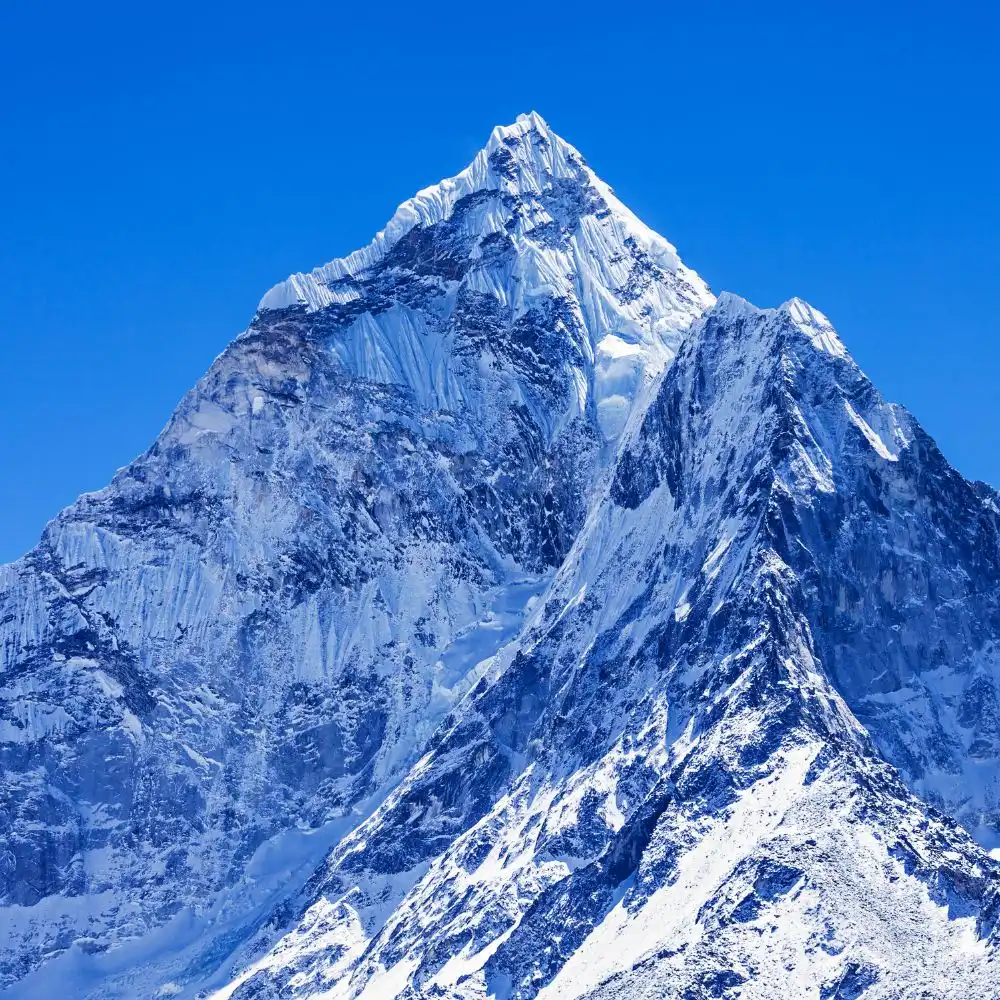
Kathmandu offers a fascinating glimpse into Nepal's heritage, with its ancient temples and lively markets. The trek spans 14 days, immersing you in stunning landscapes and cultural richness. You’ll reach Everest Base Camp (5,364m) at the foot of the world’s tallest peak, Mount Everest (8,848.86m), while encountering Buddhist monasteries, traditional Sherpa villages, and diverse flora and fauna.
The itinerary includes a three-day margin for potential flight delays, ensuring flexibility and allowing you to fully appreciate the trek at your own pace. Expert guidance is provided for purchasing international flights, ensuring a seamless travel experience. Focused on the classic Nepal side, this trek is an iconic milestone in mountaineering.
Day-by-day itinerary
Day 1: Tribhuvan International Airport, काठमाडौँ, Nepal to Thamel, Kathmandu, Nepal
Arrive in Kathmandu Upon arrival at Kathmandu airport, our team will warmly welcome you and transfer you to your hotel for relaxation and settling in. Later, we’ll explore the lively Thamel district, an ideal spot for shopping and immersing in the local culture. In the evening, we’ll gather for a welcome dinner. This dinner, held the night before our trekking expedition begins, is a special occasion for us to connect and get acquainted before embarking on our exciting adventure. It also provides an opportunity for you to address any questions or concerns with your guide before starting the journey. This first day in Kathmandu marks the beginning of our gradual acclimatization process.
Day 2: Tenzing-Hillary Airport, Chaunrikharka, Nepal to Phakding, Nepal
Flight from Kathmandu (1,400m) to Lukla (2,850m). Trek to Phakding (2,650m) Flight: 40min Trek: 3h 30min, 200m descent, 50m ascent, 6.2km distance After the scenic flight, we will land at the Tenzing Hillary Airport at Lukla, extreme and highest in world. It’s an easy and gentle first day from Lukla to Phakding. The trail starts at the north end of Lukla, passing a kani(ceremonial gatehouse) and a police checkpost. We’ll probably spot our first yaks, we have to step to the side of the trail to let them pass. Leaving Lukla the trail drops steeply then runs level above the village of Kyangma, which has a large Gompa and a school founded by Sir Edmund Hillary. Nearby is the Sherpa village of Chaurikharka. Later we’ll enter the village of Cheplung (2,700m). As we continue north we’ll catch our first views of the Dudh Kosi River roaring along the bottom of the valley. From now and throughout the whole trek we’ll cross some swaying metal suspension bridges, if any yak or pony trains are already on the bridge, let them pass. It’s a short climb around the ridge to Ghat (2,590m). Leaving Ghat, the trail enters a sacred Buddhist site. The trail winds through the forest beside the Dudh Kosi. We are going to follow the path up into the village of Phakding, a collection of lodges, straddling the Dudh Kosi (2,610m).
Day 3: Phakding, Nepal to Namche Bazar, Namche, Nepal
Phakding (2,650m) to Namche Bazaar (3,440m) 5h 30min, 1000m ascent, 100m descent, 7.4km distance From Phakding the trail follows the Dudh Kosi Valley north, we’ll pass a bluff overlooking the river. Continuing up the valley there is a pretty, multilevel waterfall where locals wash their laundry. We’ll soon get our first glimpse of Thamserku (6,608m), the peak that rises to the east of Namche Bazaar. What a walk it is! Before long, we’ll reach Chumoa (2,820m). Along this stage of the trek, villages are interspersed with magnificent forests of Nepal’s much-loved national flower rhododendron, and also magnolia and fir. From Chumoa, it’s another steep climb to the outskirts of Monjo (2,840m). The teahouses along the trek are set around kitchen gardens that provides plenty of fresh organic vegetables for the cookpot. Just above Monjo is the entrance checkpoint for the Sagarmatha National Park, where our permits will be checked. Then we’ll climb up through the dense forests from where we will catch the first sight of Mt. Everest. Along the whole trail there are water-pipes where we can fill our drinking bottle. The climb to Namche Bazaar will take us to an elevation where we may feel the first symptoms of altitude, we should climb slowly. Namche Bazaar is the gateway to Everest.
Day 4: Namche Bazar, Namche, Nepal
Acclimatization in Namche (3,440m) Trekkers must respect ‘acclimatization day’ in Namche to avoid symptoms of AMS further up the trail. This doesn’t mean we have to stop walking, Namche Bazaar hosts numerous wifi-linked cafes and restaurants, souvenirs, and gear shops, and there are short walks through the hills around. If you are passionate about Everest, you should not miss hiking up to Everest View Hotel, from where you can catch the breathtaking views of Mt. Everest.
Day 5: Namche Bazar, Namche, Nepal to Tyangboche, Khumjung, Nepal
Namche Bazaar (3,440m) to Tengboche (3,855m) 5h, 350m descent, 750m ascent, 9.2km distance We will trek from Namche to Tengboche,on a trail that runs gently downhill towards the river. As we descend, the thumb-like peak of Ama Dablam soars into view above the trail. The Tengboche trail drops on steep stone steps to Phunki Thenga (3,250m). From here it’s a draining climb to Tengboche. The trail climbs past some water-powered prayer wheels and begins a sustained climb through a forest of tall, mature rhododendrons. On the way, there are several chautaara (porter rest stops) where we can set down our pack and enjoy the views towards Kantega. The name means ‘horse saddle’, and from here it’s clear how the mountain got its name. Eventually we’ll reach a kani and a pair of chortens marking the start of Tengboche. The village is scattered across a wide, grassy saddle below a crescent-shaped ridge covered by scrub pines and dwarf rhododendrons. This day also provides us the chance to see the biggest Buddhist monastery in the Khumbu Region, the Tengboche Monastery. From the viewpoint at the top of the hill there are awe-inspiring views over the Himalaya. Looking north over the saddle, we’ll see the distinctive peak of Ama Dablam (6,856m) standing proud of the massif containing Everest (8,848.86m), Nuptse (7,861m) and Lhotse (8,501m). Down the Pangboche trail we can find Debuche.
Day 6: Tyangboche, Khumjung, Nepal to Dingboche, Nepal
Tengboche (3,855m) to Dingboche (4,360m) 4h 30min, 70m descent, 580m ascent, 12km distance Dingboche will be part of the acclimatization. The trek to Dingboche also forms part of the approach route for the ascent of Island Peak (6,189m). Coming from Tengboche, we’ll follow the Pheriche trail as far as Orsho, and we’ll take the lower path along the west bank the Imja Khola. The trail will drop to a small bridge over the Khumbu Khola (4,130m) and then we’ll climb beside the river. On the way, we will be passing many Chortens, mani walls, and several small villages, including Pangboche, from where you can enjoy the stunning views of Mt. Ama Dablam. Dingboche is a pleasant place to stay, the sun stays here long each evening and the wind blows gently over the potato fields. This is the highest Sherpa settlement in the Khumbu Region.
Day 7: Dingboche, Nepal
Acclimatization day in Dingboche (4,360m) It is very important to spend an additional night at Dingboche to aid the acclimatization process. This is the second of the mandatory acclimatization days on this trek. Trekkers are happy to spend the day exploring Dingboche, there are several interesting day hikes in this area. One enjoyable short walk is the climb to Nangkartshang Gompa, the base of Nangkartshang Peak on the ridge north of Dingboche. From this vantage point there are good views way off to the east to Makalu (8,463m), the fifth-highest mountain in the world. We can also get spectacular views of mountains Ama Dablam, Island Peak, and Cho Oyu.
Day 8: Dingboche, Nepal to Lobuche, Khumjung, Nepal
Dingboche (4,360m) to Lobuche (4,930m) 4h 30min, 700m ascent, 8.5km distance On the trail, there are outstanding views of the twin peaks of Taboche and Cholatse above a desolate, rounded landscape sculpted by vanished glaciers. Ama Dablam appears as a perfect pyramid. The Dingboche trail drop down to a glacial stream, rising up the other side to Dughla (4,620m), set in a small depression. Half of the village was washed away in the 2007 floods. From Dughla, the trail goes directly up the gravelly terminal moraine of the Khumbu Glacier. The surrounding terrain is parched and desolate, with fingers of ice and snow dropping down sheer mountain walls on all sides. The path bears left at the top of the ridge, which is covered with memorials to lost climbers and sherpas. As we cross the ridge, the perfect peak of Pumori (7,165m) soars into view. The air is heavy with the scent of ground-hugging rhododendron bushes. To the west, across a shallow gravel gully, you can trace the route of the trail to the Cho La pass. After meeting the junction with this trail, make a labored ascent to the north over loose moraine to Lobuche, originally a summer village for herders. The bitter cold keeps most people inside around the dung-fuelled heater. We can see the Khumbu Glacier, with Everest mostly obscured by Lhotse and Nuptse (7,861m).
Day 9: Lobuche, Khumjung, Nepal to Everest Base Camp, Khumjung, Nepal
Lobuche (4,930m) to Everest Base Camp (5,364m) and back to Gorak Shep (5,185m) 7h, 450m ascent, 200m descent, 15km distance The altitude will really become apparent. The trail goes past the turn-off to the Italian Pyramid. The Khumbu Glacier, highest in the world, gurgles and moans under a blanket of ground-up rocks and gravel. This enormous tongue of ice marches down the slopes of Everest at a rate of up to a meter per day, breaking off into brittle towers of ice at the Khumbu Icefall. As a result of global warming, the glacier is shrinking away from the moraine wall at an alarming rate. The route of the path changes regularly as the edge of the moraine tumbles onto the glacier. We’ll get our first views of Kala Pattar (5,545m). The walk to Base Camp is a draining scramble over and ever-changing path across the Khumbu Glacier. We’ll look out for mouse-hares scurrying between the boulders on the path. The atmosphere at Base Camp is fascinating. Gorak Shep is a flat sandy bowl at the foot of Kala Pattar. This was the base camp for the 1952 Swiss Everest expedition. The sandy patch bellow is actually the bed of a vanished lake. There are grand views over the Khumbu Glacier from the top of the moraine. Dotted around the ridge above Gorak Shep are a number of memorials to expedition members lost during various ascents of Everest. Since 1921 climbers sherpas and porters have perished on this peak.
Day 10: Kala Patthar, Khumjung, Nepal to Pheriche, खुम्जुंग, Nepal
Hike to Kala Patthar (5,545m), trek to Gorak Shep (5,185m) then to Pheriche (4,250m) 5h, 200m ascent, 1,090m descent, 9.6km distance The summit of this dark mound of mountain rubble provides perhaps the best view of Mt. Everest in the Himalaya. Mornings are usually sparkling clear, and this is the best time to climb to Kala Pattar for one of the world’s definitive mountain views. This can be the highlight of our trek. We will start this trek as soon as it gets light. The path to Kala Pattar climbs up the grassy ridge above Gorak Shep. As we climb, the peak of Pumori looms dramatically ahead. Having gained the summit we’ll sit back and be amazed. We have placed ourselves in front of one of the most astonishing views on earth, a 360-degree panorama of Himalayan giants from Pumori and Lobuche West (6,145m) to Nuptse, Lhotse and Everest. Even Gorak Shep seems impossibly distant, a tiny speck next to the frozen river of the Khumbu Glacier. From this elevation, the true height of Everest becomes clear. The entire south face is clearly visible, as well as Lho La, the pass between Nepal and Tibet, and most of the West Ridge route. On our way back down to Gorak Shep, after a morning climb as we skip down the mountainside, we’ll be losing all the altitude we have gained. We’ll retrace our steps along the moraine of the Khumbu Glacier. For Pheriche, the path drops along the wide valley of the Khumbu Khola.
Day 11: Kala Patthar, Khumjung, Nepal to Tyangboche, Khumjung, Nepal
Pheriche (4,250m) to Tengboche (3,855m) 4h, 550m descent, 70m ascent, 8.5km distance To go to Tengboche, we’ll drop down the valley to Orsho, then we’ll follow the west bank of the Imja Khola to Shomare and on to Pangboche. From there, we’ll retrace our footsteps down and up through the juniper forest to Tengboche.
Day 12: Tyangboche, Khumjung, Nepal to Namche Bazar, Namche, Nepal
Tengboche (3,855m) to Namche Bazaar (3,440m) 4h 30 min, 750m descent, 350m ascent, 9.2km distance From Tengboche, we’ll retrace our steps down to Phunki Thing, then we’ll climb the ridge towards Namche Bazaar. The trail takes us through forests full of high-altitude wildlife like pheasants, musk deer and mountain goats. Along our path, we’ll also see numerous prayer flags, chortens, the backside of Lhotse, and Mt. Everest. We’ll celebrate the return to Namche with a good meal.
Day 13: Namche Bazar, Namche, Nepal to Phakding, Nepal
Namche Bazaar (3,440m) to Phakding (2,650m) 4h, 1000m descent, 100m ascent, 7.4km distance The descent from Namche to the Dudh Kosi can be one of the hardest stage of the entire trek. Although the path is all downhill, the unrelenting slope places massive impact on the knees. Using trekking poles will help, as will wearing a knee support bandage. Once we cross the high suspension bridge, the paths runs mostly level to Jorsale and the climbs to Monjo, where we will stop in the checkpost. It’s an easy run through Benkar to Phakding.
Day 14: Phakding, Nepal to Tenzing-Hillary Airport, Chaunrikharka, Nepal
Phakding (2,650m) to Lukla (2,850m) 3h 30min, 50m descent, 200m ascent, 6.2km distance It’s an easy journey with a final ascent until we reach in Lukla. Once in Lukla we will reconfirm our flight reservation. There is usually a bit of a party atmosphere among trekkers who are finishing their trek here and several bars in Lukla offer happy-hour deals, pool tables and late-night drinking.
Day 15: Tenzing-Hillary Airport, Chaunrikharka, Nepal to Kathmandu, Nepal
Fly back to Kathmandu (1400m) from Lukla (2,850m) Flight: 40min This is the last of our trek. This morning, after having breakfast, we’ll say goodbye to Mt Everest and the Khumbu Region as we board our flight back to Kathmandu Airport. Depending on weather conditions we will be back in Kathmandu for brunch or in the early afternoon. We’ll gather for dinner where we’ll have the chance to reflect on and discuss our experience. It’ll be a wonderful opportunity to share our thoughts and memories, reminiscing about our journey and the experiences we’ve had together. Additionally, it will provide us with the chance to express our gratitude to our guides and porters for their invaluable support throughout this remarkable adventure.
Day 16: Kathmandu Durbar Square, Kathmandu, Nepal to Pashupatinath Temple, Kathmandu, Nepal
Sightseeing in Kathmandu - Temples Begin our day with breakfast at the hotel and then we’ll wander through local neighborhoods and explore Kathmandu Durbar Square, home of the sacred Kumari girl, a site rich in history and culture featuring remarkable palaces, ancient temples, and statues, recognized as a UNESCO World Heritage Site. Following our morning exploration, indulge in lunch at a local restaurant. Afterwards, let’s make our way to Pashupatinath Temple, a revered Hindu destination. During the afternoon, we’ll visit Boudhanath, one of the largest Buddhist stupas, where we can admire the stupa’s beauty and immerse ourselves in its spiritual ambiance. To conclude our day, we’ll dine at one of the nearby restaurants, enjoying a delightful dinner while taking in the awe-inspiring views of the remarkable Boudhanath stupa.
Day 17: Swayambhunath, Kathmandu, Nepal to Kirtipur, Nepal
Sightseeing in Kathmandu - Villages Let’s kick start the day with a delightful breakfast at our hotel to gear up before heading to the Monkey Temple (Swayambhunath), a Buddhist site with panoramic views. After this visit, we’ll travel to Kirtipur, an ancient town brimming with history, where we can explore its alleys and monuments. Here, we’ll indulge in a traditional Newari lunch, immersing ourselves in the local culinary delights and customs. Later, we’ll visit Patan Durbar Square, a UNESCO World Heritage Site, to delve into its Newari architecture and culture. We’ll return to Kathmandu in the afternoon to unwind and share our day’s experiences over dinner at a local restaurant. This itinerary will lead us to explore a fascinating blend of history, culture, culinary traditions, and Newari architecture in Kathmandu and its outskirts. Let’s revel in the day exploring these remarkable sites together!
Day 18: Thamel, Kathmandu, Nepal to Tribhuvan International Airport, काठमाडौँ, Nepal
Last day in Kathmandu On our final day, we’ll start with breakfast at the hotel before spending time doing some last-minute shopping in Thamel, seizing the chance to pick up final souvenirs and soak in the unique atmosphere of this bustling neighborhood. It’ll be a perfect opportunity to once again appreciate the local culture and bid farewell to this charming place before our departure.
What's included
- Pre-trip online personal advice - Round trip flight from Kathmandu to Lukla - All permits - Bedroom in teahouse lodges during trek - Three meals per day during 14 days of trek - Government registered, well experienced, English speaker and friendly local trekking guide - Staff fees with all their expenses and necessary insurance - Welcome dinner - Sightseeing in Kathmandu including tickets and transportation - Accommodation in Kathmandu - Breakfast in Kathmandu - Firante's gift
- Nepal visa fee - International flight - Health insurance with heli-rescue up to 6,000m (compulsory) - Personal expenses due to flight delay - Any expenses which arise due to a change of the itinerary, because of landslides, political trouble, and strikes etc. - Personal expenses (phone charging, WiFi, hot shower, laundry...) during trek - Drinks and bar menu during trek - Lunch and dinner on the last day of trek - Lunch and dinner in Kathmandu - Gratuity (optinal)
What to know
This tour can be customized. Please get in touch with me.
Route & locations
Tribhuvan International Airport, काठमाडौँ, Nepal to Thamel, Kathmandu, Nepal