Nomads Gobi Desert Altai Mountain Lakes
About this tour
Mongolia is home to one of the world’s last surviving nomadic cultures, and these nomads still live in traditional ways. Up to 40 percent of Mongolians live as nomadic herders. They mostly live tens of miles away from the nearby communities, villages and towns and live in harsh conditions taking care of their livestock with limited electricity power.
Travelers are given the opportunity to spend time with Mongolian nomads, take a rest in Mongolian gers and learn first-hand about the traditional Mongol daily life.
“
Mongolia is said to be derived from the word Mongol, which is said to be from the word mong, meaning “brave.”
The simple secret of Nomads
Mongolians have a simple nomadic lifestyle enriched by the philosophy of living in harmony with the natural environment. Each and every symbolic act of nomads – be it a greeting, paying respect, telling a legend or singing an epic, – inevitably has deep symbolism and meaning.
Observing the life of Nomads, one rich with symbolism
surrounding their origin
Melodies of nomads
Nomads have a musical mindset and their melodies are an intrinsic part of their lifestyle. Nomads have developed various ways of calling, whistling, whooping, and practicing rituals such as “chuugii,” “khuus” and “toig” to communicate with their herds.
Mongolians as well as their understanding of the world. As they mimic their surroundings, you can hear the mountains, wind and water, the sounds of birds and other animals, the unity of man and nature, and the echoes of inner souls.
Our tours focus on interactive communications, experiences sharing with Mongolian people, especially nomadic herder communities since one of the primary purposes of our guests are to understand local way of life, culture and beliefs and exchange knowledge in non-touristic way.
Mongolia
Day-by-day itinerary
Day 1: Ulaanbaatar, Mongolia
Arrive to Ulaanbaatar.Meet you at the airport.Drive to Chingizz Khan Statue.Stay in Ger camp around statue.
Day 2: Ulaanbaatar, Mongolia to Tsagaan Suvarga (White Stupa), Mongolia
Today is our direction Tsagaan Suvarga National Park (White Stupa).Driving day .600km.It has a nice pave road.Enjoy the landscape. Tsagaan Suvarga is found within Ulziit Soum, Dundgobi Aimag in the far south of the Mongolian desert region. This white limestone rock formation stands at around thirty metres in height and has been shaped strangely as a result of thousands of years of wind and water erosion.Formation of the Tsagaan Suvarga It has been said that from a far when approaching the White Stupa cliffs they take on the appearance of an ancient city. The Locals have long respected and feared this area in equal measure even to the point of never referring to it by its original name. For many its simply known as 'Tsagaan Khairkhan', the 'White Darling. One of the origins of this fear is that many years ago an earthquake shook the region, in turn, causing the eastern part of the White Stupa to collapse. It is said that the collapse was so immense that it created a cloud of white dust which blocked the horizon for days. Far from being a deserted city, the creation of the cliffs began some millions of years ago, Dundgovi Province was the bottom of an ancient sea. Perfect evidence for this lies with a closer inspection of the cliffs. Tsagaan Suvarga contains many sedimentary limestone layers and is rich in marine fossils. Nice hiking day to the top of Tsagaan Suvarga.Enjoy the view of sunset.Camping day.
Day 3: Tsagaan Suvarga (White Stupa), Mongolia to Hongorïn Els, Mongolia
Today our direction is to Khongor sand dunes.Drive 300km.Dusting road. Khongor dunes, ”Khongoriin Els”, are the most important sand mass of Gobi Gurvan Saïkhan National Park. Its area is more than 900 square kilometres (347,49 square miles). It’s one of the largest sandy areas of Mongolia. Suddenly standing out from the plains, they are undoubtedly among the most spectacular of the country. The wind continuously blows from North towards West and the dunes can reach breathtaking heights, between 100 and 300 metres (328,08 – 984,25 feet) at their highest points. Khongor dunes are more than 180 km long and can reach 27 kilometres (16,28 miles) wide. The inhabitants name their imposing dunes ”singing dunes” due to the noise made by the wind when it moves the sand. Beyond the dunes, the steppe extends as far as the eye can see. Khongor dunes have a particular appeal because they have an impressing combination of colours (the dunes are pale yellow). At the north, they are lined with a green and luxuriant vegetation band, delimited by a river: Khongoriin Gol. Supplied by subterranean sources, this little river flows along the dunes on a few kilometres, and forms an oasis in the middle of the dried landscape.Staying in a ger camp. This area is also very rich in dinosaurs’ fossils and in mineral deposits.
Day 4: Hongorïn Els, Mongolia
Today is more exciting day.Camel riding on a Khongriin Els sand dunez.Nice hiking day on a sand dunez.Stay in a traditional ger. S
Day 5: Hongorïn Els, Mongolia to Kharkhorin, Mongolia
.Today our direction drive to Kharkhorin.Driving day long driving day .400km..Kharkhorin, Mongolia Back in the 13th Century, Kharkhorin was constructed as a capital city which attracted traders, dignitaries and skilled workers from across Asia and even Europe.Erdene Zuu Khiid was built in 16th Century using materials from the destroyed city, but was later badly damaged during the Stalinist purges of 1937, when the monks were either killed or deported to Siberia. This put the monastery completely out of business until 1965 when it was allowed to reopen as a museum, and then once again as a place of worship after the collapse of communism in 1990. At its peak, the monastery had 60-100 temples and 300 gers inside the walls plus 1,000 monks in residence. The success of this city lasted around 40 years – until it was moved to Khanbalik, which was later known as Beijing. This move coincided with the collapse of the Mongol Empire leading to the abandonment of Kharkhorin and destruction by Manchurian soldiers in 1388.With a population of less than 10,000, Kharkhorin is not the bustling, imperial city it once was in the Middle Ages, however given its immense history and presence in Mongolia, it is definitely worth adding to the list of places to see. The site of ancient Kharkhorin stretches about 1km south and east but with the foundations all underground, you will need a bit of imagination to picture the sheer scale of it all. As well as Erdene Zuu Khiid, Kharkhorin is also home to Stone Turtles, Phallic Rock, the Great Imperial Map Monument and the town's new museum which is probably the best one outside of Ulaanbaatar.The new museum is small but very impressive! It’s very well laid out in an air conditioned room with individual display cabinets and even has labels in English. There are local artefacts from the 13th & 14th centuries including pottery, coins, stone inscriptions and bronzes.There are two Stone Turtles remaining from the four which originally marked the boundaries of the ancient city. Turtles are considered symbols of eternity and so were placed as protectors to Kharkhorin (formerly Karakorum) with inscribed stone steles on their backs. The ‘phallic rock’ is a 60cm long stone penis pointing towards a small valley curiously named ‘vaginal slope’. It was built 2km from Erdene Zuu Khiid, supposedly to deter frisky monks from fraternising with the local women. Overlooking Kharkhorin is the Great Imperial Map Monument which was built in 2004. There are impressive views from high up and you can also see how the three sides of the monument honour the various empires along the Orkhon Gol, including the Hunnu Period (300-200 BC), the Turkic Period (AD 600-800) and the Mongol Period (13th Century).Camping day around river Chuulut.
Day 6: Kharkhorin, Mongolia to Khorgo, Mongolia
, Khorgo-Terkhiin Tsagaan Lake National Park is located in Tariat soum of Arkhangai province. Khorgo is an extinct volcano that lies on the east shore of Terkhiin The volcano erupted 8000 years ago and changed its surroundings once and for all. Today the area is covered by basalt rocks, siberian pine and larch forest. The Khorgo Crater can be found at the northern side of the Khorgo volcano. With 200m radius and 80m depth, the Khorgo Crater provides a rare view of an extinct volcano. The area is perfect for hiking. As for Terkhiin Tsagaan Lake, it was created when the Khorgo volcano erupted and the lake covers 61 square km. This freshwater lake has over 20 species of fish including pike, lenok, perch, common carp and sturgeon. There is a small island in the middle of the lake and migrating birds nest over there specially brant geese. The lake is great for fishing and bird watching. Khorgo-Terkhiin Tsagaan Lake National Park was established in 1965 to protect only the Khorgo volcano, but in 1995, the Terkhiin Tsagaan Lake was included in the protected area. In this remote location, you will have a chance to unwind and enjoy the attractive wildlife.
Day 7: Khorgo, Mongolia to Khyargas Lake, Mongolia
Today our direction is drive to Khyargas Lake.Driving day 300km.Dusting road.Khyargus lake It is located in the district of Khyargas, province of Uvs, at an altitude of approximately 1025m above see level. From its size of 75km long by 31km large, it is considered the second main lake on the west part of Mongolia, being one of the 4 lakes in Mongolia that have a surface area of over 1000 km². The average depth is 50m. It is a salt lake, in contrast with the fresh water found in the Khusvgul lake, the biggest of the country. One thing to note is this major salty lake is coming partly from another one small named Airag lake, which is a freshwater one. It is part of an ecosystem that has been preserved by the authorities, and considered as a National Natural Park. A preservation program was launched in 2000, covering an area of about 3,328 km². Classified as The Great Lakes Basin by the World Wildlife Fund (WWF), it has become a priority and unique terrestrial ecoregion. Besides its beauty, one other feature of this lake is providing a lot of activities around. You can for example do some fishing, where you will find some unique varieties of fish like the herrings of Altai and Nokhoi, or the pikes. Observation of birds is also possible around the lake, as lots of migratory and nomadic birds are gathering. Of course a true Mongolian experience implies visiting nomadic families, horse and camel riding, and play different games like the ankle bone.Camping around lake.
Day 8: Khyargas Lake, Mongolia to Khovd, Mongolia
Today is our direction to Hovd small city.Drive 150km.In Hovd small city you will visit the most famous throat singer.Share unique culture of Mongolia.Stay in a hotel.
Day 9: Khovd, Mongolia to Road Sagsai, Ulgii, Mongolia
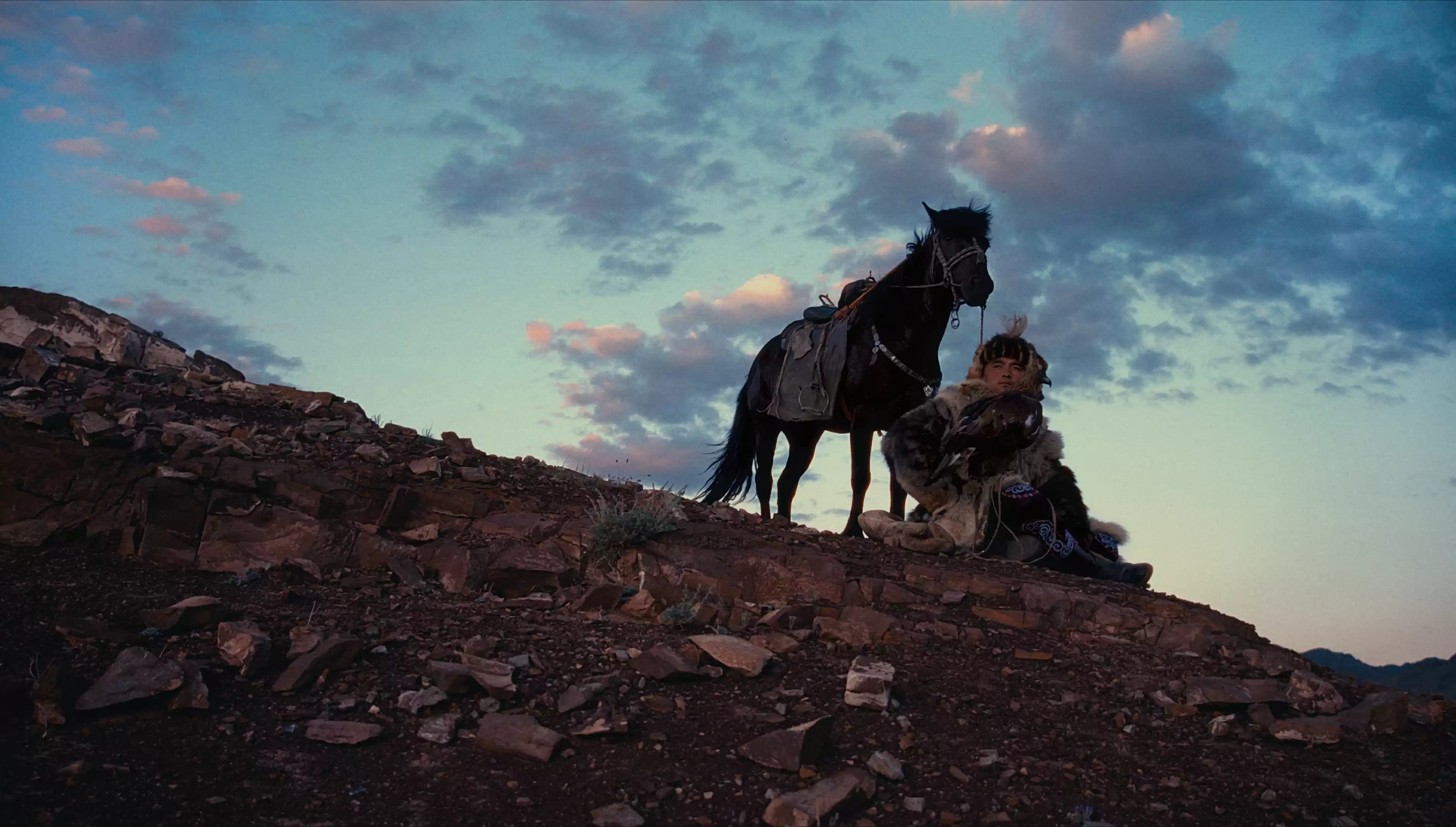
Today our direction is to Bayan Olgii city.Bayan Olgii center is the homeland of amazing Mongolia Eagle Hunters, Eagle Hunting and Golden Eagles.Driving day for 200km.Enjoy the view of amazing landscape.It has a nice pave road. During the driving day you can see Tsambagarv Peak 4000m. You can see the most beautiful lake Tolba. Today we drive to Sagsai village.Visiting the most amazing eagle huntress Aymoldr and eagle hunter Jenisbek.Stay with Eagle hunter's family. To meet the eagle hunters and for the eagle experiences, travel to Bayan-Ulgii province, the remote western corner of vast open Mongolia where the Kazakhs reside. Not all Kazakhs of Mongolia are eagle hunters. There are approximately 400 registered Eagle hunters due to the Mongolian Eagle Hunters’ Association. The average age of the eagle hunters is 30 to 70 years while the oldest of them is 88 years. It is not unusual to see small boys handling their fathers’ eagles at the age of 6 and 7. Mongolian Eagle Huntress Eagle hunting is not the work of a man. There are 11 eagle huntresses. One of them is a 13-year-old teenage huntress Ashlopan who competed against the adult hunters in the 2014 Eagle Festival and won prizes. Mongolia Eagle Hunting Season In general, summer is the best time for Mongolian travel. However, the weather is cooler, it is better for the eagle experiences. Mongolian eagle hunting season is between the end of October and the beginning of February. The hunting is done on horseback. The eagle hunters travel through the mountain one day to several days in search of the games. They hood the eagles with a special hood and keep the eagles on their arm readily to remove the hood and release when they see the hunting game. On the contrary, the eagles are carried without hoods to let them scan the areas and release when the hunter feels any body movement or their tightening grip on his gloved hand, signaling the eagle has spotted a prey. Joining the eagle hunters for hunting will be challenging, but an authentic experience. Authentic eagle hunting experience is available.
Day 10: Road Sagsai, Ulgii, Mongolia
Visiting Altai Golden Eagle hunters.Horse riding day to the mountain Khuriin.Share culture of Kazakh Eagle hunters.Have a nice conversation with eagle hunters.Visiting more eagle hunters.Share story time. Stay in a big ,Kazakh ,traditional Ger.
Day 11: Altai Mountains, Mongolia
What to see and do in the Altai Tavan Bogd National Park? Most travelers travel to Altai Tavan Bogd Mountain to trek to the Botanin Glacier, see Khuiten, the highest peak of the mountain and Mongolia. The Khuiten peak is accessible for experienced mountaineers when joining a guided mountaineering tour. Are you a regular adventure traveler who wishes to challenge yourself? You may climb the Malchin peak. The trekking to and back Botanin Glacier is 36-37 km. Hiring a horse or a camel is available instead of trekking. Your 36-37 km trekking adventure will be scenic and awe-inspiring seeing the majestic snowcapped mountains of Mongolia, Russian, and Chinese Altai Mountains. Another should not miss attraction is the Shiveet Khairkhan rock drawing in the Altai Tavan Bogd Mountain. The rock drawings are varied and cover a huge area. The earliest rock drawings belong to the beginning of the Bronze Age while the latest belongs to the Turkic Era of V to VIII AD. The Shiveet Khairkan rock drawing has listed in the World Cultural Heritage site by UNESCO. Some of our lucky clients spot wild sheep, ibex, and snow leopard on the trekking tour. Alternatively, the wild creatures will be observed on the special interest tours. On your way from Ulgii town to Altai Tavan Bogd Mountain, you will see the Tsagaan Gol/White River, historical remains and visit eagle hunter Kazakhs. Border control permission is required when traveling to Altai Tavan Bogd National Park. The permission is available at the BorderATavan Bogd Mountain National Park Altai Tavan Bogd Mountain is a part of Altai Tavan Bogd National Park and is a dream travel destination for trekkers, mountaineers, wildlife lovers, and nature lovers. Not only nature, but the surrounding area is also home to various ethnic groups and historical sites. The highest peak of the mountain is snowcapped Khuiten Peak (4374 m), the highest point of Mongolia. The main habitats of the mountain are Argali wild sheep, Ibex, and snow leopard. Location of Altai Tavan Bogd National Park and how to reach Altai Tavan Bogd Mountain is located in Bayan-Ulgii province on the western frontier of Mongolia borders with China and Russia. 1920 km from Ulaanbaatar and 270 km from Ulgii, a central town of Bayan-Ulgii province. The best way to travel to Altai Tavan Bogd Mountain is overland drive seeing amazingly beautiful sights and natural formations along the way. Today our direction to drive to Altai Tavan Bogd National Park.Driving day 200km.Dusting road. Camping on a south ranger station.
Day 12: Altai Mountains, Mongolia
Today is more exciting day. Nice hiking day to a basecamp.18km. We are going to pack all our stuffs to the camels.Camel caravan join our trip.Camping day on a basecamp.
Day 13: Altai Mountains, Mongolia
Today is beautiful day.Today is nice hiking day on a Potanin Glacier or Malchin peak.4050m. Malchin peak dont need any special equipment. Amazing view of Potanin Glacier.Camping on basecamp.
Day 14: Khoton Lake, Mongolia to Khurgan Lake, Mongolia
Today our direction to Hoton lake and Khurgan lakes.Drive 200km.Dusting road.Visiting Kazakh nomads around Hoton and Khurgan lakes. you’re looking for an unforgettable fishing experience, look no further than Khoton lake and Khurgan Lakes. These stunning bodies of water are located in the Altai Mountains of Mongolia and are home to some of the best grayling and lenok fishing in the world. With its pristine forests and snow-capped peaks, the landscape around these lakes is simply beautiful. So don’t miss your chance to experience this one-of-a-kind fishery! Khoton lake is especially noteworthy, as it features an island that is completely covered in woods. Its length is about 27 kilometers, the width is 12 kilometers, and the average depth is 16. The Khoton and Khurgan lakes are connected by a wide channel and together form the Hovd river. This river drains the entire Mongolian Altai region. So whether you’re looking for some world-class fishing or just want to take in the breathtaking scenery, Khoton and Khurgan lakes are sure to please. Khoton lake was formed by glacial blockages, while Khurgan Lake is the lowest point in the Altai Tavan Bogd National park – making it a truly unique destination.
Day 15: Khoton Lake, Mongolia to Hoton Nuur, Mongolia
Today we will go to see waterfall Baga Turgen.Nice hiking day not so far 7km.It is the most beautiful waterfall Baga Turgen.Today also visiting kazakh nomads .Taste traditional food.Learning how to make yak cheese.They herd animals such as yak,horse,sheep,camel.Helping to nomads looking after animals.Share nomadic culture.Stay in a big,traditional Ger.
Day 16: Khoton Lake, Mongolia
Today we are driving around Hoton lake.Visiting nature gallery.You can visit a wonderful nature gallery under, open, blue sky. Art rocks,ancient stone,deer stone,petroglhyps.Stay in a traditional Ger.
Day 17: Khoton Lake, Mongolia to Bayan-Ölgii, Mongolia
Today is driving back to Bayan Olgii city.Drive 200km.Dusting road.Stay in a hotel.Have a nice small city tour.
Day 18: Bayan-Ölgii, Mongolia to Ulaanbaatar, Mongolia
Today is transfer to the airport in Bayan Olgii.Flight to Ulaanbaatar.
What's included
What to know
This tour can be customized. Please get in touch with me.
Route & locations
Ulaanbaatar, Mongolia