Pamir Highway Wildlife Safari - 17 Days
About this tour
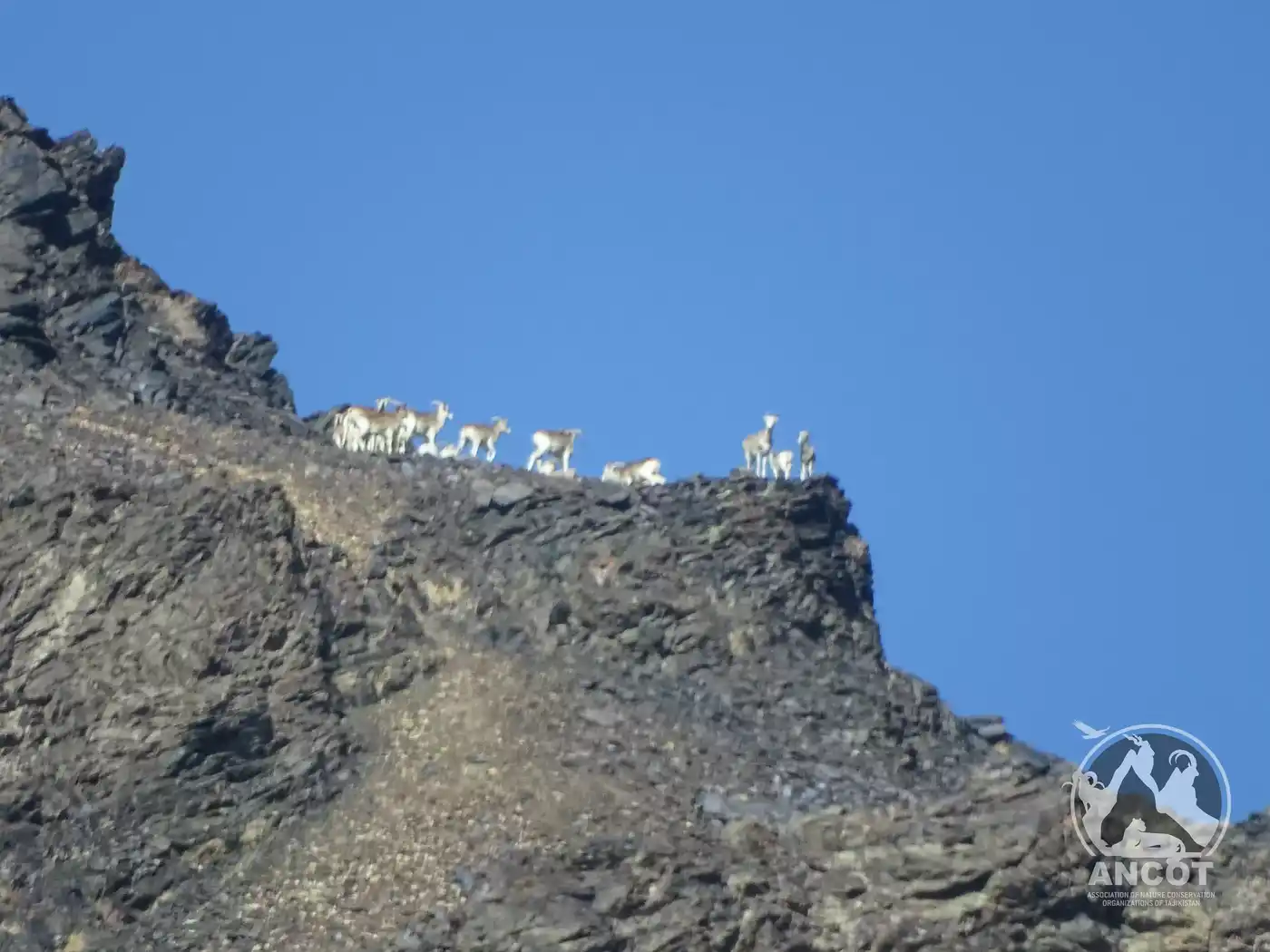
Pamir Highway road trip is a trip across the country and across different habitats, which gives one the possibility to meet quite a diverse assembly of wildlife species that Tajikistan hosts. Going from lowland semi-deserts of southern Tajikistan to high mountain plateau deserts of Pamir and see such mammals as Jackal, Bactrian Deer, Goiteres Gazelle, Markhor Goat, Urial Sheep, Siberian Ibex, Marco Polo Sheep, Brown Bear, Marmot, Wild Boars, and a variety of bird species makes your journey across the Pamir Highway more interesting and rich, You will experience authentic Pamiri hospitality, see high altitude mountain lakes, and learn about local cultures and traditions.
Day-by-day itinerary
Day 1: Dushanbe, Tajikistan
Today you arrive in Dushanbe, the capital of Tajikistan. I will meet you at the airport and take you to the hotel for the rest after the flight. Closer to the lunchtime we will embark on a city sightseeing tour. We will visit the central square with a big monument of Ismail Somoni and the tallest flagpole in Central Asia. After having lunch in a traditional Tajik restaurant we will visit Kokhi Navruz Palace, a huge entertainment and business complex consisting of four completely tailored halls where the Tajik government holds high official meetings. Later we will walk to the National Museum where you will be introduced with the Nature of Tajikistan as well as its history. Our day will finish with dinner at an excellent restaurant.
Day 2: Dushanbe, Tajikistan to Tigrovaya Balka State Nature Reserve, Tajikistan
We start from Dushanbe early in the morning heading south to Jillikul town along Vakhsh river. The Nature Reserve’s main entrance is just 7 km south of Jilikul. Upon arrival, we register our names at the entrance and meet with the reserve’s rangers who will be assisting us on our trip. Most of the rangers of the reserve are people from surrounding villages who grew up working in the reserve. Before continuing into the reserve we will visit the reserves museum, where we will learn about the history of the reserve and its fauna and flora. We will also look into the map of the reserve in the museum to learn how to navigate in the area. After entering the reserve we will drive 15 km to a rangers hut called Darya-Kul, where we load off our belongings and have lunch. After lunch, we will drive further south into the reserve to a place called Korolevskya Dacha or King’s resort. With more than a dozen water bodies in the reserve, we will start our wildlife watching with birds. The avifauna of the reserve consists of 43 Native, 58 Breeding, 66 Wintering, and around 30 migratory species. Closer to the evening we will drive into the forest to spot Bactrian Deer. By the dark, we will be able to see Jackals and wild boars. After the dark, we will return to our lodge and have dinner before going to sleep.
Day 3: Tigrovaya Balka State Nature Reserve, Tajikistan
One of the main species that we shall be concerned about on this trip is a Goitered Gazelle. This species is almost extinct in the reserve due to habitat fragmentation that happened in the last 3 decades and still going on. However few survived due to good protection by the reserve’s staff. In the past, we were able to spot four individuals and by continuous monitoring, we will be able to tell the population trends. After the Gazelle sighting, we will drive to the steppe area to spot Hawks and Buzzards. For the Lunch we will drive to Korolevskaya Dacha again, to be closer to our next sighting area. After lunch, we will drive down closer to the sandy semi-desert area to spot Pheasants and if we are in the migration season of Bustards. We will drive back to our lodge at dark again after more deer sighting today.
Day 4: Tigrovaya Balka State Nature Reserve, Tajikistan to Darvoz, Tajikistan
After spending two days in the reserve which is at the lowlands we will move to the mountainous area today. Darvoz region where the Hazratishoh mountain range lies on the frontier of Tajikistan is home to a family-based conservancy. This mountain range is home for a variety of wildlife like Markhor goats, Brown bears, Foxes, Wolves, Porcupine, Badger, Lynx, and birds such as Himalayan vulture, Griffon vulture, Lammergeier, Cinereous vulture, Egyptian vulture, Long-legged Buzzard, Golden Eagle, Common Kestrel, Barbary Falcon, and many other passerine birds. We will stay at one of our Markhor conservancy guesthouses, making some rest and bird watching stops en-route in steppes and agriculture fields near Dangara. Our guesthouse will be located by the Panj River on the border with Afghanistan.
Day 5: Darvoz, Tajikistan
The territory of the conservancy stretches all the way to the Dashtijum Nature Reserve from the northwestern side and is the biggest in terms of area. Run by a family of former hunters who carry out wildlife surveys, habitat protection, and management in its territory the conservancy has served many tourists who are into wildlife photography, game watching, and trekking. As a result of conservation work and the implementation of sustainable management practices, the number of wildlife is thriving in its territory. Communities here to a great extent engage in mountain agriculture. Many families practice beekeeping and take pride in their practice. In fact, the honey produced here is considered the best in Tajikistan. The highlights of the area include an abundance of wildlife, birds, waterfalls, towering snowy peaks, incredible flower fields (Amaryllis), and breathtaking views into Afghan villages across the river. Today we will hike to a place called mushroom land above the camp, from where we will be able to see a lot of animals.
Day 6: Darvoz, Tajikistan to Bartang, Tajikistan
Today after breakfast we will have a long drive to Bartang valley. We will break the whole drive into three sections and will be making stops for bathrooms, tea, lunch, and bird-watching. We will also stop for you to have a look at the small Afghan villages across the river. The closer we will be getting to Bartang, the more remote and less developed the villages will become. In Bartang we will drive to the cozy village of Khijez situated on the bank of the Bartang River. Bartang valley is famous for its untouched nature and exceptionally hospitable people. We shall stay at the local conservancy family house for an overnight.
Day 7: Bartang, Tajikistan
Asiatic Ibex is the most common wildlife of Pamir mountains and is morphologically rather different from those in other countries, and also between the different areas of Tajikistan considerable variation in horns and coloration can be found. Six community-based conservancies in the region protect this iconic animal. Early in the morning, we will drive towards Ravmed village some 20 km further in the valley, making stops en-route to scan the slopes of the surrounding mountains for the Ibex. We will have lunch in a remote Ravmed village where people still live traditionally. After lunch, we will drive back to the main road and hike to yet another side-valley of Bartang river to Jizev. An easy 3-hour hike will take us to the picturesque tiny village where we spend the night in a traditional Pamiri house.
Day 8: Bartang, Tajikistan to Khorog, Tajikistan
Today we will have breakfast and hit the road towards a town called Khorog set on the bank of the Panj River, which is the administrative capital of Gorno-Badakhshan province of Tajikistan. Here we will settle in a good traditional hotel with a shower and bath after many days of staying at homestays and in the wild. In the afternoon we will go out to explore Khorogs famed Botanical Garden after which you will have some free time on your own to explore the local mosque and central Park.
Day 9: Khorog, Tajikistan to Yamchun Fort., Eshkashem, Tajikistan
Today we head to the spectacular Wakhan valley. We will drive four hours before reaching Ishkahsim, where Wakhan valley starts. At Ishkashim we will do some bird-watching and continue to Darshai village where we will have lunch at the local home. Today we will see two of the most impressive architectural heritage of the ancient Silk Road, Yamchun and Kah-Kaha forts which once guarded this section of the Silk Road from the bandits and invaders. This part of Tajikistan is also identified as an Important Bird Area We will have 4-5 hours of driving mostly on a dirt road partly paved and arrive early in the afternoon. Our destination is the village of Yamg, and we will stay with a homestay family tonight. After lunch in Ishkashim, we continue driving west along the Panj river, here we enter the wide Wakhan valley. Along the road, we will stop to visit Yamchun fortress and bath at Bibi-Fatima hot spring. Tonight we stay at a local Wakhi family house.
Day 10: Yamchun Fort., Eshkashem, Tajikistan to Langar petroglyphs, Eshkashem, Tajikistan
We continue exploring Wakhan today. In the morning we will visit a museum dedicated to the work and life of an 18th-century Ismaili religious scholar, poet, and musician at Yamg village. Later on, we will discover the Buddhist stupa in the next village left here from the times of the Kushan Empire which ruled these territories during the 1st and 3rd centuries. At the same time we will stay focused on finding one of the least studied birds in the world the large-billed reed warbler, considered extinct for some time in the past it was rediscovered in Thailand in 2006, and breeding in Wakhan in 2011. This one surely will be one of your lifers. After visiting the stupa we continue to the village of Zong where we undertake yet another hike to the ancient Silk Fortress, ruins of which have been preserved. Located on the slope of the mountain, the hike to the fortress offers an exceptional view of the Wakhan valley and Hindu Kush mountains of Afghanistan. After spending some time in the fortress we descent to the village and take another bath in a hot spring. We will keep our eyes open to spot birds throughout the day. We stay at the local guesthouse tonight.
Day 11: Langar petroglyphs, Eshkashem, Tajikistan to Zorkul Nature Reserve, Tajikistan
Today we drive to one of the most remote parts of Tajikistan, a place registered as Key Biodiversity Area and is protected by the Government of Tajikistan – Zorkul lake area. Otherwise named Lake Victoria in English literature of the 19th century this place was a boundary of famous Anglo-Russian rivalry known as the Great Game. Many explorers of the 18th and 19th centuries visited this place as it is the major tributary Panj river and consequently to Amu or Oxus river that attracts many wildlife species, including waterfowl birds.
Day 12: Zorkul Nature Reserve, Tajikistan
We will spend the whole day observing and studying the Zorkul area fauna today. Zorkul lake area represents a wide valley near the border of Afghanistan at an altitude of 4100 masl with poor vegetation. The lake is 6 meters deep, occupies an area equal to 3900 hectares, and is a freshwater lake surrounded by a wetland. 125 breeding pairs of bar-headed geese were documented in the last survey conducted in 2011, which is a flagship species of the lake. But the reserve was classified as an IBA because it also supports significant numbers of the populations of several other bird species, either as residents or as overwintering, breeding, or passage migrants. Apart from the water and wetland habitats the reserve’s landscape also includes a steppe and mountain areas, where such mammals as Marco Polo sheep, Siberian Ibex, mountain weasel, and Snow leopard can be seen. Here we will stay in tents.
Day 13: Zorkul Nature Reserve, Tajikistan to Alichur, Tajikistan
Today you will see different culture from that of a western Pamir. We will travel to one of the few Kyrgyz settlements in Eastern Pamir, a village called Bashgumbez. Most of the population here are ethnic Kyrgyz, who originally lived a nomadic life and to this day preserved the elements and traditions of their past. Local people in this region have established a community-based wildlife conservation organization to protect their wildlife resources from poachers and excessive livestock grazing. They have achieved successful results over time and today they can easily show you where Marco Polo sheep or Ibex come to forage in and around their territories. The village is located in the wide Alichur valley on a plateau at 4000 masl. Today you will sleep in a traditional Kyrgyz Yurt and learn how to ride a Yak.
Day 14: Alichur, Tajikistan to Karakul Lake, Tajikistan
In the morning we will drive to one of the gorges in the conservancy and spend time scanning the slopes and the valley to spot Marco Polo sheep and possibly the snow leopard. Closer to noon we will drive to Murgab town, which is the biggest town in the eastern Pamir. This is the far eastern frontier of Tajikistan where historically Russians held their military points even before Tajikistan was formed as a country. Today it’s a small town that resembles a settlement on the surface of the moon. We will have lunch in Murgab and continue driving north to Karakul over the highest point on our trip – the Akbaital pass at 4655 masl. Karakul is crater represented by a massive lake created by a meteor fall some 5 million years ago. This lake also hosts a lot of waterfowls, mostly the same species that are found in Zorkul lake, however, the site is usually visited by vagrants that are not found elsewhere. We will stay in the village located on the Eastern side of the lake in the house of the local Kyrgyz family.
Day 15: Karakul Lake, Tajikistan to Osh, Kyrgyzstan
We leave Tajikistan today and enter Kyrgyzstan. We travel up to the Kyzyl Art pass (4336 masl) in the morning where we cross the Tajik border control, after some 30 km at the entrance of the Alai valley we cross the Kyrgyz border checkpoint. The landscape will change dramatically from an Arid mountainous area to a humid vegetated Alai plain. We will drive further to the Alai mountain range which connects the Pamir and Tien Shan ranges. Along the way, you will have a glimpse of the nomadic way of life that the Kyrgyz pastoralists lead here, with all the green pastures dotted with yurts. Passing over a scenic Toldyk pass at 3554 masl, we drive into Osh city the second-largest city in Kyrgyzstan. Having a climate much like Dushanbe, but more humid, Osh was also one of the major Silk Road towns, so here we will visit its most famous site Solomon’s Throne – the rock that looms over the city and is an important Muslim pilgrimage site. We will have dinner in a traditional Kyrgyz restaurant and stay at a local hotel tonight.
Day 16: Osh, Kyrgyzstan to Bishkek, Kyrgyzstan
After breakfast, we will catch an early flight to Bishkek. On arrival, we will spend some time exploring this classic green soviet-style city by visiting its bazaar and central square, later we will spend some free time of our own. In Bishkek, we will stay at a Hotel.
Day 17: Bishkek, Kyrgyzstan to Manas International Airport, Kyrgyzstan
Today we will transfer you to the airport for your departure home. End of the tour!
What's included
For the group tours, I try to include all the group activity expenses in the price to avoid confusion and time during the payments
What to know
By participating in this tour you are contributing to the conservation of endangered wildlife species and their habitats in Tajikistan.
Route & locations
Dushanbe, Tajikistan