Tajikistan Mammals And Birds Tour
About this tour
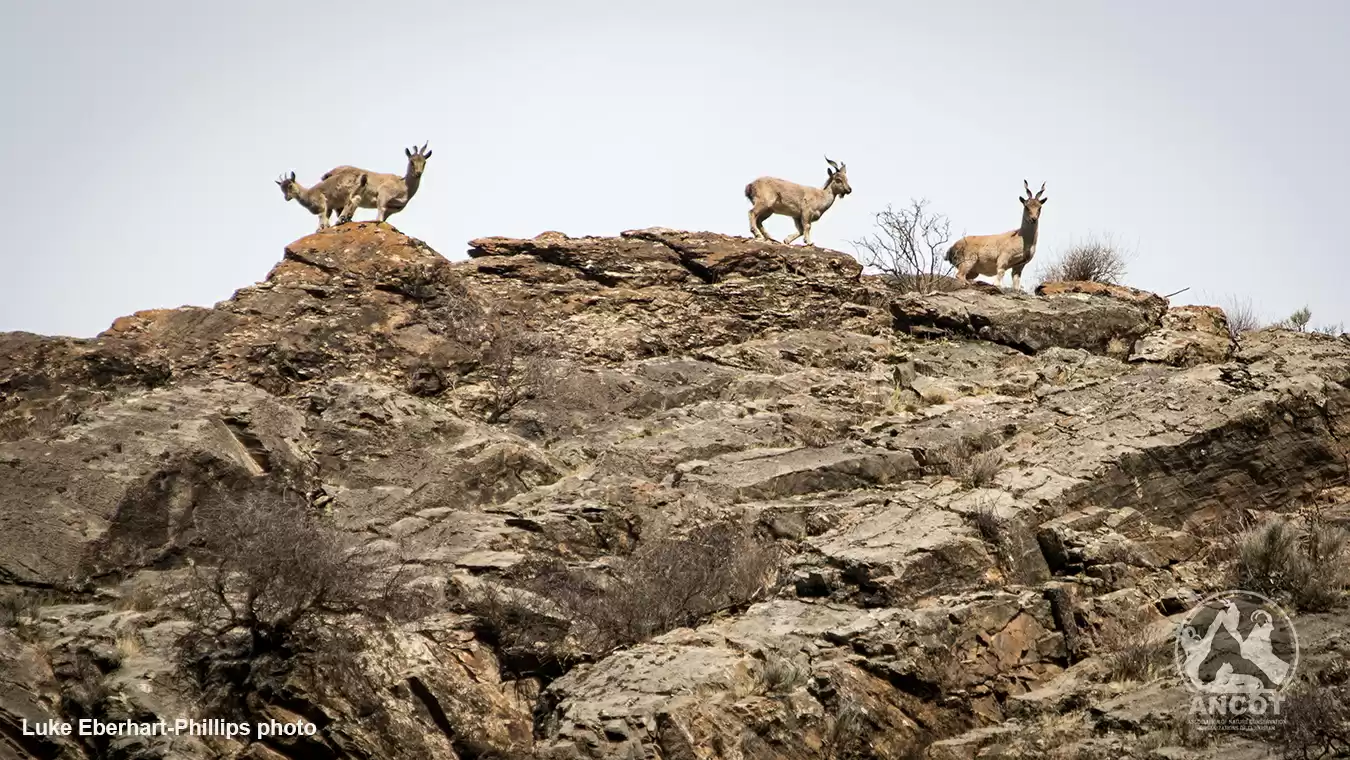
Nestled between Afghanistan and China, Tajikistan’s landscape is defined by several mountain ranges which make up 93% of its land. Different mountain biomes and heavily varying climatic conditions at various altitudes have caused different vegetation zones. This factor has developed different habitats thus making the mountains of Tajikistan a sanctuary for a variety of wildlife species including 392 bird species and notable mammals like Asiatic Ibex, Marco Polo sheep, Bukhara Urial sheep, an endangered Markhor goats, and their predator the Snow Leopard. This tour is designed for naturalists and wildlife lovers in general who are seeking to see as many species as possible in one trip. On a 17 days adventurous tour you will visit 2 nature reserves, 5 conservancies and see much wildlife among which are Markhor goat, Urial sheep, Marco Polo sheep, Bactrian deer, Brown bear, and more than 50 species of birds. Besides you will learn about the local culture, enjoy local food, and make many new friends. This trip will surely be a once in a lifetime experience in every sense of this word.
Day-by-day itinerary
Day 1: Dushanbe, Tajikistan to Baldzhuvon, Tajikistan
Arrive in Dushanbe. Due to the COVID-19 pandemic arrivals to Dushanbe are halted or are operating at a limited frequency. Please check with Us for the flight information before proceeding with the booking. Once you arrive at Dushanbe airport our representatives will meet you and take you to the hotel where you will rest after your flight. Closer to lunchtime you will meet your guide at the lobby and embark on a sightseeing tour of Dushanbe. You will visit the central square with big Ismail Somoni monument and the tallest flagpole in Central Asia. After having lunch in a traditional Tajik restaurant you will visit Kokhi Navruz Palace, a huge entertainment and business complex consisting of 4 completely tailored halls where the Tajik government holds high official meetings. In the evening you will have dinner with ANCOT staff and discuss your upcoming trip.
Day 2: Dushanbe, Tajikistan to Baldzhuvon, Tajikistan
You drive south-east to Baljuvon district today. Your first exposure to Tajikistan’s nature and wildlife will occur in the Vakhsh mountain range. Here a private conservancy is doing a great job in terms of nature protection and wildlife population restoration. The highlight of this place will be Bukhara Urial and Brown Bears among the mammals. The road from Dushanbe to the camp located on the ridge of the Vakhsh mountain range takes 3 – 4 hours. After arrival at the camp and meeting with rangers, you will have lunch and later go for Urial search and bird-watching.
Day 3: Baldzhuvon, Tajikistan
Baljuvan has been recognized internationally for its high biodiversity and is recognized as a Key Biodiversity Area. This morning you will start by birdwatching near the camp, where you will be able to see Chaffinches, Bramblings, Greenfinches, Red-fronted Serin, Yellow-breasted Tit, Black Redstart, Rusty-tailed Flycatcher, Eurasian Griffons, Common Kestrel, and other birds. Later you will drive close to the highest peak of the range called Dushokha mount, from where we will descend on foot to Tukai-Noron’s small forest and watching point. Here we will have a good chance to observe Urial sheep from a close distance and spot several other bird species. Throughout the day we will also be looking for more bird species and possibly a Brown Bear. We will have lunch in the field and return to the camp in the evening. A hot sauna and a hearty dinner will be waiting for you at the camp.
Day 4: Baldzhuvon, Tajikistan to Tigrovaya Balka State Nature Reserve, Tajikistan
You say goodbye to the hosts and rangers at the camp and drive to Tigrovaya Balka Nature Reserve after breakfast. Established in 1938, Tigrovaya Balka Nature Reserve consists of river-floodplain forest or “Tugai forest” and is considered to be one of Central Asian’s important aquatic ecosystems upon which many wildlife rely. The name – Tigrovaya or Tiger’s stems from the fact that it was the last habitat of the Turan-Caspian tiger in Central Asia – now extinct. In fact, the last time Tiger was seen in the reserve was in 1953. Today the reserve is home to the original main prey of tigers such as Bukhara deer, porcupine, goitered gazelle, and wild boar, and a variety of bird species. Upon arrival, you will drive into the reserve and on to the forest area to spot Bukhara deer. Tonight you will stay at a ranger’s post called Darya-Kul.
Day 5: Tigrovaya Balka State Nature Reserve, Tajikistan
The reserve area comprises 62,248 ha and consists of several biomes. There are more than 10 water bodies – lakes and ponds within the reserve. Early in the morning you drive to the Kirpichniy observation point and spend time bird watching near the lake. You will have lunch in the house of a local family located nearby the kirpichniy place. After lunch, you will drive to the Vakhsh river shore and stroll along the shoreline to spot more birds and possibly a Bukhara Deer drinking water on the opposite side of the river. In the evening you drive into the forest area again to increase the chances of seeing the deer. You will drive back to Daryakul today to spend the night. Some of the bird species you will spot the reserve are Common Quail, Common Pheasant, Little Grebe, Great Crested Grebe, Black Stork, White Stork, Black-crowned Night Heron, Grey Heron, Common, Lesser Kestrel, Egyptian Vulture, Western Marsh Harrier, Common, Long-legged Buzzard, and Steppe Eagle during migration, Water Rail, Common Moorhen, Common Coot, Turkestan Tit, Clamorous Reed Warbler, Sykes’s Warbler, Menetries’s Warbler, and others.
Day 6: Tigrovaya Balka State Nature Reserve, Tajikistan
One of the main species that you shall be concerned about on this trip is a Goitered Gazelle. This species is almost extinct in the reserve due to habitat fragmentation that happened in the last 3 decades and still going on. However few survived due to good protection by the reserve’s staff. In the past, we were able to spot four individuals and by continuous monitoring, we will be able to tell the population growth or decline tendency. After the Gazelle sighting, you will drive to the reed area to spot reed warbler, blue throat, and other passerines. After lunch, you will drive down closer to the sandy semi-desert area to try to spot the Macqueen’s Bustard.
Day 7: Tigrovaya Balka State Nature Reserve, Tajikistan to Darvoz, Tajikistan
After spending 3 days in the reserve which is in the lowlands you will move to the mountains again to Darvoz district where Hazratishoh mountain range lies on the frontier of Tajikistan and Afghanistan. This mountain range is home to a variety of wildlife such as Markhor goats, Brown bears, Foxes, Wolves, Porcupine, Badger and Lynx and birds such as Himalayan vulture, Griffon vulture, Lammergeier, Cinereous vulture, Egyptian vulture, Long-legged Buzzard, Golden Eagle, Common Kestrel, Barbary Falcon and many other passerines among which are a Wallcreeper, Everman’s redstart, and other migrating species. In Darvoz we will stay at a conservancy that was the first one to work and protect Markhor goats.
Day 8: Darvoz, Tajikistan
You will explore stunning wilderness areas of the Darvoz region today. Throughout the day you will visit the two hotspots where you will see birds and Markhor goats. Due to this region’s abundant wildlife, you will likely have the chance to observe brown bears and guaranteed observation of Markhor. Here we will observe Golden Eagle, Eurasian and Cinereous Vultures on their roost sites. Other species will include Brown Accentor, Black-throated Accentor, Alpine Accentor, Rock Bunting, Pine Bunting, Red-headed Bunting, Long-tailed Shrike, Indian Golden Oriole, Streaked Laughingthrush, Eastern Rock Nuthatch, Blue Whistling Thrush, Himalayan Snowcock and See-see Partridge.
Day 9: Darvoz, Tajikistan to Bartang, Tajikistan
Before continuing on to Bartang valley we will have a short hike today along the Zighardara gorge to spot Winter wren, Plumbeous water redstart, White-capped Redstart, Little Forktail, Brown Dipper, and White-breasted Dipper. After the hike, we will continue driving along the Panj river to Bartang valley having the views of Afghan villages all along the road. Bartang is a wild and remote valley in Gorno-Badakhshan Autonomous Oblast (GBAO) province of Tajikistan and one of the most successful community-based conservancies in Tajikistan is located in the village of Ravmed in Bartang valley. The background species of the area is Asiatic Ibex. The Asiatic Ibex is the most common wild mammal of Pamir mountains and are morphologically rather different from those in other countries, and also between the different areas of Tajikistan considerable variation in horns and coloration can be found. There are 6 community-based conservancies in the region that protect this animal. In Ravmed village one can see the Ibex foraging on the slopes of the mountain from the house.
Day 10: Bartang, Tajikistan
The area is also popular for its frequent sightings of snow leopards. Therefore you will try your luck today and spend much of the day scanning the surrounding mountains of the village to see this iconic predator. You will be able to see different age groups of Asiatic Ibexes and see such birds as Yellow-billed chough, Red-billed chough, White-winged Woodpecker, Black Redstart, and Himalayan Vulture, and others. Above all, the village of Ravmed is popular for its extraordinary hospitality and beautiful people. Here you will have the chance to learn about the Pamiri traditions and culture, try local food, and make lifelong friends.
Day 11: Bartang, Tajikistan to Darshai, Tajikistan
After your final breakfast in Ravmed, you will continue driving along the Panj river to Khorog. Khorog is the administrative capital of Gorno-Badakhshan province of Tajikistan and the biggest city in the whole Pamir. You will stop shortly in Khorog to Explore the museum and have lunch, later you will drive further south towards Ishkashim in Wakhan valley of Tajikistan. Historically Wakhan laid on the famous silk road from where caravans passed with their goods and the remnants of the ancient silk road can still be seen in the valley, like Kah-Kaha and Yamchun forts. The indigenous people of this area are called wakhi people whose language is different from the rest of the Pamirs and wildlife such as an Ibex plays an important role in their culture. For centuries Ibex was the main source of meat in the area and local people developed unique respect for the animal. Wakhi people decorate the shrines of holy people with Ibex horns and have preserved many Zoroastrian traditions which you can witness in their houses. You will drive all the way to Darshai village where another conservancy is located. We will be met by conservancy staff and sleep in a guesthouse.
Day 12: Darshai, Tajikistan to Langar, Tajikistan
The area from Darshai village to Zong is recognized as an Important Bird Area by Birdlife International. One of the most notable species that can be seen here is a Large-billed Reed Warbler which for a long time was mistaken with different races of the warbler family and is still under a data deficiency status on the IUCN list. Other species that can be seen in the area are Barbary Falcon, White-winged snowfinch, Crimson-winged Finch, Plain mountain finch, Red-fronted Serin. Greater spotted eagle, Ferruginous duck, Pallas’s fish eagle can be seen during spring or autumn migration. Wakhan valley is a treasure for not only naturalists but also historians and anthropologists. Here you will visit 2000-year-old fortresses and bath at a famous Bibi-Fatima hot-spring. During your stay in Wakhan valley, you will travel centuries back in your imagination and will have a better understanding of the silk road history.
Day 13: Langar, Tajikistan to Alichur, Tajikistan
Half of the day today you will be bird-watching and exploring some 10000 ancient stone inscribing’s or petroglyphs above Langar village. After lunch, you will continue your journey to the eastern Pamir where a high altitude plateau dominates the landscape. The village of Alichur where you will settle is set at the 3900 masl. Here the famous Argali sheep or Marco Polo sheep roam the area. Another community-based conservancy is working hard to protect these sheep and other animals in the area. Here you will get familiarized with the nomadic culture of the ethnic Kyrgyz people who have preserved many aspects of their nomadic lifestyle to this day, such as Yurts and food.
Day 14: Alichur, Tajikistan
You will start our exploration of the Alichur region with a drive to one of the conservancy area gorges where you will see Marco Polo sheep. Later you will visit a picturesque Bashgumbez village where you will have lunch and a short Yak ride. On the way to Bashgumbez, you will make several stops for spotting birds. Afterward, you will drive to yet another gorge where you can see Guldenstats Redstart. For the rest of the day, you will be birdwatching in the valley and near Bulunkul lake. Species that you are going to see in Alichur include Pied Wheatear, Isabelline Wheatear, Desert Wheatear, Altai Accentor, Citrine Wagtail, Brandt’s mountain Finch, Mongolian Finch, Crimson-winged Finch, Common Rosefinch, Spotted Great Rosefinch, Horned Lark, Lesser Sand Plover, Ruddy Shelduck, Common Redshank, Common Sandpiper, Black-headed Gull and more.
Day 15: Alichur, Tajikistan to Khorog, Tajikistan
After the final morning birding in Alichur, we will depart to Khorog. The road to Khorog goes over the Koitezak Pass (4271masl) and further along the Ghund river. Here as well we will have a chance to make several birding stops. Upon arrival in Khorog, you will check in to your hotel and have lunch. After some rest at the hotel, you will visit Khorogs Botanical Garden – Khorog’s birding hotspot. Later in the evening you will stroll down the city Park and visit the local Ismaili Jamaatkhana (religious center) where you will witness amazing architecture and learn more about the culture of the local people.
Day 16: Khorog, Tajikistan to Kalaikhum, Tajikistan
Today you will head back towards Dushanbe. Again driving along the border but in a reverse direction, you will make your way back to Kalai Khumb town of Darvoz region. Along the road, you will make some stops at Vamar town and visit the Karon archeological site right before the Kalai Khumb town. Tonight you will stay at a superb hotel in the town also called Karon.
Day 17: Kalaikhum, Tajikistan to Dushanbe, Tajikistan
A 7-hour drive today will take you to Dushanbe. You will hit the road early in the morning to get to Dushanbe earlier and have time for a little shopping. In the evening you will have a collective dinner with the ANCOT staff and friends to share your experience.
Day 18: Dushanbe, Tajikistan
Early in the morning, you will be transferred to the Airport. End of the tour. Flight back home!
What's included
Binoculars and watching scopes are provided
What to know
This tour can be customized. Please get in touch with me.
Route & locations
Dushanbe, Tajikistan to Baldzhuvon, Tajikistan