Unesco Seven World Heritage Tour In Kathmandu Valley
About this tour
Nepal is now a culmination of various religions and cultures. But many years before, the major religion was Hinduism and Buddhism. There have been many dynasties and kings ruling Nepal and so, many cultural and religious architecture and structures have been cumulating for centuries. In Kathmandu Valley only, the seven landmarks and structures have been identified as religious and historic monuments by UNESCO and listed as UNESCO World Heritage Sites, known to the world.
The UNESCO World Heritage Tour in Kathmandu Valley is a full-day tour where you will visit all seven heritage sites in Kathmandu. It is a very favorable tour created for those who have less time on their hand and want to explore a lot more. The trip begins at 7:00 am and lasts for 12 hours at most visiting all seven heritage sites according to the itinerary provided. The major highlights of this tour are:
• All seven USECSO World Heritage Sites of Kathmandu Valley ( Swayambhunath Stupa, Kathmandu Durbar Square, Patan Durbar Square, Bhaktapur Durbar Square, Changunarayan Temple, Pashupatinath Temple, and Bouddhanath Stupa)
• Private Transportation and Tour Guide
• Culture, civilization, history, architecture, and heritage of ancient and medieval Nepal
Day-by-day itinerary
Day 1: Kathmandu, Nepal
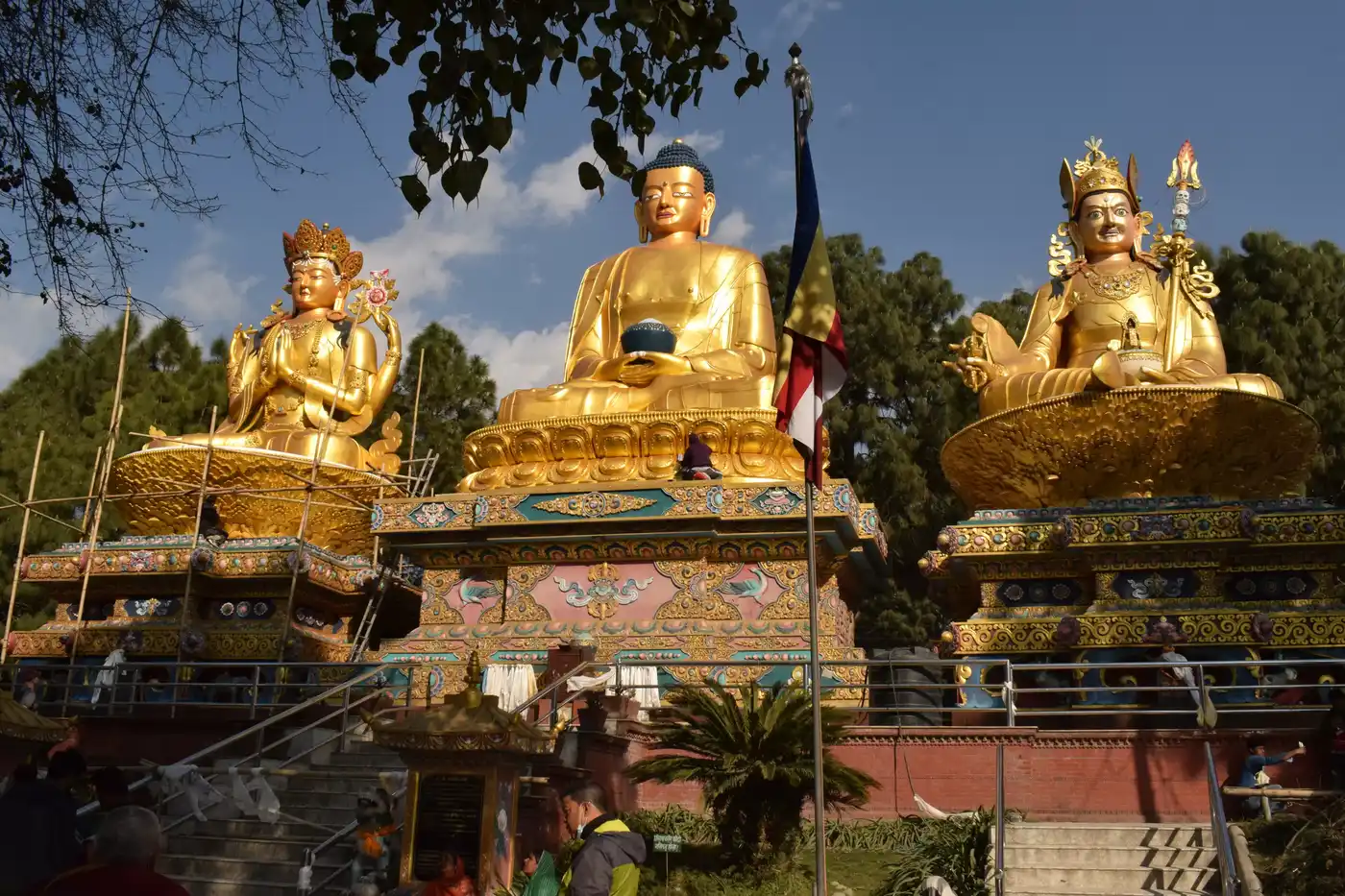
Stop At: Swayambhunath Stupa, Kathmandu The trip starts with the first stop Swayambhunath Stupa. The stupa is located on top of a forest-covered hill. Also called "the Monkey Temple", there are many monkeys freely roaming around the area. The top can be reached by climbing a steep stairway filled with many statues of Buddha and shrines along the way. At the entrance to the hill, a thunderbolt specter can be seen and right beside that, a white dome with a cube at the top with eyes painted on all four sides can be found. The prayer flags are stringed from the top of the stupa to the corners of the area and prayer wheels surround the dome. There are many Hindu temples and idols of Hindu gods in the area of the stupa. Many smaller stupas and pagodas are in the area. You can clear view of Kathmandu Valley from the hilltop on clear days. After exploring the stupa, head to Amideva Buddha Park located on the opposite side of the hill. There are three monuments of Shakyamuni Buddha in different mudras. They are over 60 feet tall with a serene atmosphere. • Stop at Swayambhunath: approx. 45/50 min • Stop at Amideva Buddha Park: approx. 10 min Stop At: Kathmandu Durbar Square, Kathmandu Then head to Kathmandu Durbar Square. We will visit all three Royal Courtyards in Kathmandu Valley. The first one is Kathmandu Durbar Square in the Kathmandu district. It is also called Basantapur Durbar Square and is known to be a hangout place for the locals. Many monuments, temples, and architectural structures are scattered in the vast area of Durbar Square. There is also the royal palace turned into a museum in the area. Some important structures in the area are Kal Bhairav, Sweta Bhairav, Hanuman Dhoka, Ashok Vinayak Mandir, Taleju Temple, Vishnu Temple, Indrapur Temple, and Kotilingeshwara Mahadev Temple. The main significance of the Kathmandu Durbar Square is the abode of Kumari: the living goddess of Nepal. • Stop at Kathmandu Durbar Square: approx. 1 hrs 30 min Stop At: Patan Durbar Square, Lalitpur The next stop is another royal courtyard in the Lalitpur district of Kathmandu Valley. The Patan Durbar Square has three primary courtyards/chowks with distinct temples and prominent buildings. The main attraction of the area is Krishna Mandir, Bhimsen Temple, Vishwanath Temple, and Taleju Bhawani Temple. One of the courtyards is now a museum with Buddhist, Hindu, and Tantric artifacts. The golden temple is another famous structure in the vicinity of durbar square. The name of the golden temple is Hiranya Varna Mahavihar Temple. It is a 12th-century pagoda-style temple with a golden image of Lord Buddha and a large prayer wheel, bronze statues, and silver and gold decorations. • Stop at Patan Durbar Square: approx. 1 hrs 30 min Stop At: Changunarayan, Bhaktapur Then let's drive to Changunarayan temple, one of the oldest temples of Nepal in the Bhaktapur district. It is recorded to be one of the oldest temples ever made in Nepal with an architectural style never seen before. The temple houses lord Vishnu, the preserver. The intricate detailing and decorations around and in the temple building are popular for historic and architectural studies. The monuments of other gods and goddesses are distributed around the main temple. • Stop at Changunarayan temple: approx. 30 min Stop At: Bhaktapur Durbar Square, Bhaktapur The next destination is the final royal courtyard of the Kathmandu Valley. Bhaktapur city shows the medieval era to modern generations and the Bhaktapur Durbar Square is the center for the old age culture, religion, and architecture. The indigenous Newari culture can be found in every corner of the city with the famous curd produced locally there. The major attraction of durbar square is 55 Window Palace, Lion's Gate, Golden Gate, Dattatreya Temple, and Nyatapola Temple. Most of the structures are either pagoda style or shikhara style. The place is an open museum. We will also visit Siddha Pokhari, a man-made pond in Bhaktapur. There will be a lunch stop in Bhaktapur. • Stop at Bhaktapur Durbar Square: approx. 3 hrs or more including lunch stops • Stop at Siddha Pokhari: approx. 10 min Stop At: Bouddhanath Stupa, Kathmandu Our penultimate destination is another stupa in Kathmandu Valley, Bouddhanath. It is considered to be one of the largest Buddhist shrines with a height of 36 meters. As with any other stupas with dome shapes and cube structures with eyes, surrounded by prayer wheels and prayer flags hung from the top, it has a significant history. Bouddhanath area houses the Tibetan refugees who have witnessed the construction of many gompas around the area. It is one of the most visited sites locally and by tourists too. • Stop at Bouddhanath: approx. 30 min Stop At: Pashupatinath Temple, Kathmandu Our final destination is the Pashupatinath temple complex. Worshipping lord Shiva, the destroyer in the main temple, there are many shrines and smaller temples surrounding the main temple. It has not only religious but traditional and cultural significance in the lives of Hindu devotees. The temple complex spreads over miles of areas including the holy river Bagmati in its domain. There are also monkeys roaming around the area of Pashupati. So be careful of your possessions being snatched by them. Many sadhus can be seen in the temple complex who have come for salvation leaving everything behind. You can see the cremation ceremonies being performed on the platform created near the river banks. In Hindu religion and culture, the dead are burned to ashes after death, so please have a strong heart before witnessing this scene. After exploring the region, the seven-world heritage tour of Kathmandu Valley is now complete. So, let's head back to our departure point. • Stop at Pashupatinath: approx. 1 hrs Note: The arrangement of the travel destination may change according to the situation or your need
What's included
• Hotel pickup and drop-off (Inside Ring Road) and Bouddha area • Transport by private vehicle • Professional tour guide • Entrance fees in all 7 Heritage sites
• Food and drinks (Can buy bought at each site) • Gratuities • Personal expenses
What to know
• Not wheelchair accessible • Infants must sit on laps • Most travelers can participate • This is a private tour/activity. Only your group will participate • Traveler pickup is offered in any hotel inside ring road including the Bouddha area. • The duration of the trip will not exceed 12 hours. • The trip starts at 7 in the morning. • The trip can be canceled or altered due to unforeseen circumstances like weather or local politics. It is unlikely to alter the itinerary substantially. If the changes are needed, then the leader will decide the best alternative taking into consideration the best interest of the whole group.
Route & locations
Kathmandu, Nepal