Architectural
complex Hast Imam (Hazrat Imam) is an ensemble of historical monuments dating
back to the 16th century. It was named after Abu Bakr ibn Ismoil al-Kaffal Shoshiy,
one of the first preachers of Islam in Tashkent.
The much-revered
saint imam was born in the city of Shash (Tashkent). His initial knowledge was
obtained in the madrassah of Tashkent, Samarkand and Bukhara, and a little
later, at a mature age, he went to Baghdad to improve his knowledge in fiqh,
philosophy, poetry, and linguistics. Abu Bakr Kaffal Shoshiy carries out his
activities at the court of the Abbasid caliphs, for his skillful knowledge of
more than 70 languages, eloquence, and a sharp mind, Abu Bakr Kaffal Shoshiy
became known as Shoshiy Al Qabiyr (the great Tashkenter) and was awarded the
post of caliphate diplomat. In his later years, the great Islamic thinker
returned to his hometown of Tashkent and made a huge contribution to the
recognition and spread of Islam as a single religion throughout the city and
for all.
Mausoleum Hast Imam
The mausoleum
built-in honor of Hazrat Imam is rightly considered one of the most important
attractions of the complex, where sons and disciples of Hazrat Imam and other
prominent figures of that time were buried. The building of the mausoleum was
rebuilt more than once in several centuries and got its final look in the 16th
century, the facade of the mausoleum is decorated with mosaics of plant
ornaments characteristic of that time, majolica poem inscription.
Besides the
Mausoleum of Hazrat Imam, the ensemble includes a number of attractions, such
as: Barakhana Madrassah; Mui Mubarak Madrassah; Tilla Sheikh Mosque; Khazrat
Imam Memorial Mosque, Tashkent Islamic Institute and Administration of Muslims
of Uzbekistan.
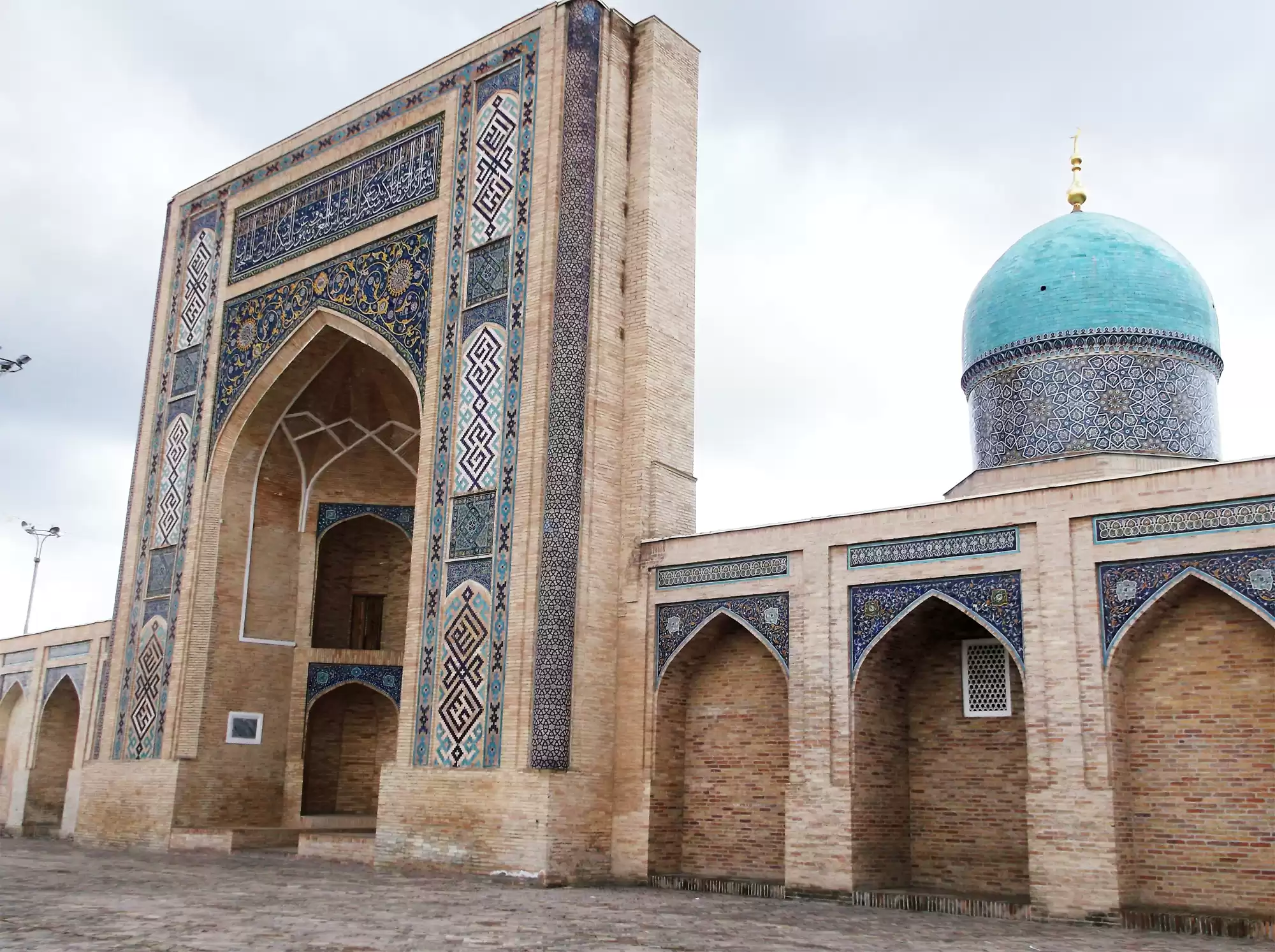
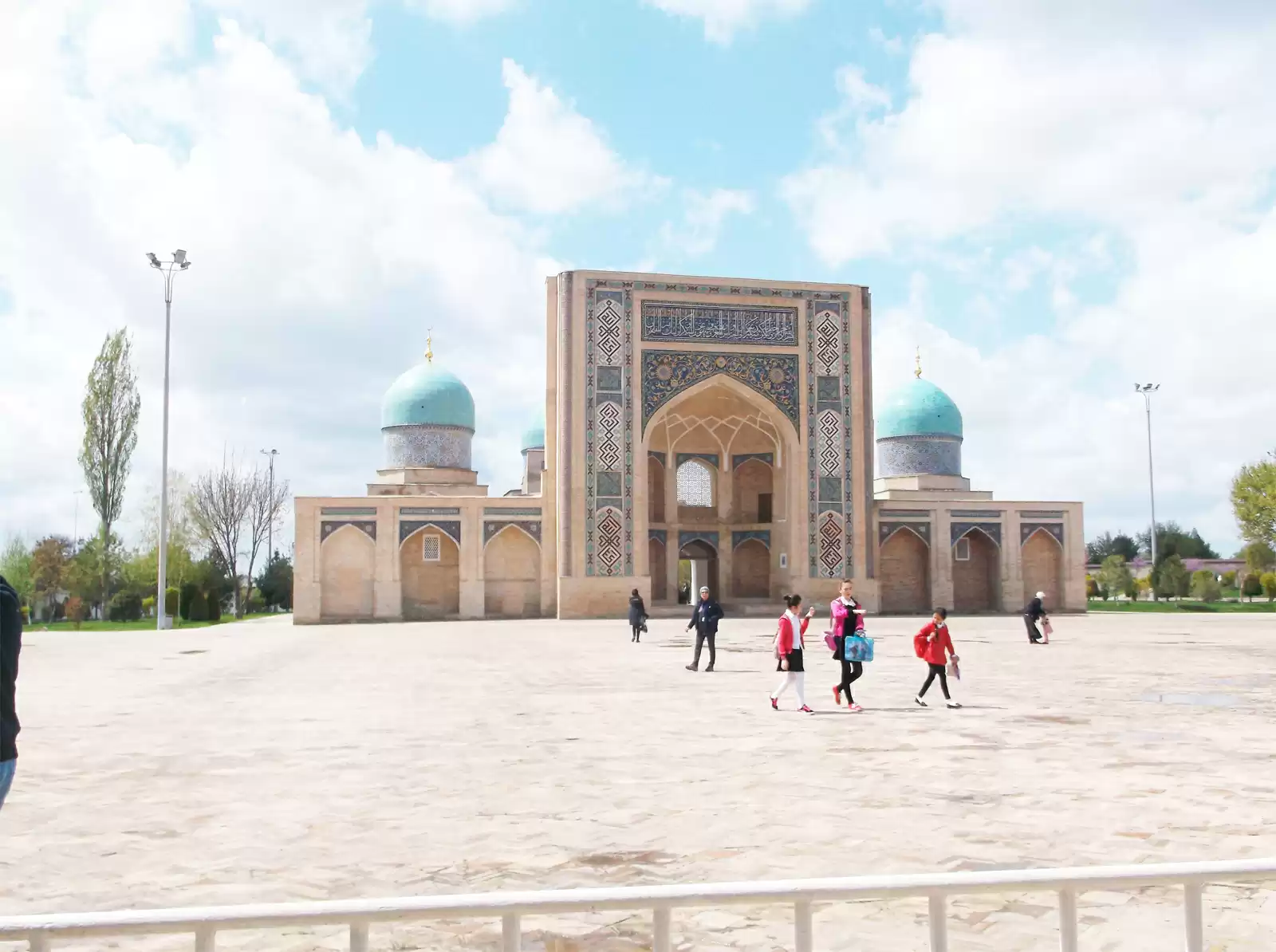
Barakhan Madrassah
Poet Zainuddin
Vasifi, who played a major role in Tashkent's history, is another important
figure. Talented poet, disciple of Alisher Navoi was also native of the capital
of Khorasan - Herat. After the Iranian shah's invasion of Khorasan, Vasifi
leaves his homeland and goes to Maveranakhr, where he finds refuge in the city
of Tashkent. For his wit, poetic talent, and eloquence, Vasifi was called to the
court to educate princes from the Sheibanid dynasty. One of Vasifi’s pupils,
Nawruz Akhmad nicknamed Barakkhan (lucky), orders the construction of a
madrassah where Wasifi becomes the chief mudariss (rector). The remaining years
of his life the poet and spiritual mentor of the Tashkent rulers devote to
enlightenment and art. It is during this period that he wrote his famous work
"Badai al Vaqai" (Amazing Events). So in the half of the 16th century
in the architectural complex Hast Imam grandiose construction of Barakhan
madrassah appears, the original look of the madrassah, unfortunately, it has
not been preserved for the past years, it has been reconstructed several times,
and in addition, modern architects distorted proportions as on the one hand was
completed another dome. Until 2008 the madrassah served as a residence for
SADUM (Spiritual Administration of Muslims of Central Asia and Kazakhstan).
Mui Muborak Madrassah
Mui Muborak
Madrassah was built in the 16th century but was completely restored several
times. Originally it functioned as a khanaka for dervishes, then it was
transformed into a higher religious education institution for students. Today,
Mui Mubarak Madrassah is famous as a library, the keeper of more than 20
thousand manuscripts and books of the religious and spiritual genre, among which
the only and original manuscript of the Quran - the Quran of Osman, written by
the disciple and secretary of the Prophet Muhammad Zeid ibn Sabit in 650 on the commission of the third righteous Khalifa Osman takes a special place. This
original, consisting of 353 folios, is considered to be the personal Qur'an of
Othman, as evidenced by the traces of blood of the murdered Caliph during the
reading of the holy book. In 1991, the Quran of the Caliph of Othman was
transferred from the history museum to the Hast Imam library.
Tilla Sheikh Mosque
The next
attraction in the ensemble is the Tilla Sheikh Mosque. The mosque was built at
the expense of one of the richest residents of the city in the 18th century.
Modest type of architecture, minimal size of the construction did not prevent
from being the main mosque of the city in its time. Today, the mosque is fully
operational.
Nomozgoh Mosque
The Tashkent
Islamic Institute, a higher religious education institution, has been operating
on the territory of the Namozgoh Mosque, training theologians and madrasah
teachers for half a century.
Namozgoh Mosque
itself was built by the order of Kokand khan Khudoherkhan for festive prayers for
many thousand armies of Kokand khanate. The mosque was built from 1845 to 1862
by the chief architect Khoja Iskhak.
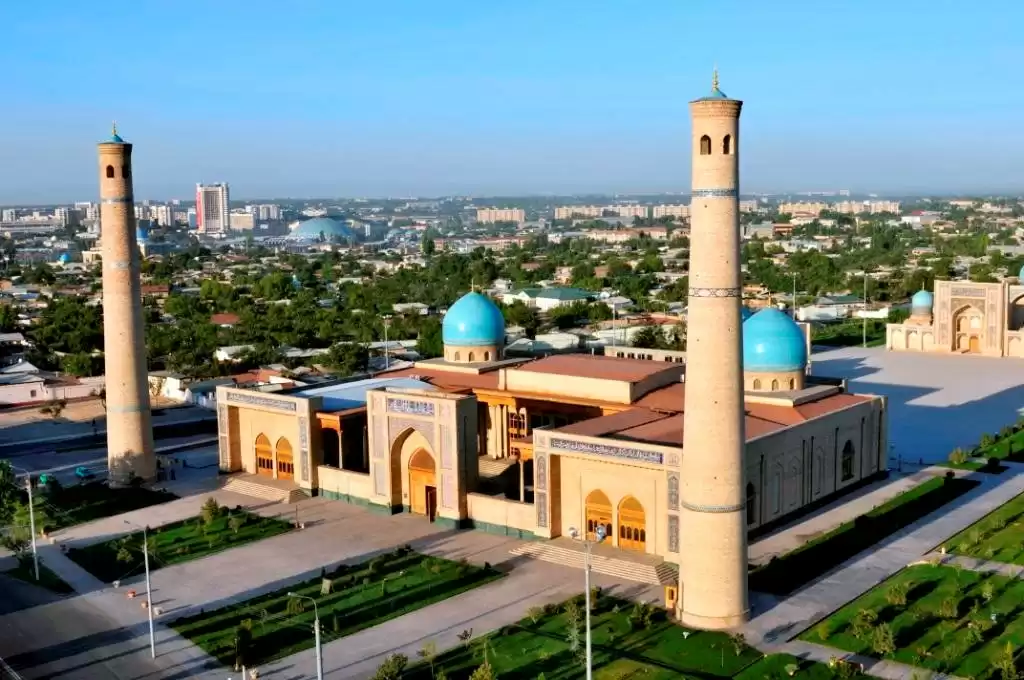
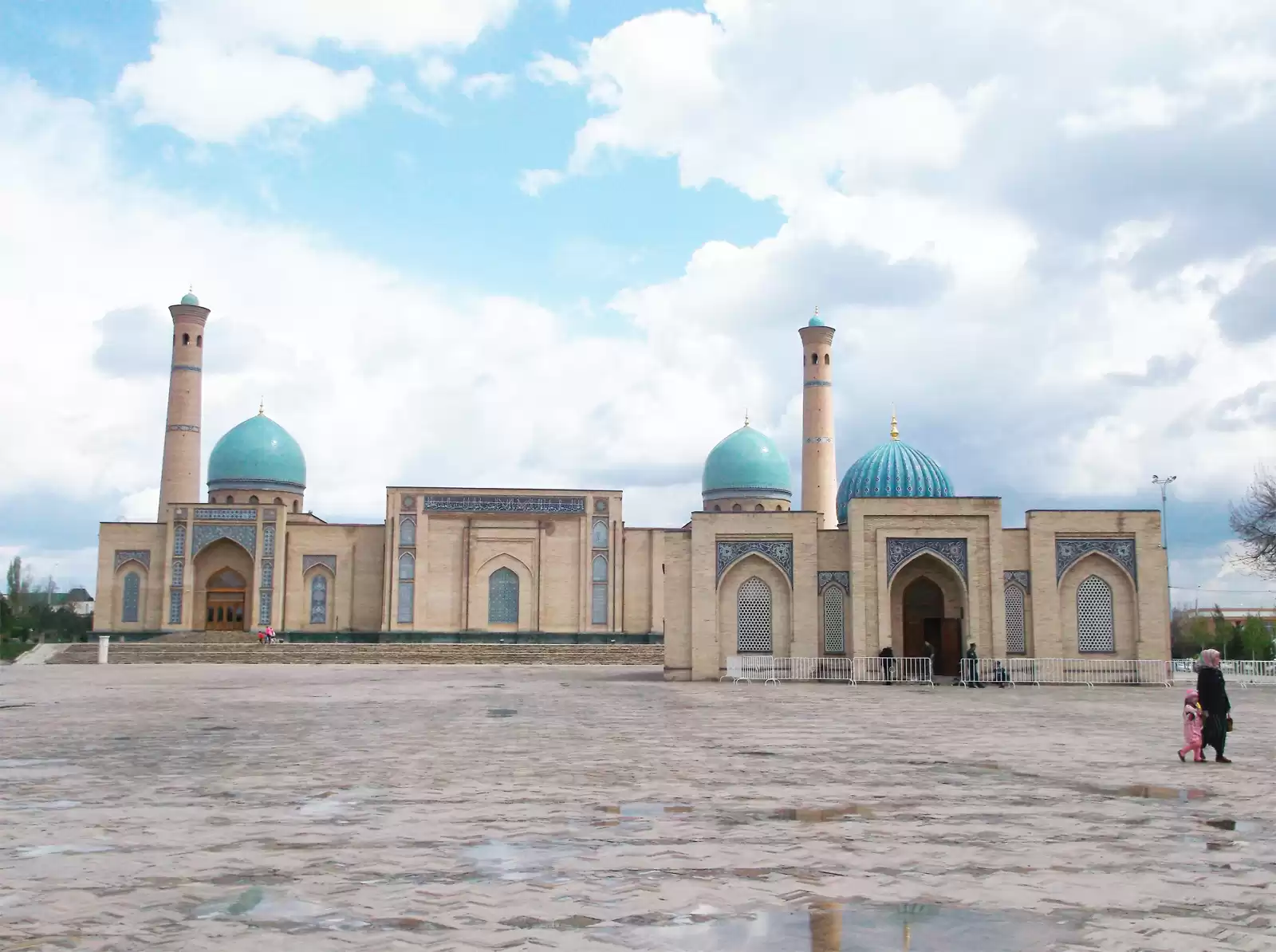
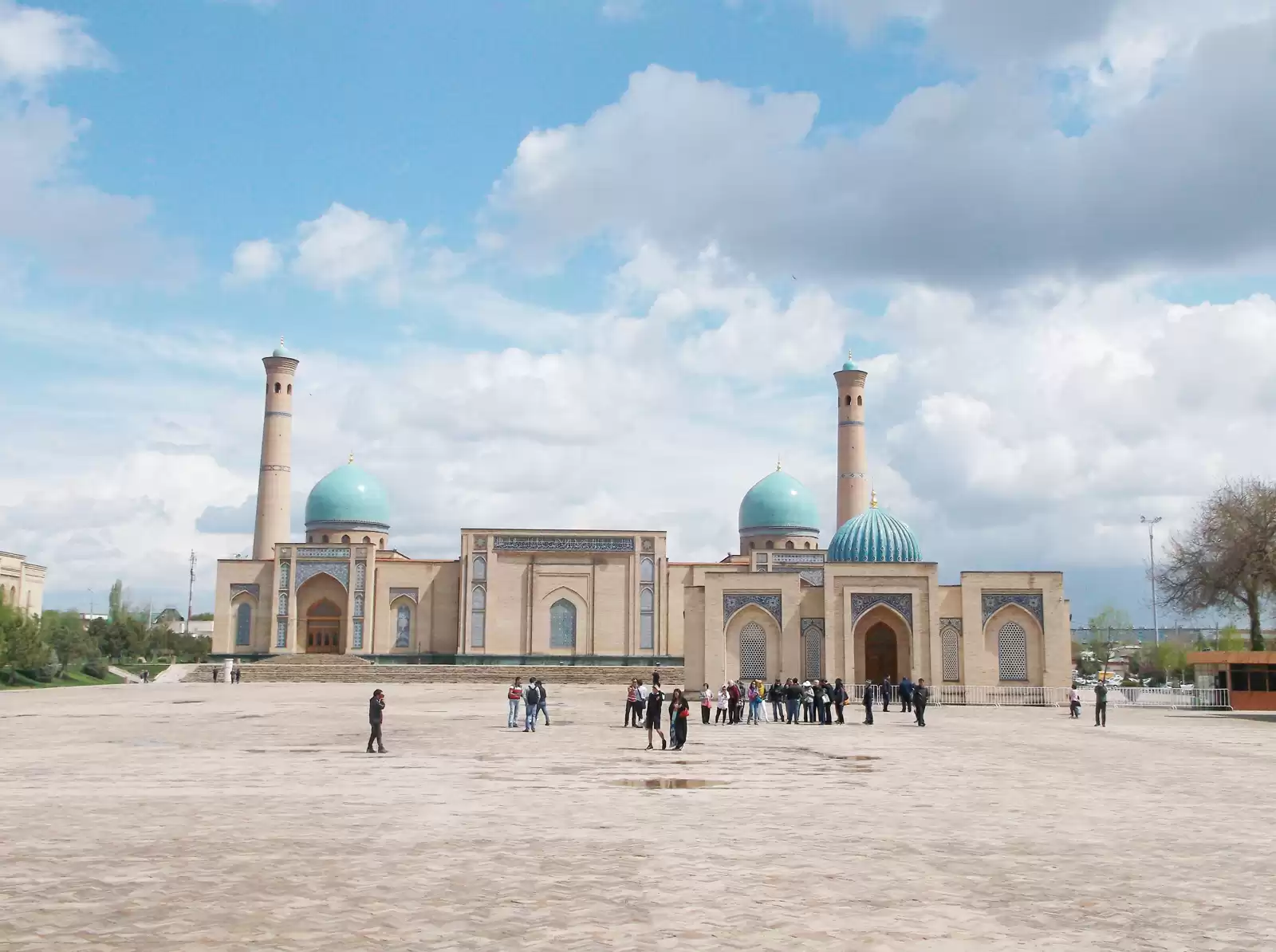
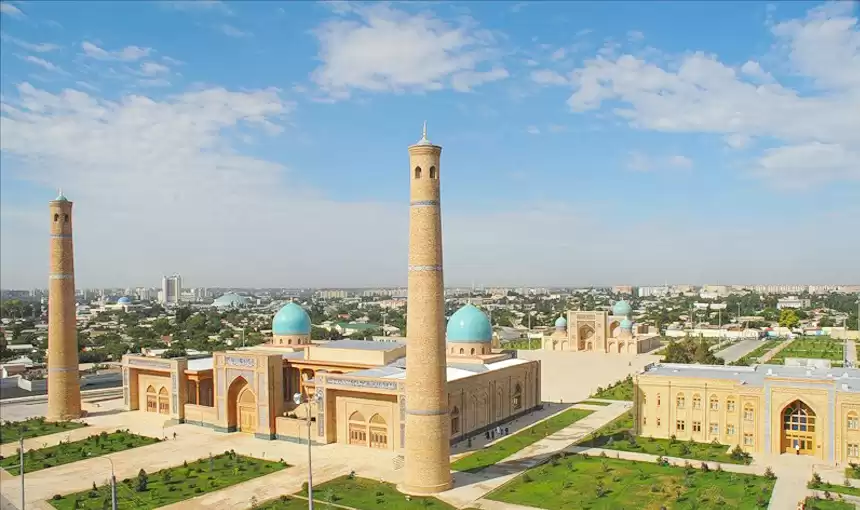
The newest buildings of the ensemble are the memorial mosque Khazrat Imam and the building of the Administration of Muslims of the Republic of Uzbekistan, built-in 2008. On the territory of the mosque, there are Friday and festive prayers, the mosque building itself was built in the medieval Tashkent style of burnt bricks, with inscriptions on the Sul and Kufichi scriptures on the facade and inside, and also decorated with mosaics of plant ornaments. Two minarets on either side with a height of 54 meters are not typical of the medieval architectural style of Tashkent. Due to the seismic location of the city, no tall minarets were built in the Middle Ages in Tashkent, and they had to be replaced by small "guldasta" minarets at the entrance portal.
The spiritual heart of Asia. The architectural and cultural heritage of Hast Imam consists of several independent buildings, Mausoleum Hast Imam, Barakhan's Madrassah, Mui Mubarak Madrassah, Tilla Sheikh Mosque, Namozgoh Mosque, constructed by the people of Tashkent, who have left a rich spiritual heritage, Osman's Quran more than 10 000 religious works, scientific works, theological works, works in philosophy, medicine, country study, literature and linguistics in madrasas, mosques and libraries.
VIEW PROFILE →