Being held annually in February, Tsagaan sar could be acknowledged as the Mongolian Lunar New Year.
It is the first day of the year according to the Mongolian lunisolar calendar which has been used for years. Tsagaan sar is a traditional holiday which brings families together in joyful atmosphere.
It is the first day of the year according to the Mongolian lunisolar calendar which has been used for years. Tsagaan sar is a traditional holiday which brings families together in joyful atmosphere.
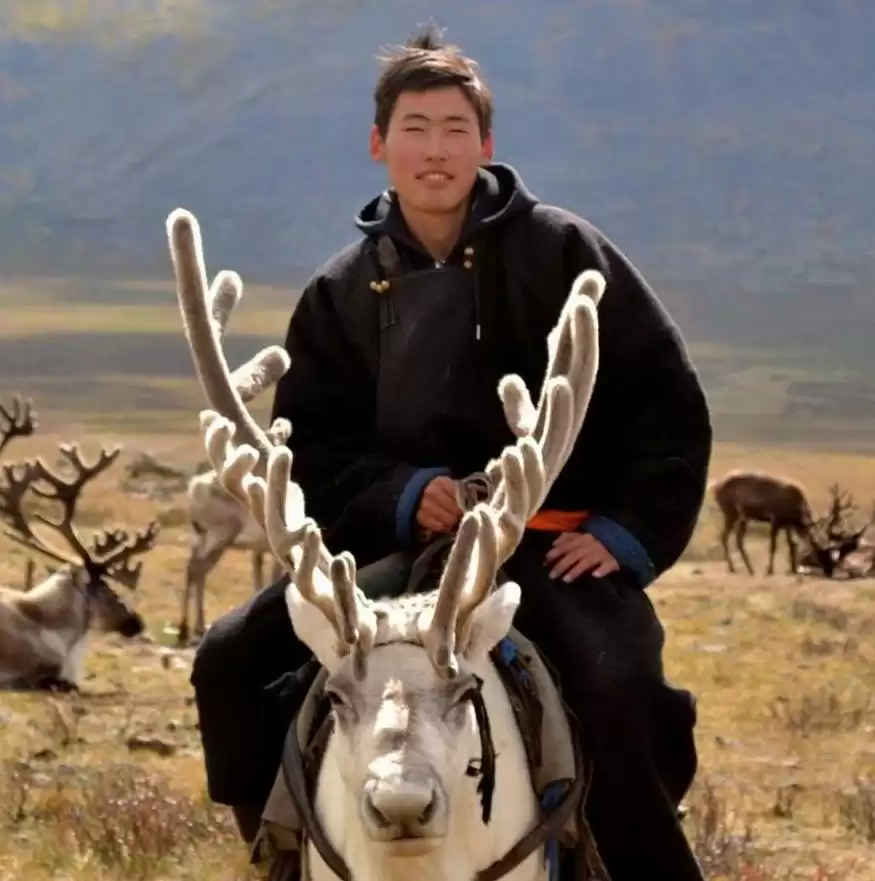
The Mongolian nomadic lifestyle is heavily reliant on the weather, its unpredictability making conditions harsh. Especially in winter, the nomads would have to take care of the the cattle in the middle of snow storm. Although the nomads try their best to keep all their animals alive during winter, no one can stop the law of natural selection. So it is no doubt that winter is the most challenging season for the nomads. Fortunately as the spring nears, the weather gets warmer and brighter for the nomads and their livestock. Therefore, "Tsagaan Sar" is celebrated as a joy of surviving the harsh winter and welcoming the warm spring.


The celebration could take up to weeks, but the most important days are the first four days: Bituun- The New Year Eve, Shiniin negen- the first day, Shiniin hoyron- the second day, Shiniin gurvan- the third day of the new year.
The Lunar New Year Eve is caled Bituun in Mongolian (means closed) symbolizing the no moon day. Bituun is also an important day as the families clean their homes and prepare meal for the holiday. Mongolians believe how well they welcome the new year defines how well they will be doing in the next year. According to Buddhism, the Baldan Lkham Buddha visits all families in Bituun and that is why Mongolians put some offering and ice outside their homes for both the deity and her horse.
During the first three days of lunar new year, people visit their relatives. Mongolians have a long history of respecting the elders, so the young people are mostly the visitors and the elders are the hosts. At the beginning of the visit, Mongolians perform a special greeting called zolguut or zolgokh in Mongolian, holding the elders by the elbow and saying "Amar baina uu?" (asking if they are living in peace). In return, the elders usually give a gentle kiss on the cheek and reply "amar", meaning peaceful. People also exchange or give a long blue cloth called "khadag" to show respect.
The table is filled with traditional cuisines such as rice curds, steamed sheep spine, dumplings, yogurt,Nermel- Mongolian traditional distilled vodka, Airag- the fermented mare's milk, and so on. Dumplings or Buuz (in Mongolian) are the main dish for the holiday. Local families prepare 800-1500 dumplings in advance for the new year. Upon the end of the visit, the hosting family give gifts to the guests, mostly for the kids.


Tsagaan sar is unarguably the biggest and the oldest traditional holiday in Mongolia. If you happen to be in Mongolia during January or February, we recommend you to visit a Mongolian nomad family to experience the celebration.
END OF STORY
YOUR HOST
Bilguun
Mongolia
Tsagaan Sar is a Mongolian traditional holiday which brings families together in joyful atmosphere. It could be understood as the Mongolian Lunar New Year.
VIEW PROFILE →