Nowruz, Iranian New Year Festival
The word Nowruz
is a combination of two Persian words: now—meaning "new"—and
ruz—meaning "day". It is the day of the vernal equinox, and marks the
beginning of spring in the northern hemisphere and is the first day of the
first month of spring (Farvardin) in Iranian solar calendar. Nowruz is
considered the most important holiday in Iran that usually occurs on March 21. Nowruz
begins at the exact day, hour and minute of the spring equinox because the moment
the Sun crosses the celestial equator and equalizes night and day is calculated
exactly every year. This exact second is called "Saal Tahvil" and
families get together to observe the ceremony.
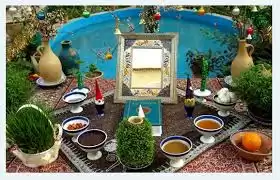
The celebration
has its roots in ancient Iran so in Iranian mythology there are various
foundation myths for Nowruz. It is part of Zoroastrianism, a Persian religion
that predates Christianity and Islam to the first millennium BC.
The resumption of
the spring was believed to have great spiritual significance, symbolizing the
triumph of good over evil and joy over sorrow. According to Zoroastrian
tradition, the Spirit of Noon, known as Rapithwina, who was considered to be
driven underground by the Spirit of Winter during the cold months, was welcomed
back with celebrations at noon on the day of Nowruz. So Nowruz is a holy day
for Zoroastrians while a secular holiday for other celebrants, people of
several different faiths that enjoy it.
Although having
Iranian and religious Zoroastrian origins and known as the Persian New Year, it
is celebrated worldwide by various ethno-linguistic communities. It has been
celebrated for at least 3,000 years in most of Asia, the Caucasus, the Black
Sea Basin, the Balkans, India, Pakistan, Afghanistan, Turkey, Iraq, Syria,
Tajikistan, Uzbekistan, Turkmenistan, Azerbaijan, Kazakhstan, and Kyrgyzstan,
and of course by Iranians worldwide.
In 2009 Nowruz
was inscribed on UNESCO’s Representative List of the Intangible Cultural Heritage
of Humanity in recognition of the importance of this ancient rite. Moreover, in
2010, the United Nations General Assembly proclaimed 21 March as the International
Nowruz Day.
Nowruz Traditions in Iran
Nowruz is Iran’s
national New Year festivity that includes four official public holidays but
celebrated for two weeks. These two weeks focus on seeing relatives and friends,
picnicking, travelling, feasting, eating traditional food, and exchanging
gifts. A wide range of traditions such as cultural performances also take
place. Families and within communities share a symbolic meal, often consisting
of cooked rice with meat or fish and vegetables combined with many local
ingredients.
Preparations
for Nowruz celebrations in Iran begins weeks before the start of spring,
including a tradition of deep house-cleaning ‘khaneh takani’, literary meaning
‘shaking the house,’ that is common in almost every household. The cleaning is also
called “sweeping the dust”, all family members are involved in this ritual to wash
the carpets and wipe the windows, old furniture is repaired or even replaced
with a new one. It is widely believed that with all the dust ill fortune is
also washed away and there would be a fresh start to the year. Shopping for new
clothes, shoes, fresh fruits, sweets and confectionaries, nuts, flowers and
everything that goes on the Haft Seen Table is done during the weeks left.
Iranian welcome
spring on the first day of Nowruz by gathering with their family members around
a traditional ‘sofreh’, a
cloth spread on the floor, or table setting. Iranian grow sabzeh (wheat,
lentils, barley or mung bean) in a dish to put on the Haft-seen table, which is
the focus of Nowruz observance. Then it joins to six other symbolic items starting
with the Persian letter "seen" or S that makes seven, a sacred number
in Zoroastrianism. They include: seeb (apples) - symbol of health and beauty,
somaq (sumac) – patience, senjed (dried oleaster) - wisdom and rebirth, samanu
(wheat pudding) - strength/ justice, seer (garlic) - cleansing of body and
environment, serkeh (vinegar) – patience/ age. The Haft-seen spread also
includes other items such as a mirror, symbolizing reflection, candles for
brightness, colored eggs for fertility and goldfish in a bowl representing
life. There is usually also a book by the Persian poet Hafez (1315-1390), and
holy Quran. This reflects Nowruz’s power to combine its ancient roots with more
recent religious and cultural traditions.
Chaharshanbe Suri
Chaharshanbe
Suri (Wednesday feast) is a fire jumping festival on the evening of last
Tuesday of the year, so it is held within a week to the Nowruz day. There are
Zoroastrian religious significance attached to it. People go out and make bush fires, jump over it chanting “Give me your beautiful red color and take back my sickly pallor!”.
A specially made mixtures of nuts and dried fruit, called Ajil, salted
hazelnuts, pistachios, almonds, prunes, apricots, and raisins is commonly
nibbled on throughout the evening. This tasty treat is believed to make one
kinder and compassionate.
Sizdeh Bedar
Sizdeh Bedar, “Getting
Rid of Thirteen”, or Nature's Day takes place on the 13th day of the Persian
New Year and marks the end of the Nowruz holiday. It is customary for Persians
to celebrate it by spending the day outdoors picnicking. It is a springtime celebration whose activities symbolize rebirth
and the link between humans and nature. Throwing the greenery (Sabze) grown for
Haft-Seen table into a running
water is a ritual performed at the end of the picnic.
Tourists need
to take into account the crowd in chaharshanbe soori night, the fireworks,
crowded bazars because of the shopping for the New Year, the exact time for the
New Year and also Sizdeh Bedar picnicking. Many locals will be traveling, so it is
a high travel season and you may need to organize your accommodation and transportation
beforehand, sites or museums are not closed but very busy.
Iran Main Cultural Events Iran has two distinct faces, as a country with a rich ancient background and as an Islamic country. This means Iranian have kept some of their pre-Islamic rituals which are held yearly besides their Islamic religious practices. Being an ancient territory justifies the existence of all Abrahamic religions as well as Zoroastrianism. The evidences are active churches, synagogues and fire temples in major cities. Therefore, there are events held by each of these religious communities, but regarding the majority, following are short descriptions of the main event that may affect a tourist’s trip plan as time schedule, transportation and accommodation availability, activities, visiting sites and even clothing.
VIEW PROFILE →