10 Days Iran South To West Silk Road Expedition
About this tour
In this trip you experience with a unique 10-day individual tour of the 10 most beautiful villages, cities and areas in western Iran. Admire the archaeological finds in the south western Khuzestan in the Persian Gulf. Visit Shushtar & Shush and be surprised by the ultimate in hospitality in the Kurdistan of Iran.
Teheran (1n) –Train ( 1n) - Shushtar (2n) – Khorramabad (1n) – Kermanshah (1n) – Sanandaj (1n) – Hamadan (2n) – Tehran IKA Airport
Day-by-day itinerary
Day 1: Tehran, Iran
Experience Tehran is an “experience” not to forget. For Solo travellers Tehran is too big and there is too much to do for a few days. So choose from a museum, a park, the bazaar, a palace, a tea house, an art gallery, a kebab shop or be surprised by spontaneous encounters with the surprisingly helpful Tehrani.
Day 2: Tehran, Iran to Shooshtar, Iran
Morning explore modern metropolis Tehran , where more than 10 million people live and work. The economic heart of the city is the bazaar in the south. Its central Golestan Palace complex, with its ornate rooms and marble throne, was the seat of power of the Qajar dynasty. The National Jewelry Museum holds many of the Qajar monarchs’ jewels, while the National Museum of Iran has artefacts dating back to Paleolithic times. The Milad Tower offers panoramic views over the city. In the city’s east, the Reza Abbasi Museum showcases Persian art over many centuries. Expansive Laleh Park is home to the Carpet Museum of Iran and the striking Tehran Museum of Contemporary Art. West of the centre, the dramatic Azadi Tower sits atop the Azadi Museum. Evening travel by train to Shushtar. enjoy privet compartment , next morning 7-8 am you will be at Shushtar .
Day 3: Shooshtar, Iran
Our driver guide will be waiting for you at train station. Then start exploring ancient Iran ,view the Chogha Zanbil (UNESCO World Heritage) ,an ancient Elamite complex and one one of the few existing ziggurats outside Mesopotamia . continue exploring by visiting Susa , one of the oldest cities in the world. Excavations have uncovered evidence of continual habitation dating back to 4200 BCE. Susa was a principal city of the Elamite, Persian and Parthian empires (capital of the Elamites) and was originally known to the Elamites as 'Susan’ or 'Susun’. Then you come there unwind in a charming traditional 3* hotel. Shushtar overnight.
Day 4: Shooshtar, Iran
Today explore Shushtar , it is famous for the Hydraulic System in the island city of Shushtar, which is a complex irrigation system that dates back to the time of the Achaemenid king Darius the Great in the 5th century BCE. Described by UNESCO “as a masterpiece of creative genius”, the Shushtar Hydraulic System involved the creation of a diversion canal on the river Karun to form a moat around the city, over which bridges and gates were built to keep away unwanted visitors.
Day 5: Shooshtar, Iran to Khorramabad, Iran
continue your trip from South to west of Iran with a friendly fully accompanied driver guide .Khorramabad city is your next destination, which is a mountainous city located between Zagros valleys with the height of 1147/8 m above the sea level. Enjoy local culture and continue the trip with visiting impressive Falak-ol-Aflak castle. Khorramabad overnight.
Day 6: Khorramabad, Iran to Kermanshah, Iran
Kermanshah: The Bride of Zagros Mountain ! From the Median till now, for over 3000 years, the city of Kermanshah has been among the most important cities in the region and for about 2500 years, then it has been on the main trade routes of Silk Road. Kermanshah is a relatively large city with a population of around 900,000 people. It is located at the foot of the Zagros Mountains in the West of Iran. Its subtropical climate has made Kermanshah mild in the spring and summer and cold in fall and winter. Historically, it is believed that the city of Kermanshah was founded by “Sassanid” kings (226-640 CE) in 4th century, and it became the summer capital whereof after a short time. Several significant sites in and around the city amaze you. Outside the city, there are two wonderful attractions: “Bisotun”, about 19 miles away from the city is a World Cultural Heritage Site consisting of a world-famous inscription authored by “Darius I the Great” (522–486 BCE) and written in three ancient dead languages: “Old Persian”, “Elamite”, and “Babylonian”. “Taq-e-Bostan”, extraordinary Sassanid bas-reliefs, is another remarkable site at the northern edge of the city. Also, city of Kermanshah is a melting pot mixing different Iranian ethnicities. Kurds are the majority and Lori, Persians and other Iranians constitute the rest of the population.
Day 7: Kermanshah, Iran to Sanandaj, Iran
From Kermanshah , you travel about 3 hours further West and enjoy the colorful Kurdish culture in the picturesque mountain village of Palangan and the city of Sanandaj. Although Iran is famous for super-hospitable standards, but Sanandaj is a remarkably friendly city. It is a great place to learn more about Kurdish history and culture. You would see Kurdish men wearing traditional Kurdish clothes. Although it is a modern, noticeably prosperous city with a large, fashionable population of students keen to try out their English.
Day 8: Sanandaj, Iran to Hamedan, Iran
Hamadan: Capital of the Median Empire! Hamadan is home to many poets and cultural celebrities as well as one of Iran Silk Road’s cities. The city is also said to be among the world's oldest continuously inhabited cities. Hamadan has always been well known for handicrafts like leather, ceramic, and carpets. Iran's Cultural Heritage Organization lists 207 sites of historical and cultural significance in the city of Hamadan alone. A tomb believed by some to hold the remains of tomb the biblical Esther and her cousin Mordechai is located in Hamadan. The scientist and writer known in the west as Avicenna (Abu Ali Sina) is buried in Hamadan. The 11th-century Iranian poet Baba Taher is also interred in Hamadan. This city is also the birthplace of Badi' al-Zaman al-Hamadani, author of the Maqamat. You need one long day tour to visit its main attractions as; Ali Sadr Cave; Ibn-e Sina (Avicenna) Tomb; Gonbad-e Alavian; Hamadan Stone Lion; Nazari House and Excavated Ancient Ecbatana City.
Day 9: Hamedan, Iran
You want to not leave this beautiful area but the royal Hamadan at the foot of the Alwand announces itself already. Here you can visit the famous tomb of Queen Esther. The excursion to Alisadr unique cave with visiting Lalehjin village’s pottery is a nice ending to this unique and fascinating trip .
Day 10: Hamedan, Iran to IKA Departure Terminal, Robat Karim, Iran
And at the end a driver creates a carefree transfer to IKA airport south of Tehran.
What's included
Visa invitation | Airport transfers by private driver | transport between cities by privet car | Accommodation in tourist class hotel with breakfast |Excursions to Choga Zanbil, Shush , Ecbatan with driver guide | Train station transfer | Local service desk
International flight | Visa fee | Entrance fee
What to know
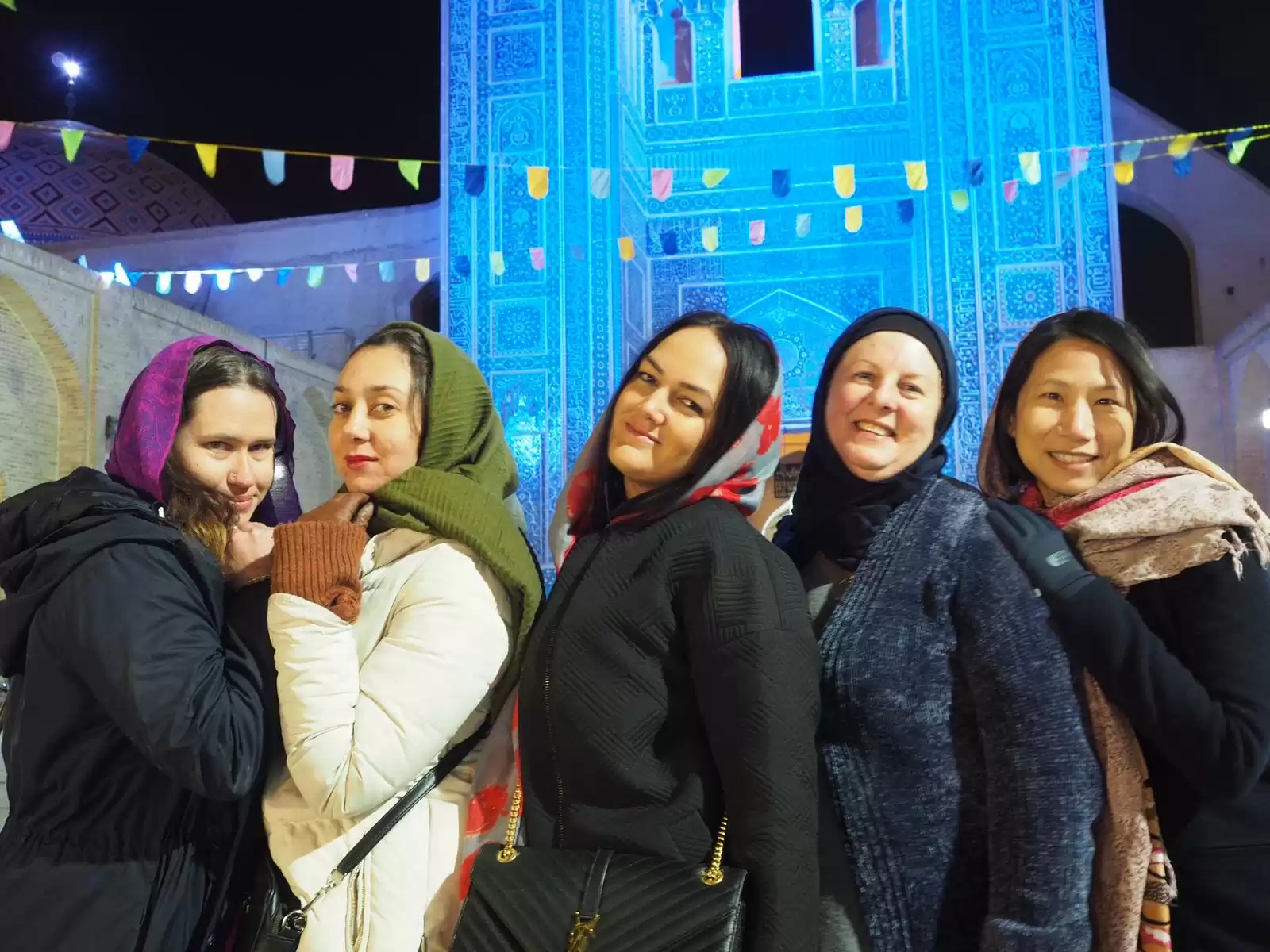
Travel Advise: - Security & politics Iran is safe with a stable political situation Iranian politics are not directed against tourists. Iran is safe with a stable political situation and a moderately conservative government. Despite political contrasts, tourists are very welcome. Tourist visa simply be provided and the Iranian government is investing in tourism, utilities, health care and infrastructure. - Travelling as a woman in Iran A tour through Iran ,certainly in the big cities not much else than as a traveling man. Women are generally treated with great respect. You will not be bothered quickly, regardless of the usual interest and curiosity for tourists. The vast majority of Iranian men treat women politely and courteously. -Dress code in Iran It is true that women in Iran are obliged to wear a (loose) headscarf or scarf over their hair on the street and to dress modest. This can be uncomfortable especially in warm weather. The advantage is that it commands respect from the conservative part of the population. Iranian women are very actively involved in social life as you can see in the street scene and in offices. Men are not allowed to wear shorts on the street and short sleeves are not appreciated in shrines. Women are obliged to wear a (loose) headscarf on the street or to drape a scarf over their hair. It is also recommended to wear a suit (= manteau) or skirt over trousers. In principle, the arms, legs and neck should not be too exposed. Due to the climate, linen clothing is recommended in the warm areas. -Space for strict dress rules To enter an Islamic sanctuary, stricter rules apply, such as a black veil (= chador). Usually it can be borrowed at the entrance. Money and pay in Iran The currency of Iran is officially called Rial, but almost everyone in Iran uses the name Tuman. For example, 10000 Rials is 1000 Tuman. This makes converting prices to euros a challenging activity. payment with a credit card is NOT possible in Iran because of the American boycott. This means that you have to take cash with you. In Iran, euro / dollar are easy to exchange at exchange offices, banks and our office in Tehran. Therefore we advises travellers to bring sufficient cash in undamaged 20, 150 - 300 euro/ dollar banknotes. By exchanging 100 dollars ,it will may cover your expense of food , entrances fee and drinks during 10 days.
Route & locations
Tehran, Iran