Colors Of Pakistan: History & Culture Experience
About this tour
Tour Summary
This journey takes you through Pakistan’s most iconic historical landmarks and vibrant cultural centers. From Mughal architecture and Sufi shrines to bustling bazaars and modern cityscapes, the tour offers a rich blend of heritage, spirituality, and everyday life. Guided by local expertise, travelers will experience the diverse “colors” of Pakistan its traditions, food, music, and people.
Highlights
Lahore – The Heart of Heritage
Explore Lahore Fort and Badshahi Mosque, masterpieces of Mughal architecture.
Walk through the Walled City and Delhi Gate bazaars.
Visit the Lahore Museum and Shalimar Gardens.
Experience the patriotic Wagah Border Ceremony.
Taste authentic cuisine at Food Street and rooftop restaurants.
Islamabad – Modern Capital
Visit the iconic Faisal Mosque, symbol of Islamic architecture.
Enjoy panoramic views from Daman‑e‑Koh.
Capture sunset photography at the Pakistan Monument.
Sample traditional BBQ and Pakistani dishes.
Hunza & Northern Valleys
Discover the legendary Baltit and Altit Forts.
Trekking and scenic drives with views of Rakaposhi, Ultar Sar, and Passu Cones.
Meet the hospitable Hunza people and enjoy apricot orchards.
Kalash Valleys – Living Traditions
Immerse yourself in the unique culture of the Kalash people.
Explore colorful festivals, wooden houses, and vibrant traditions.
Learn about their mythology and way of life.
What to Expect
Cultural Diversity: From Mughal grandeur to tribal traditions.
Authentic Cuisine: Street food, rooftop dining, and village meals.
Local Guidance: Expert insights from Mr. Sherbaz, Tour & Mountain Guide.
Adventure & Comfort: A mix of city exploration, scenic drives, and light trekking.
Memorable Photography: Iconic landmarks, mountain panoramas, and vibrant bazaars.
This tour is designed to showcase the soul of Pakistan—its history, culture, and hospitality—making it perfect for travelers seeking both discovery and connection.
Day-by-day itinerary
Day 1: Karachi
Today I am Sherbaz Tour and Mountani guide meet at Airport Upon arrival in Karachi and transfer to your hotel. After a short rest at Hotel we proceed for sightseeing of Karachi including visits to the White Marble Mausoleum of Quaid-e-Azam (the founder of Pakistan); Bustling Bohri Bazaar - crowded with yelling hawkers; National Museum - housing a rich collection of Gandhara art; Zaibunnissa Street - a cosmopolitan shopping center; after lunch resume the sightseeing. Visit DHA and Do Darya Restaurant and Clifton beach. Dinner at open restaurant with BBQ ,aft and live music ,after dinner Return to hotel for overnight.
Day 2: Karachi to Hyderabad
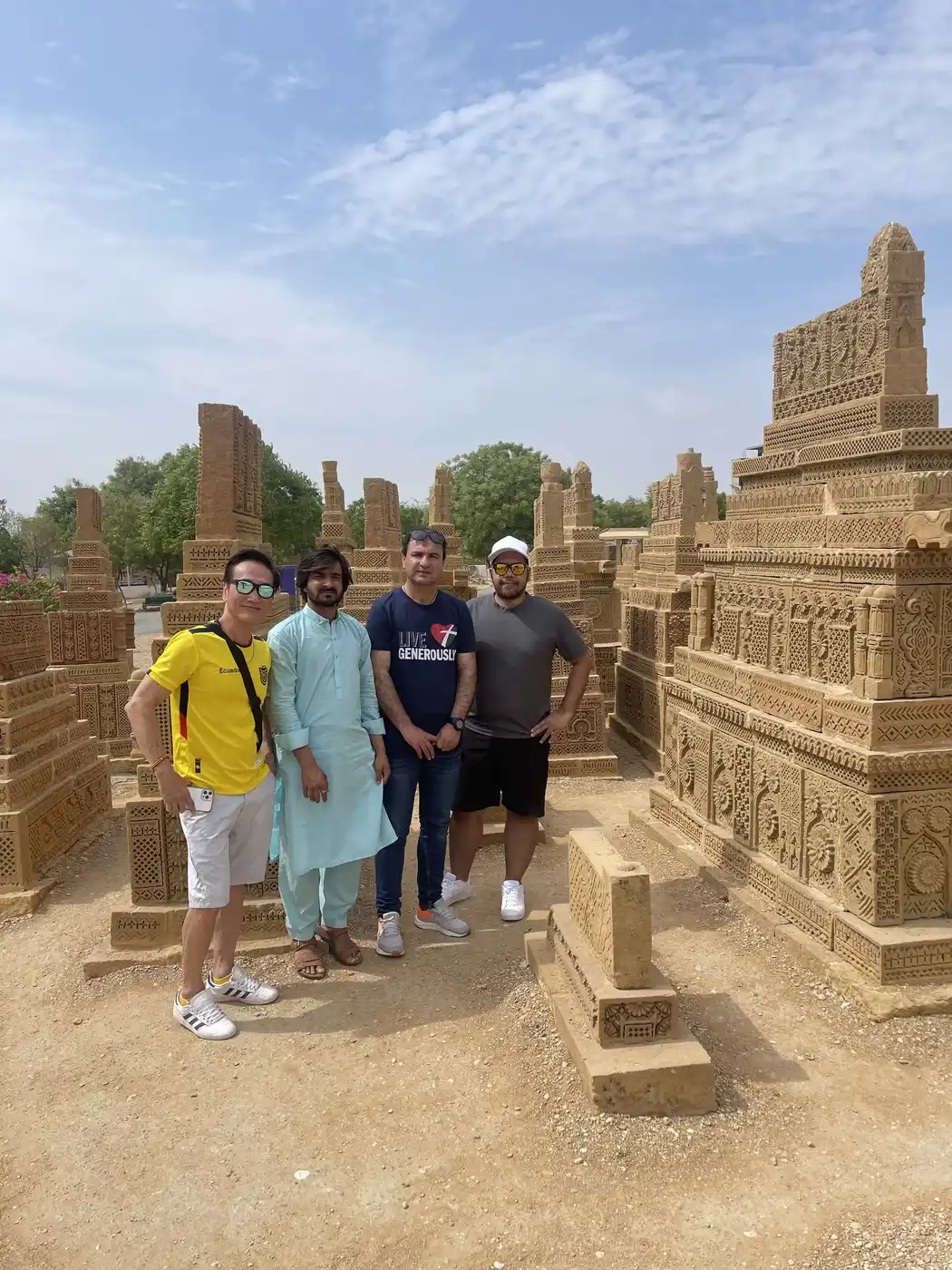
AM: Drive to Hyderabad via Makli Hill & Thatta. Hyderabad, Pakistan's fifth-largest city after Karachi, Lahore, Faisalabad and Islamabad-Rawalpindi, is a bustling industrial metropolis on the Indus River. Makli Hills, or Little Mecca, is the site of a million graves, tombs and mausoleums, and is reputedly the largest necropolis in the world. Visiting it is an eerie, impressive experience. For over 1,000 year the Sindhi people have felt that there was something sacred about Makli, and a spiritual atmosphere still pervades the site today. Thatta, about 100 kilometers (60 miles) from Karachi, is well worth a visit for the Shah Jahan Mosque and its bazaar. The mosque is a reminder of Thatta's past as a thriving port and the capital of lower Sind before the Indus abandoned it for new channels to the east. Subject to available time, visit the Hyderabad Fort, Tomb of Talpur Mirs, Shah Makai Fort, Kalhora Tombs all located within Hyderabad. PM: Return to Hotel for overnight.
Day 3: Hyderabad to Sukkur
AM: Drive to Sukker enroute options visit to Mohenjodaro, Sehwan, Fort Ranikot, Kot Diji. Sehwan Sharif is the oldest occupied town in Sind. Mud houses huddle on top of a mound of mud debris that has accumulated over thousands of years. The ruins of a massive fort dominate the town at the northern end and command the route from the upper to the lower Indus, through which all invaders from either north or south had to pass. Possession of the fort was essential to the success of every campaign, so Sehwan figures constantly in Sind's history According to a Sindhi proverb, if you are a rich man you should go to Larkana, where you can easily spend your money; apparently the red-light district is very expensive. Mohenjo-Daro (Mound of the Dead) is the ruins of a 4,000-year-old Indus Civilization city. It is one of the most important archaeological sites in the subcontinent, and a must for anyone interested in ancient history. Enthusiasts should allow a whole day there to tour the ruins and see the excellent museum; Sukkar is strategically situated on the Indus and is the most important town in upper Sind. It is connected by air, rail and road to the rest of the country.. Visit the Sukkar Barrage - the biggest Barrage in the world with its biggest network of canal system in the world. Bhakkar Island - 300 X 800 meters is the largest of the three Islands in the river and domains two 12th century ruined forts, a Muslim Shrine, a step well, an execution. Return to Hotel for overnight stay .
Day 4: Sukkur to Bahawalpur
Today we drive you to Bahwapur via Uch . Uch is domains the Muslim tombs of the 13th and 14th centuries. Located near the confluence of the Chenab and Sutlej rivers, it was the capital of a rich kingdom and, with its sister city Multan, a center of political, cultural and literary activity. The independent Kingdom of Uch was short-lived, as the river changed course and the town declined, but it still continued to attract the pious and saintly. Today it is always referred to as Uch Sharif (Holy Uch). Bahawalpur was rebuilt in 1748 by the Nawab (Lord) on an old site, Bahawalpur's wide tree-lined streets and large houses with arched verandas give it an air of calm spaciousness. Most public transport is by bicycle rickshaw, so life here seems graciously Unhurried. Bahawalpur is a small but prosperous town, and is an ideal starting-point for safaris into the Cholistan Desert, or for day trips to the Lal Suhanra National Game Park or Derawar Fort. On arrival transfer to Hotel. After a brief rest proceed for sightseeing of Bahawalpure Bazaar, Library & Museum. Proceed for sightseeing excursion of Lal Suhanra Park. Overnight hotel for overnight.
Day 5: Bahawalpur to Multan
AM: Drive to Multan. Multan is the most important city in the lower Punjab. Strategically placed at the crossroads of the main trade route through Pakistan, and at what was once the confluence of the Ravi and Chenab rivers (today the Ravi joins the Chenab 40 kilometers, or 25 miles, to the north), Multan has been a rich, well-defended city for more than 2,000 years. Today it is a flourishing industrial city, and can be reached by daily air and rail services from the rest of the country. Sightseeing excursion of Multan.Visit to the Shrines of Shah Rukan-e-Alam, Bahauddin Zikirya Temple of Pra Halad (temple and Phulhattan Mosque. All presenting intricate designing and incomparable workmanship. Visit the city bazaars of Multan including Lahori Gate, Hussain Agahi Bazaar, Town Hall, Saddar Bazaar, Overnight at your hotel
Day 6: Multan to Lahore
AM: Drive to Lahore via Harrapa, The turning to the Indus Civilization city of Harappa is about 150 kilometers (93 miles) from Multan. A tour of the site itself takes about an hour. Leave the museum and follow the path past the cemetery. Jars containing human bones were found here, and are thought to be of a later date than the Indus Civilization. Some jars and skeletons are on display in the museum. Harappa was discovered in the mid - 19th century by railway engineers building the Lahore - Multan track. David Ross, in The Land of Five Rivers (1882), wrote: 'the ruins were extensive enough to provide brick ballast for about 100 miles (160 kilometers) of the railway: in this way several of the large mounds have been entirely cleared away. After sightseeing Harrapa, continue drive to Lahore.
Day 7: Lahore
After breakfast Visit to the Lahore Museum - built by the Britishers in Mughal Gothic style, it is Pakistan's best Museum with a rich collection of Buddhist stone sculpture from Gandharan Period, a fine Islamic collection of illustrated manuscripts, miniatures, rugs and carvings, a good ethnographic display and a gallery on an excellent prehistoric display. Visit Chuburji Gate Lahore. Include The visit to the Walled City of Lahore includes Wazir Khan's Mosque - built in 1634 by Hakim Ali-ud-Din; Shrine of Data Ganj Bakhsh - a great scholar from Ghazni 1039-1072. has millions of pilgrims and his Urs (death festival) is a national event; Anarkali Bazaar - named after Prince Salim's (Jehangir) lover, is a cluster of street bazaars exclusively for ladies. After lunch resume sightseeing. Visit the Lahore Fort - a marvel of Moghal Architecture begun in the 11th Century and completed in the end of 16th Century. Among the emperors who contributed to its splendors are Akbar, Jahangir and Shah Jehan; the Badshahi MosqueProceed to Wagha Border Flag down ceremony. In the afternoon we drive you to historical route Wagha border to attend flag down ceremony of Pakistan and India rangers. It is a daily practice since 1960, It is an hostile show mean that it show the power of both countries. Back to hotel.
Day 8: Lahore to Islamabad
In the morning breakfast will drive on the famous and comfortable road Motorway. En route we drive you to Katas Temple.. Visit to Qila Katas on the way. Katas temple is several Hindu temples connected to one another by walkways the temples form a complex surrounding a pond named Katas which is regarded as sacred by Hindus.The temples' pond is said in the Puransas to have been created from the teardrops of Shive after he wandered the Earth inconsolable after the death of his wife Sati. Khiwa Salt Mine also located here but we skipped it and get back to Motorway after a brief tour in the Katas Temple and transfer by Motorway for Islamabad.. The motorway 375 long upon arrival to Islamabad we will transfer to the Hotel Activities: Explore the town and visit Royal Mosque and old fort. City sightseeing tour to Rawalpindi and Islamabad. See Raja Bazaar, Murree Road, Lok Virsa Museum and Shah Faisal Mosque in the tour. Islamabad and Rawalpindi are both twin city. Islamabad is located on the Photohar plateau. Approximate population in Islamabad 2.05 million and Rawalpindi exceeded 4 million. For more details our guide explain during the visiting of each places. Grace Crow Hotel Rawalpindi.
Day 9: Islamabad
Today after breakfast we drive to a tour of Pakistan capital of Islamabad and busting Bazzars of Rawalpindi. Islamabad is the planned city of Pakistan because it serves as the capital of the Islamic Republic of Pakistan. Ranked in the beautiful capital of the World after London and Berlin. The 10th largest city and population of almost 2 million. Islamabad was built in 1960 under the direction of President Ayub Khan to replace Karachi as Pakistan’s capital. The city’s master plan divides the city into eight areas, including administrative, diplomatic, residential, educational, industrial, commercial, rural and green areasA tour to Islamabad that covers all the major and minor attraction of the capital features. Lunch at Afghan Restaurant. After lunch, Visit Pakistan movement, lok Versa Heritage here displaying/depicted all Pakistan culture, visit Damane Koh a beautiful picnic point for Pakistani holiday’s makers where you have a panoramic view of Capital Islamabad worth looking Faisal Mosque and Gov. official building Parliament House, Prime Minister house, High court and some major business towers top looking from this location visit Fisal Mosque see modern Muslim feature of architecture. Visit saidpur Village. Dinner at BBQ open Restaurant and transfer to Airport with a lot of good memories from colorful culture of Pakistan.
What's included
• Luxury transport throughout Journey • • Tourist Class Hotel accommodation throughout tour plan • • All hotel and restuarant Meals • • Local cuisines in each town and city • • license Tourist Guide and Professional Driver • • Site entrace tickets and all parking fee • • visa Invitation Letter and other neccessary documents • • Daily Nestle water Bottle unlimited • • offer Seasonal fresh fruits
• International Flight tickets • • International travel Insurance • • Personal shopping • • Tip for staff waiter and driver
Languages spoken
What to know
Travel Essentials Visa & Documents: Ensure your visa is valid and carry copies of your passport, travel insurance, and booking confirmations. Health & Safety: Vaccinations may be recommended; consult your doctor before travel. Carry basic medicines and stay hydrated in hot climates. Local Currency: Pakistani Rupee (PKR). ATMs are available in cities, but cash is essential in rural areas. Guidance: With Mr. Sherbaz, your professional tour and mountain guide, all permits, logistics, and safe travel arrangements are expertly managed. Cultural Awareness Dress Code: Modest clothing is expected, especially at religious sites. Women may need a scarf for shrines and mosques. Respect for Traditions: Photography at shrines and tombs may require permission. Always ask before photographing people. Language: Urdu is widely spoken, but guides often speak English. Learning a few Urdu greetings is appreciated Sherbaz’s Role: He will guide you through cultural etiquette, ensuring respectful and meaningful interactions with local communities. Tour Logistics Transport: Luxury vehicles with professional drivers are usually included. Roads can be long and bumpy, so prepare for extended drives. Accommodation: Hotels are provided, often with twin‑sharing rooms. Confirm if you prefer single occupancy. Meals: Local cuisine is part of the experience; vegetarian options are available but should be requested in advance. Sherbaz’s Expertise: He coordinates transport, accommodations, and meals, making the journey smooth and enjoyable. Highlights to Anticipate Ancient ruins of Mohenjo‑daro and Harappa. UNESCO sites like Makli Necropolis and Shah Jahan Mosque. Sufi shrines in Multan and Uch Sharif. Mughal heritage sites and vibrant bazaars. Sherbaz ensures you experience both the historical depth and the living traditions of Pakistan. With Mr. Sherbaz as your tour and mountain guide, you’ll benefit from his deep knowledge of Pakistan’s culture, history, and landscapes. He ensures safe travel, authentic experiences, and expert guidance making your journey not only well‑organized but also unforgettable.
Route & locations
Karachi